
Host: Nikhil Kamath
A video podcast by entrepreneur and investor Nikhil Kamath, bringing friends and experts together for casual, intellectually curious conversations about business, technology, culture and ideas.
Read structured takeaways and actionable insights from WTF is with Nikhil Kamath
WTF is with Nikhil Kamath
Nikhil Kamath sits with the three people who run India's payment rails - Sohini Andani (ED Growth, NPCI), Harshil Mathur (co-founder, Razorpay) and Sameer Nigam (co-founder & CEO, PhonePe) - for a four-hour map of how money actually moves in India. They draw the six-party UPI diagram live (why your 100-rupee transfer is about 10 API calls across PhonePe, a sponsor bank, NPCI and two banks), break down who pays for 'free' UPI (an estimated 25 bips ecosystem cost, a 15-50 paise switching fee, and the zero-MDR decision that froze private investment), and retell the Flipkart Big Billion Day when 75-80 million waiting shoppers took down bank core systems. The conversation ranges across card economics (who really keeps the 2%), the regulation debate (caps, monopolies, banking licences, 'process is the punishment'), what payment data reveals about real India (tier-2+ is 65-70% of digital payments; 70% of e-commerce spend comes from 15 million households; a GST cut study), cross-border, CBDCs vs stablecoins, agentic commerce, and a closing panel with founders of Seven (payment rings), Dodo Payments (merchant of record) and PayGlocal (cross-border). All figures and views are the speakers' own. FULL COVERAGE: the captions appear to cover the entire episode. Sponsor: none stated. Nothing here is investment, legal or financial advice.
WTF is with Nikhil Kamath
Nikhil Kamath spends a week in San Francisco asking the people building AI whether it is a bubble. His panel: Akshay Kothari, co-founder of Notion; Azalia Mirhoseini and Anna Goldie, the Google Brain duo behind AlphaChip who were Anthropic employees 25 and 26 and have now co-founded frontier lab Ricursive Intelligence; and Vijay, a founder in the AI data-training space whose platform spans five million knowledge workers. The conversation maps the full AI stack - chips and data centres, frontier labs, neolabs like SSI and Ricursive, data trainers like Turing, Mercor, Surge and Scale, inference providers, applications and services - then goes layer by layer: why Ricursive is building AI that designs chips to break the hardware lottery, why training data work is obsolete every nine months, what recursive self-improvement means and why the cost of intelligence is its metric, and how Notion's agent users went from 1% to 30% in under a year. Nikhil's framing number: about $700 billion spent or committed on AI this year against about $100 billion of AI enterprise revenue. FULL COVERAGE: the captions appear to cover the entire episode. All figures and claims are the speakers' own, not independently verified. Sponsor: none stated in the episode. Nothing here is investment advice.
WTF is with Nikhil Kamath
Before the fame, what were they like? This Stitch'd montage rewinds to the childhoods of Ranbir Kapoor, Kriti Sanon and other well-known Indians from film, music, cricket and business. Ranbir Kapoor recalls Bombay Scottish, canes and duster-on-knuckles discipline, 54.3% in his 10th boards, dropping out of film school in New York and living on a $2 McDonald's menu for lunch and dinner because his father kept him on a tight budget. Kriti Sanon describes being an extremely shy, stage-frightened firstborn who hid in her mother's dupatta - until dance (five years of kathak at Kathak Kendra) gave her a stage. A rapper remembers being a government sub-divisional officer in Himachal Pradesh while writing for an underground Honey Singh; a composer raised by a single mother who rented out his late father's instruments; a cricketer from Mangalore who picked up a plastic bat at two and a half; and a founder from Indore who scaled his father's detergent business from 40 lakhs to ten times that in 18 months. FULL COVERAGE: the captions appear to cover the entire episode. The episode is a voice montage and does not always name each speaker on screen; these notes name only speakers confirmed by the video's title or clearly identifiable from the content itself, and quotes are verbatim from the captions. Sponsor: none stated in the episode. Nothing here is professional advice.
WTF is with Nikhil Kamath
Nikhil Kamath sits down with MakeMyTrip co-founder Rajesh Magow and IHCL (Taj) MD and CEO Puneet Chhatwal, joined by founders Sidharth Gupta of Treebo, Amit Damani of StayVista, Sandhya Chandrasekharayya of Indiahikes and Bhaveeka Bakshi of Boketto Travels, to explain the business of Indian travel. The conversation covers why booking direct is not cheaper under rate parity, why boutique hotels are often better built by outsiders than hoteliers, how AI splits hospitality between automated budget stays and human premium service, and why voice booking could unlock tier-three India. They then take on the big question: why only ten million foreign tourists visit a country with more than forty UNESCO sites, what went wrong in Goa, why tourism being a state subject is the bottleneck, and the playbook to reach a hundred million tourists. The founders add the ground view: group-celebration homestays, twenty-five to fifty room hotels for tier-two and tier-three cities, membership clubs and Gen Z's shift to spiritual, cultural and event travel. FULL COVERAGE: the captions appear to cover the entire episode. All figures and claims are the speakers' own, not independently verified. Sponsor: none stated in the episode description. Nothing here is financial or business advice.
WTF is with Nikhil Kamath
Nikhil Kamath flies to Dalian with a selfish question - his fund invests in energy transition, and energy is not the problem, storing and moving it is. His teachers: Henning Rath, CEO of EnerVenue, a Silicon Valley company commercializing NASA's nickel-hydrogen battery with a gigafactory in Changzhou, and Tang Kun, CEO of HiNa Battery, a 600-person sodium-ion pioneer spun out of the Chinese Academy of Sciences. From what a cell actually is to why the world standardized on LFP despite 14,000 LFP fires in 2025, why solid state is still at technology readiness level four of nine, how China ran a 20-year 'government venture capital' playbook that left BYD and CATL standing, and why both guests tell him the same thing: don't start a car company, start a battery company - and don't build anything that needs lithium or rare earths. $50 million is the entry ticket. FULL COVERAGE: the captions appear to cover the entire episode. All statistics are the speakers' own claims in conversation - treat them as assertions, not verified figures. Sponsor: none stated - Nikhil's podcast runs no ads or sponsors. Nothing here is investment advice.
WTF is with Nikhil Kamath
Recorded in China, Nikhil Kamath sits with two economists who saw today's crises coming: Matthew Klein, who writes The Overshoot and co-wrote Trade Wars Are Class Wars, and Ning Zhu, professor at Shanghai Jiao Tong University and author of China's Guaranteed Bubble. They cover China's post-COVID economy (growth stepped down from over 9% in the 2000s to around 5% now, with a five-year housing correction dragging on consumption), why China's trade surplus exploded from $100-200 billion a year before the pandemic to about $1.1 trillion now, whether tariffs can fix trade imbalances, why the world keeps funding American debt at 4%, de-dollarization and why stablecoins may actually strengthen the dollar, and how a government-guaranteed housing narrative inflated and then burst China's property bubble. FULL COVERAGE: the captions appear to cover the entire episode. All figures and claims are the speakers' own, not independently verified. Sponsor: none stated in the episode. Nothing here is investment advice.
WTF is with Nikhil Kamath
Nikhil Kamath sits down at the Foundery house in Alibaug with Kishore Biyani and Ronnie Screwvala, 60 days into an experiment: 25 strangers moved into one house, each assigned a new-age consumer brand and 4 crores to build the business in 90 days, with a year of groundwork done before they arrived. This episode is an audit of the model, recorded in front of the cohort. Ronnie traces his path from a Grant Road childhood to cable TV and UTV - 'the coconut has to be broken yourself' - and KB explains why, after compounding 25-30% for decades and then a COVID-era fall, he now believes abundance creates where Ronnie built on scarcity and frugality. They defend the equity split everyone questions (founders keep 25%), the consumer trends the house is betting on (India One's 30 million families, better-for-you foods, new categories, collapsing brand loyalty), celebrity co-created brands like SuperYou, and what happens on the 91st day. Santosh Desai, Lipika, Bilal and cohort founders join with the uncomfortable questions. FULL COVERAGE: the captions appear to cover the entire episode. All views and claims are the speakers' own, not independently verified. Sponsor: none stated. Nothing here is business, investment or professional advice.
WTF is with Nikhil Kamath
Nikhil Kamath sits down with Rajiv Juneja of Mankind (about Rs 40,000 crore revenue, India's fourth-largest pharma company) and G.V. Prasad of Dr. Reddy's (about $3 billion revenue) for a founder-level class on the Indian pharmaceutical business. The conversation spans the industry's real economics - India supplies roughly 60% of the world's generic drug volume but captures only a small single-digit share of its value; the anatomy of a Rs 100 MRP (pharmacy 20%, wholesaler 10%, distributor 2-4%, with 95% of the market being branded generics chosen through rep-doctor relationships); and the Mankind playbook (bottom-up tier-2/3 expansion, prices 40-60% below rivals, 17,000 medical reps, EBITDA deliberately held at 25-26% to fund growth, Manforce as a visibility engine). Prasad gives a science masterclass - APIs vs formulations, small molecules vs biologics vs peptides, why GLP-1 drugs work and why muscle loss is the catch - and a contrarian take on China: India still leads APIs, he says, but China played a long game from cheap intermediates to innovation dominance (29% of new cancer drugs), and India's biologics capability lags. For the 25-year-old founder they map closed doors (online pharmacy, distribution, GLP-1 branding - prescription drugs cannot be advertised in India) and open ones (wellness and prevention growing at 17%, sexual wellness online growing 50-60%, CDMO services riding China+1, AI services pharma cannot staff, even certifying the destruction of expired medicines). Note: YouTube auto-captions garble some names in this episode (Dr. Reddy's appears as 'Deli pharmaceuticals'/'Dr. Eddies', Juneja as 'Junja'). FULL COVERAGE: the captions appear to cover the entire episode. All figures are the speakers' own claims in conversation. Sponsor: none stated. Nothing here is medical or investment advice.
WTF is with Nikhil Kamath
Mati Staniszewski, co-founder of ElevenLabs, joins Nikhil Kamath for a conversation about the voice interface he believes will replace how we interact with technology. ElevenLabs - founded in 2022, split 50/50 between a creative platform (narration, dubbing, localisation) and an agents platform (voice agents for customer experience) - dubbed the Lex Fridman x Narendra Modi podcast, recreates Gordon Ramsay and Chris Voss as AI tutors for MasterClass, and automates roughly 60,000 support calls a day for Meesho in Hindi and English. Mati lays out the three things voice needs before the phone goes back in the pocket (human-level voice quality, knowledge and memory integration, and an unsettled form factor - he bets on behind-ear headphones plus a capture device), why he does not think an AI valuation bubble is brewing (with a caveat on GPU inference providers), and his playbook for young founders: combine deep domain expertise in a lagging industry - automotive, healthcare, e-commerce - with voice agents, as 500 startups in India and 10,000 worldwide already do on ElevenLabs. Nikhil road-tests his social-media idea (a verified, low-bias, algorithm-light network; Mati suggests a voice-first companion interface) and they debate whether a multipolar world kills WhatsApp-scale network effects. FULL COVERAGE: the captions appear to cover the entire episode. All figures are the speakers' own claims in conversation. Sponsor: none stated - Nikhil's podcast runs no ads or sponsors. Nothing here is investment advice.
WTF is with Nikhil Kamath
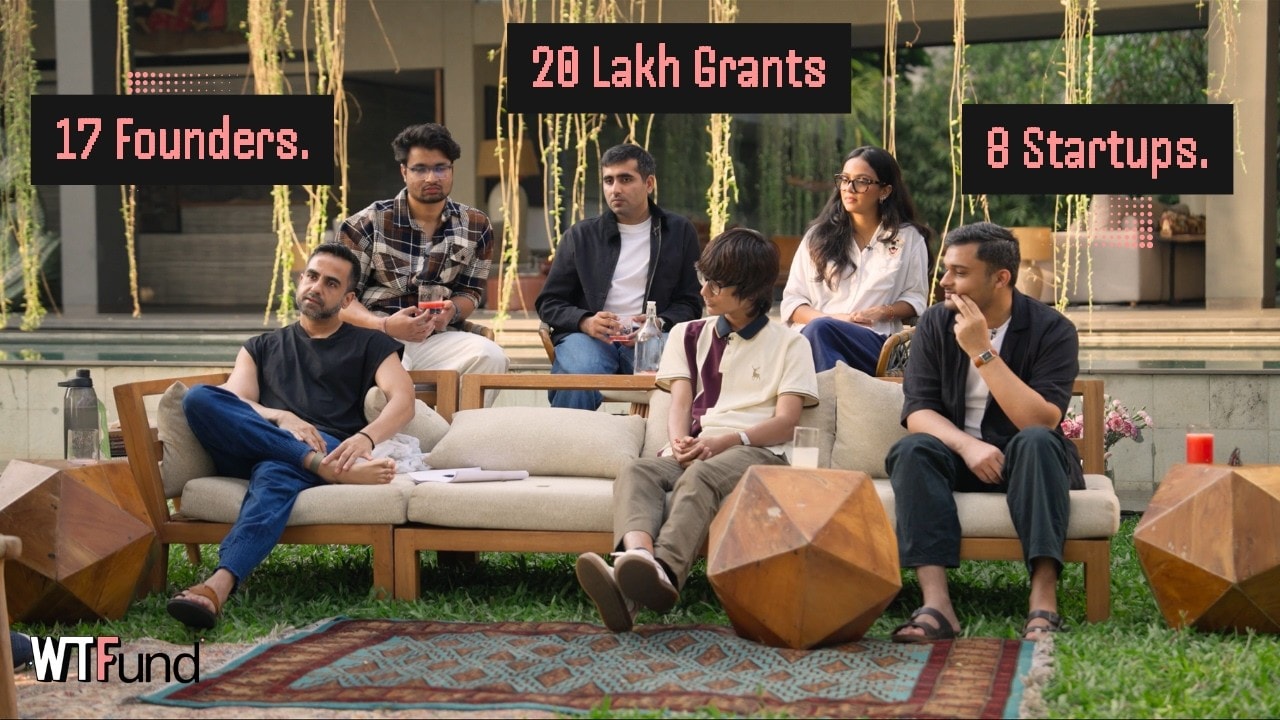
Nikhil Kamath hosts the eight startups of WTFund Cohort 3 - chosen from 3,000 applications - at his home in Goa after their bootcamp, and asks each founder what they built and which trend made them build it. Sushant and Shubham's Prava Payments is building PSP-agnostic infrastructure so AI agents can actually pay, not just discover. Dr. Jayanti's Astraeus Innovus is developing OncoALERT, a roughly Rs 150 nanotech biosensor for needleless oral-cancer screening designed to work with no electricity, lab or trained staff. A doctor, an engineer and a former ISRO rocket scientist are building a low-cost AI operating system that digitizes pathology slides for diagnostic labs and recommends personalized cancer drug therapies. Sridipto and Sirsho's antimattr wants to be the Android for earbuds and wearables. Rohit's O3 Security, already billing and working with large fintechs, argues 80% of the cybersecurity industry is white-labelled scam. Prashanth and Abhishek's BloomRehab builds home rehabilitation robots for stroke patients. A solo founder's Placestation puts a pick-and-place machine on your desk to cut hardware iteration from two months to a day. And Sahil's Aeyi turns ordinary CCTVs into AI security guards that alert you in real time. The second half is Nikhil unplugged: storytelling, negotiation, hypocrisy, marriage, legacy vs longevity, and why he allocates to energy transition. FULL COVERAGE: the captions appear to cover the entire episode. All traction figures and claims are the founders' own, not independently verified. Sponsor: none stated. Nothing here is investment, medical or professional advice.
WTF is with Nikhil Kamath
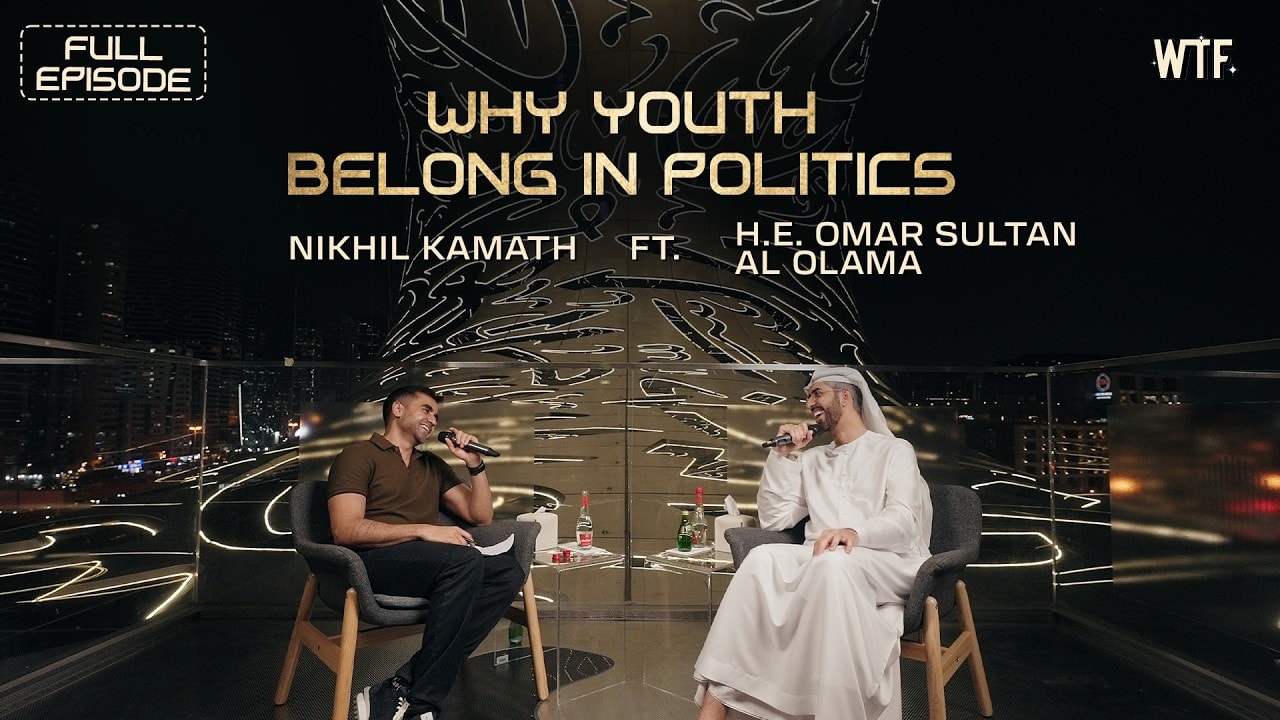
Nikhil Kamath interviews Omar Sultan Al Olama, the UAE's Minister of State for Artificial Intelligence, in Dubai: competing as a small nation in the AI era, breadth versus specialization, his path to becoming a minister at 27, how the UAE governs (majlis access, lean government, anti-corruption), why 200 nationalities move there, taxes and sovereign investment, Machiavelli and legacy, and restraint as wisdom. FULL COVERAGE: notes span the entire episode (transcript 0:15 to 1:42:46 of 1:42:56). Sponsor: none stated. All claims about the UAE, its leadership and history are the guest's own account as spoken in January 2026, attributed to him, not independently verified. Nothing here is career, political or investment advice.
WTF is with Nikhil Kamath
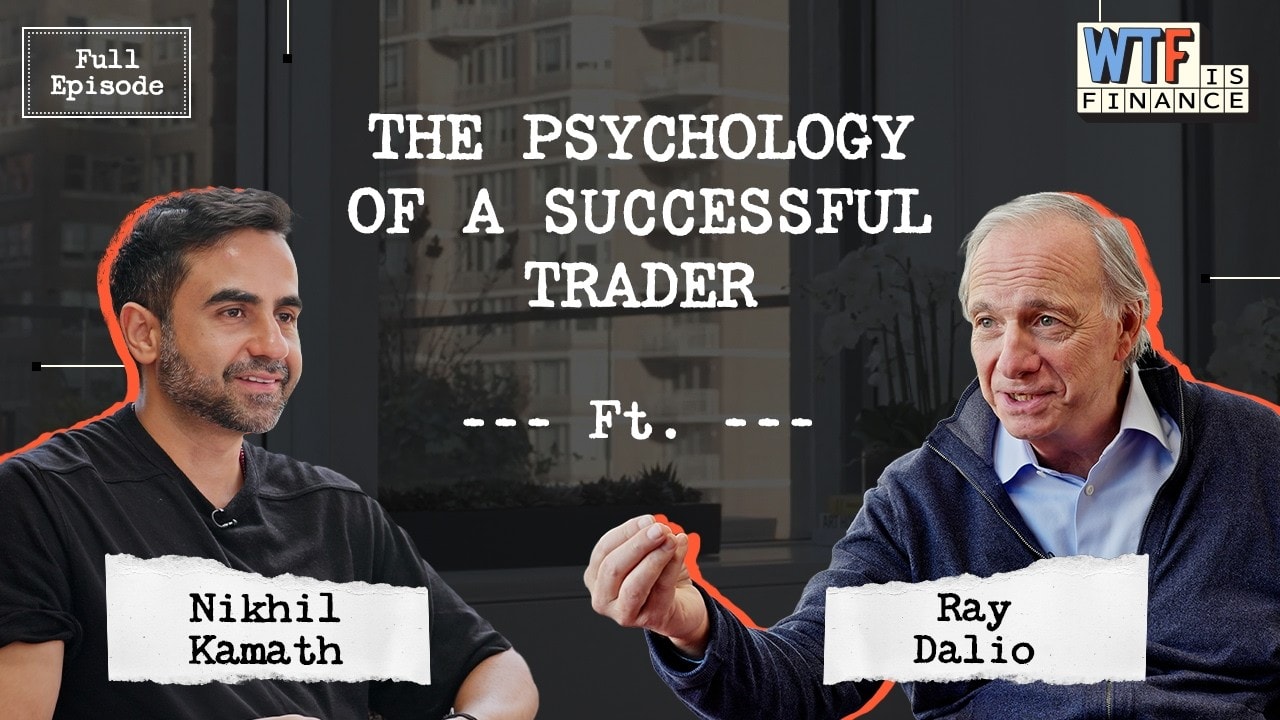
Ray Dalio speaks with Nikhil Kamath about money, wealth and investing. They examine how wealth can rise faster than the money available to realize it, how bubbles form, and what that means for young Indian investors. The conversation also covers gold, Bitcoin, portfolio construction, decision rules and the forces shaping markets.
WTF is with Nikhil Kamath
Nikhil Kamath with Shantanu Deshpande (Bombay Shaving Company), Diipa Khosla (inde wild) and Bhakti Modi (Tira): the size and shape of India's beauty and personal care market, community-led brand building, salons, sampling and minis, influencer economics, fragrance's moment, skincare trends to catch, premiumisation, quick commerce, contract manufacturing, celebrity brands, and why this is a decades-long game. FULL COVERAGE: notes span the entire episode (0:00 to 3:36:20 of 3:36:41). Sponsor: none (episode states: no advertising or sponsorship). All market sizes, growth rates, company figures and trends are the guests' account as of September 2025, attributed to them, not independently verified; product and ingredient mentions are discussion, not endorsement; nothing here is business or investment advice.
WTF is with Nikhil Kamath
Nikhil Kamath opens the WTF is Finance series with Ruchir Sharma - author of What Went Wrong With Capitalism, founder of Breakout Capital, and formerly Morgan Stanley's global emerging markets head for 25 years. Sharma traces his path from a Navy childhood (Wellington, Coonoor), a Singapore school under Lee Kuan Yew's model, and the 1987 crash at age 13, to writing the Forex Watch column for The Economic Times while hiding that he was an SRCC undergrad, and a $100,000 Morgan Stanley offer in 1996 that ended his PhD plans at 22. The conversation then builds his worldview: capitalism is economic freedom, not equal outcomes; East Asia grew by building infrastructure before welfare states while India's premature welfare and import substitution kept it uncompetitive, reconciling it to roughly 6% growth; regulation is pro-incumbent (America adds 3,000 rules a year and removed about 20 in 20 years; hedge-fund compliance costs are up 10x); and India's real strengths are competitive federalism (Karnataka's rise, Tamil Nadu's bureaucracy) and a potential DOGE-style deregulation drive. Markets get the full treatment too: the AI mania's echo of 1999-2000, why he expects the rest of the world to outperform the US over the next 5-10 years (own US only for AI), a weaker dollar, gold and Bitcoin as anti-dollar plays, China's debt-and-demographics drag versus its technology edge, America's seven-company concentration, and why he would ban big-tech acquisitions. All figures, forecasts and views are the speakers' own, not verified by us. FULL COVERAGE: the captions appear to cover the entire episode. Sponsor: none stated. Nothing here is investment, legal or financial advice.
WTF is with Nikhil Kamath
Nikhil Kamath hosts Deedy Das (Menlo Ventures), Nikunj Kothari (FPV) and Niko Bonatsos (General Catalyst) for a three-hour tour of the 2025 venture landscape: their paths into VC, sectors to avoid, what is too hot, how AI is actually changing, population decline and abundance, then a rapid-fire rating of ten market theses - education, longevity, senior living, content, brands, EVs, beauty, live events, climate and data centres, prediction markets - ending on legal AI, second movers and India's play. FULL COVERAGE: notes span the entire episode (transcript 0:39 to 2:52:00 of 2:52:17). Sponsor: none stated. All market figures, company references and ratings are the speakers' opinions as of August 2025, attributed to them and not independently verified. Nothing here is investment advice.
WTF is with Nikhil Kamath
Nikhil Kamath with Bengaluru Police Commissioner B Dayananda and Traffic Commissioner M Anucheth: inside the command centre and 112 response, the AI challan pipeline and its human verification, police careers and their costs, Bengaluru's traffic math and why flyovers fail, cybercrime's rise, and the case for young people joining the force. FULL COVERAGE: notes span the entire episode (0:03 to 1:28:15 of 1:28:24). Sponsor: none stated. All figures (response times, challan counts, vehicle density, cybercrime share) are the guests' account as of May 2025, attributed to them, not independently verified; nothing here is legal or career advice.
WTF is with Nikhil Kamath
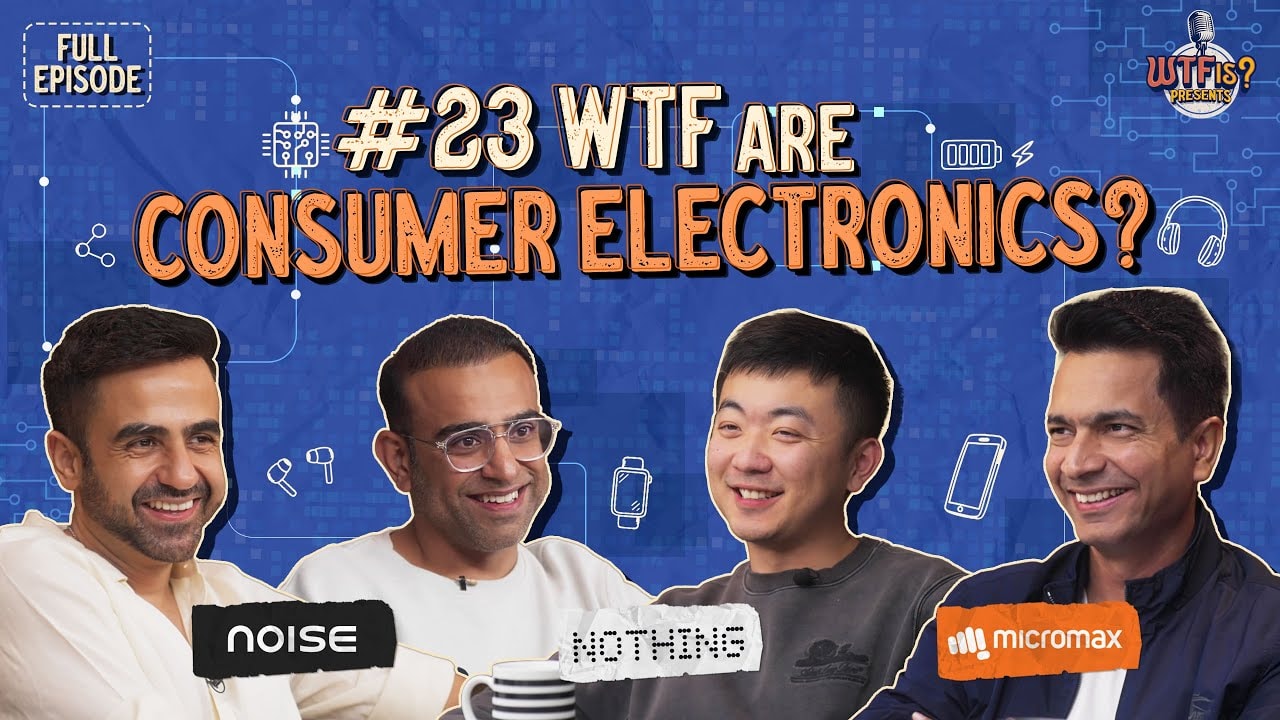
Nikhil Kamath with Carl Pei (Nothing), Rahul Sharma (Micromax) and Amit Khatri (Noise): how India's consumer electronics industry actually works - three founder journeys, why not to start a phone brand, the niche and component-supply-chain opportunities, China's manufacturing moat and India's semiconductor reality, design, distribution, and what the next software-led differentiation looks like. FULL COVERAGE: notes span the entire episode (0:00 to 2:46:20 of 2:46:40). Sponsor: none stated. All market sizes, margins, duties and company figures are the guests' and host's account as of April 2025, attributed to them, not independently verified; nothing here is business or investment advice.
WTF is with Nikhil Kamath
Nikhil Kamath with the nine founders of WTFund cohort 2 (2024): robotics, fintech fraud detection, child-development AI screening, beverages, two-wheeler ADAS, a stress wearable, referral commerce, hydrogen storage and soil testing - their origin stories, traction and Nikhil's feedback. FULL COVERAGE: notes span the entire episode (0:00 to 1:14:18 of 1:14:21). Sponsor: none stated (WTFund is Nikhil Kamath's own grant fund). All traction, funding and market figures are the founders' account as of March 2025, attributed to them, not independently verified; nothing here is investment or medical advice.
WTF is with Nikhil Kamath
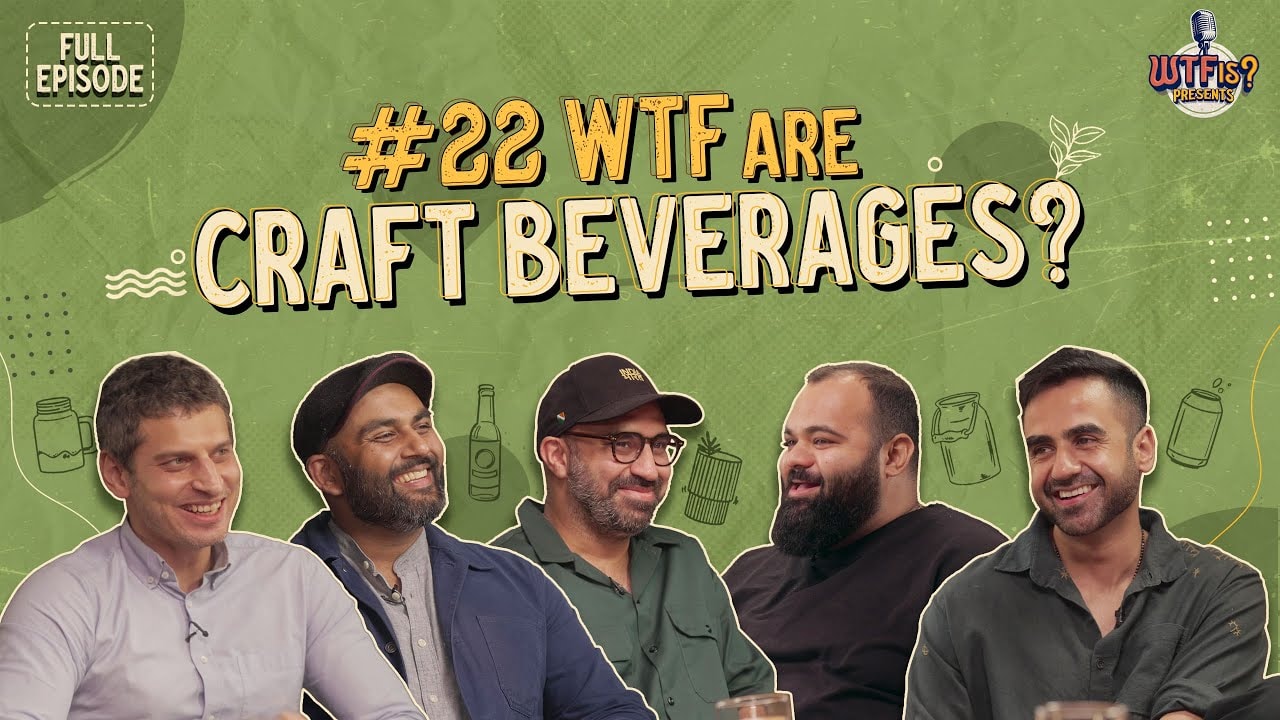
Nikhil Kamath with the founders of Blue Tokai (Matt Chitharanjan), Subko (Rahul Reddy), Svami (Aneesh Bhasin) and Mossant Fermentary (Adithya Kidambi): how India's craft beverage industry actually works - origin stories, unit economics of cafes and kombucha, taxation and regulation, distribution, quick commerce, branding without performance marketing, and where the opportunities sit for young founders. FULL COVERAGE: notes span the entire episode (0:00 to 3:25:35 of 3:25:44). Sponsor: none stated. All market sizes, margins, prices and growth figures are the guests' and host's account as of March 2025, attributed to them, not independently verified; nothing here is business, tax or investment advice.
WTF is with Nikhil Kamath
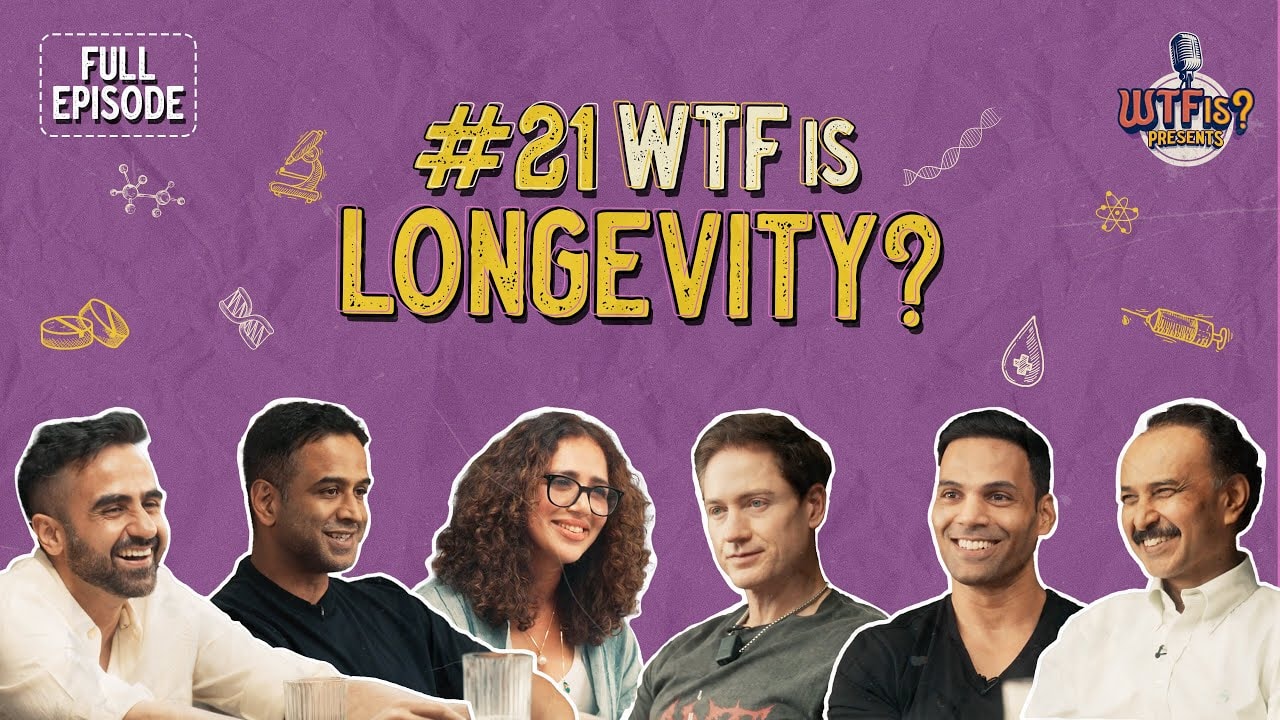
Nikhil Kamath with Nithin Kamath, Bryan Johnson, Prashanth Prakash, Jitendra Chouksey and Seema: longevity, air quality, supplements under scrutiny, the Don't Die philosophy, AI and health, India's health-data gap, and where the health-business opportunities are. FULL COVERAGE: notes span the entire episode (0:00 to 3:29:40 of 3:29:49). Sponsor: none stated. Every supplement, diet, air-quality and medical claim in this episode - including the guests' personal protocols - is the speaker's own view or experience as of February 2025, attributed to them, and several are explicitly contested by other guests on the table; nothing here is medical advice or a recommendation to take or avoid any supplement, treatment or lifestyle change.
WTF is with Nikhil Kamath
Nikhil Kamath with Irfan Razack (Prestige), Nirupa Shankar (Brigade) and Karan Virwani (Embassy/WeWork India): how India's real estate giants were built, the market's real numbers, how a 20-year-old can enter, REITs versus fractional ownership, family-business succession, and the future from malls to senior living to GCCs. FULL COVERAGE: notes span the entire episode (0:00 to 3:16:24 of 3:16:30). Sponsor: none stated. All market sizes, margins and return figures are the guests' and host's account as of October 2024, attributed to them, not independently verified; nothing here is investment or financial advice.
WTF is with Nikhil Kamath
Nikhil Kamath with Kriti Sanon, Badshah and KL Rahul on making it in offbeat careers: childhoods and first breaks, talent versus hard work, handling failure and trolling, money and validation, craft versus audience, and advice for a 20-year-old choosing an unconventional path. FULL COVERAGE: notes span the entire episode (0:00 to 2:41:27 of 2:41:31). Sponsor: none stated. All views on careers, industries and investing are the guests' and host's own, as of August 2024, attributed to them; nothing here is career, financial or investment advice.
WTF is with Nikhil Kamath
Nikhil Kamath and his brother Nithin bring three veteran Indian venture investors together to explain how angel investing, venture capital and private equity differ, how funds are structured, how investors evaluate founders and what sectors may shape India’s next decade. The group also reflects on the previous cycle, the realities of exits and incentives, and how founders should choose problems to pursue.
WTF is with Nikhil Kamath
Nikhil Kamath in conversation with Kiran Mazumdar-Shaw - a close friend, and the founder of Biocon - on her life, the company, and what biotechnology actually is. FULL COVERAGE: notes span the entire episode. Sponsor: none stated. All company figures, market shares and valuations are as stated by the speakers on the episode in mid-2023; nothing here is investment, medical or business advice. The arc is a masterclass in building from nothing: rejected from medical school, a zoology gold medal, and a father - the original brewmaster behind Kingfisher - who pointed her to brewing as the oldest biotechnology; a brewing degree in Australia in 1974 as the only woman in the class; two years of Indian breweries refusing to hire a woman brewmaster; and a chance meeting in 1978 with Irish entrepreneur Les Hawkins, who intercepted her on her way to a Scotland job and talked her into starting Biocon at 25 with ₹10,000 in the bank, a shed for a lab, retired tractor mechanics as her first hires, and banks that wanted her father's guarantee. Then the building years: enzyme technology as green chemistry decades before sustainability was fashionable, the first team of IIT and MIT engineers, the Unilever partnership that taught her professionalization and IP, the 1998 buyback funded by her husband John selling his London townhouse, the pivot from enzymes to biopharmaceuticals, India's first recombinant human insulin in 2004 at prices that collapsed the animal-insulin market, the IPO that made her India's richest self-made woman, the 2007 decision to divest the original enzymes business to Novozymes, and the recent $3 billion Viatris biosimilars acquisition aimed at making Biocon the world's number one biosimilars company. Along the way she explains biotech in plain language - enzymes as organic catalysts, recombinant DNA as a barcode cells read, statins, immunosuppressants, biosimilars versus generics, and why CRISPR and mRNA are having their moment - and closes on money (value creation, not bank balances), India's demographic dividend and research spending, women in the workforce, losing her mother and John, and her mother's parting words. The episode ends with a pledge: Nikhil and Kiran donate ₹25 lakh each, with the audience voting on the charity.
WTF is with Nikhil Kamath
Nikhil Kamath sits with his brother Nithin (Zerodha), Mukesh Bansal (Myntra, cult.fit) and Suniel Shetty to compress their combined health experience into one conversation. FULL COVERAGE: notes span the entire episode. Sponsor: none stated - products mentioned (AG1, fish oil, whey) are things the speakers personally use, not paid placements. None of the four is a doctor; they say so themselves on the episode. Every protocol, diet and supplement view here is a speaker's personal experience or opinion as stated in mid-2023 - not medical advice; consult your doctor before changing anything. The origins first: Mukesh's decade in the Bay Area, the meningitis scare at 30 that started his health rabbit hole, Myntra's accidental pivot to fashion and the cult.fit bet; Suniel's journey from a Tulu-speaking household to action stardom built on martial arts discipline; Nithin's call-center years with Nikhil, going bust in 2001 and starting Zerodha with an email that said 10,000 customers would mean they had arrived. Then the substance: each man's number-one priority (Mukesh and Nikhil say sleep, Nithin says food, Suniel says consistency), the alcohol debate (Nithin quit after his wife's cancer diagnosis sent him into food research; Mukesh quit nine months before recording and calls alcohol as bad as smoking; Nikhil floats the loneliness-and-stress counterargument; Suniel has never touched a drink), Suniel's quantified diet with allergy tests and gram counts, Mukesh's macronutrient rules and his 'guaranteed way to fall sick' formula, why movement has to be an all-day behavior rather than a one-hour gym slot, the testosterone and adaptogens experiments that did nothing until sleep improved, recovery through massages and sauna versus wear-and-tear injuries, the hormonal side of aging that men silently ignore, Peter Attia's backcasting idea and the healthspan-versus-lifespan framing, and finally the business of fitness - only about 5 million paying gym members in India against 150 million diabetic or pre-diabetic - before each man walks through his actual daily routine.
WTF is with Nikhil Kamath
Nikhil Kamath - who left school after the tenth standard - hosts three builders of very different education outcomes: Ronnie Screwvala (UTV founder, now upGrad), Gaurav Munjal (Unacademy co-founder) and Jay Kotak (Kotak811). FULL COVERAGE: notes span the entire episode. Sponsor: none stated. Every company figure, market estimate and opinion is the speaker's own, stated in mid-2023; nothing here is career, education or investment advice. The first hour is origin stories that double as lessons: Gaurav coding at twelve in Jaipur, running blogs that earned thousands of dollars in college, turning a YouTube channel into Unacademy, and taking four years and ten-plus pivots to find the business model; Ronnie wiring Mumbai's five-star hotels for cable TV, walking away from the copyright mess, building UTV on a cost-plus B2B model before betting on B2C, and his no-plan-B rule; Jay on growing up around Kotak, Columbia and Harvard, and his father's phone call that brought him back to a once-in-a-century India. The middle is the education debate itself: Gaurav's framing of Unacademy as a tournament business - 60 million Indians take competitive exams because clearing one is the only proven way to change socio-economic status - against Ronnie's learning, skilling and workforce-development thesis and his bet that peer-to-peer learning is the five-year revolution. They argue about whether online can ever match a classroom (Roblox, Duolingo and gamification versus the Harvard case method), whether degrees are just badges that get you into the room, and why 'super skills' beat marks. The last stretch is pure operator talk: the BYJU's fallout and edtech's negativity cycle, Physics Wallah's frugal counter-example, why Ronnie thinks capital does not change learning, Jay on the LRS/TCS rules and why India would attract more money than it loses if it opened up, and closing advice - Ronnie's no-hindsight rule and fix-the-have-nots market making, Jay's widen-access-don't-break-the-system, Gaurav's plea for ambitious technologists to enter edtech, and Nikhil's dystopian wish: fewer mimetic influences on how children learn.
WTF is with Nikhil Kamath
Nikhil Kamath sits down with Varun Mayya, Tanmay Bhat, Umang Bedi and Aprameya Radhakrishna for a two-and-a-half-hour tour of ChatGPT and what it does to work, information and India. FULL COVERAGE: notes span the entire episode. Sponsor: none stated. Recorded in May 2023 - every capability claim, company anecdote and market view is the speaker's own, stated at that time; nothing here is technology, financial or career advice. Varun supplies the technical spine: ChatGPT as a next-word predictor built on the Transformer architecture from the 'Attention is All You Need' paper, why word clusters beat older RNNs, the difference between a trained Transformer (GPT) and one fine-tuned to behave like an assistant (ChatGPT), context windows, plugins, and AutoGPT-style agents with memory, delegation and code execution. From there the table argues about who owns training data - the ArtStation and Midjourney lawsuits, the DMX growl copyright case, and the charge that humans are rate-limited while AI crawls everything. The jobs debate is concrete: software engineers first, then data entry, call centers (with a live debate about refund decisions and accountability), marketers, paralegals and designers, while trusted creators with authentic distribution survive and views-chasers drown. Varun's doomer mode covers AI alignment, the paperclip-maximizer thought experiment, DAN-style prompt hacks on chatbots and eventually robots, and Moravec's paradox - cognition proved easier to replicate than a human hand. The group stress-tests the hype: maybe Transformers are not the path to AGI, maybe it is an S-curve, maybe SaaS just becomes voice-first. The India thread runs throughout: Nikhil's NYT 'Indian Century' question about creating ten million jobs a year, UBI arithmetic for India, gold bonds and central-bank buying, why SVB-style duration risk lives in Indian G-secs treated as cash, and a closing round of ten-year predictions - from Varun's walled Goa farm with hydroponics to Nikhil's bet that productivity rises, capitalism evolves and people organically do right by each other.
WTF is with Nikhil Kamath
Three generations of Indian commerce at one table: Kishore Biyani (Future Group, Big Bazaar - the man Nikhil calls the OG of retail), Sujeet Kumar (Flipkart's founding supply-chain hand and Ekart builder, now Udaan) and Vidit Aatrey (Meesho), with Nikhil Kamath asking how India actually shops. FULL COVERAGE: notes span the entire episode. Sponsor: none stated. The conversation is partly in Hindi; quotes are from the episode's English caption track and marked as translated. All company figures, valuations and market estimates are as stated by the speakers in May 2023; nothing here is investment or business advice. Biyani traces the full arc - 1987 fabric trading, the stonewash and denim bets, Central conceived before Big Bazaar, and Big Bazaar itself modeled on small-town haats and Chennai's Saravana Stores, opened three stores in 22 days because 'crowd can only get crowd' - through 30 years of 30% compounding to the admission that he then created and destroyed everything, naming the fatal flaw: growing on debt without a strong balance sheet. His Three Indias frame anchors the market sizing: India 1, the consuming class (anyone with domestic help), is just 11-13% or about 20 crore people; India 2, the serving class, is three-plus times larger and underpaid for discretionary spending; lifetime SKU counts run 10,000 versus a few hundred. Sujeet's story is the startup mirror: Hindi-medium Bihar Board to IIT-Delhi, a KPO killed by the 2008 recession, then Flipkart when it was a proprietorship shipping seven books a day - he built Ekart - and Udaan after. Vidit brings the numbers: 14 crore annual buyers, a million small businesses, one billion orders in twelve months, a ₹320 average order value against Flipkart's ₹1,200-plus, a $5 billion last-round valuation, and profitability targeted by year-end. The e-commerce debate is sharp: Amazon stands for convenience, Meesho for affordable selection; ONDC as the UPI of e-commerce raises the unsolved question of who stands for what when every catalogue is everywhere; Nykaa (₹4,000 crore, ~5% margins, ₹1,500-2,000 AOV) is called a great business that does not represent Indian e-commerce. Social commerce runs through it: Meesho's image search fed by Instagram screenshots, FOMO as the purchase trigger, BlissClub built entirely on Instagram, and Meesho's hyper-local celebrity strategy (Sourav Ganguly for Bengal, Ram Charan for the South). Plus: Nikhil's multiplex journey from shorting PVR at ₹1,300 to going long on India 2's sub-₹1,000 family outing, Rameshwaram Cafe's ₹4.5-crore-a-month single store, why 80% of great unlisted restaurants refuse investor money, and a closing masterclass on fatal flaws - Shakespeare's tragic flaw, Jung's shadow, and why the people around you will never tell you yours.
WTF is with Nikhil Kamath
Nikhil Kamath sits with Tanmay Bhat and two men who build social platforms for a living - Umang Bedi (Dailyhunt and Josh; ex-Facebook India MD) and Aprameya Radhakrishna (Koo; TaxiForSure founder) - for a nearly three-hour tour of how social media really works: the dopamine economics, the growth hacks, the creator money, and the mental-health bill. FULL COVERAGE: notes span the entire episode. Sponsor: none stated. All user numbers, revenue figures and anecdotes are as stated by the speakers in April 2023 and reflect that moment; nothing here is investment, medical or psychological advice. The mechanics first: platforms monetize attention - Umang's arithmetic has one user's ten daily minutes worth about $10 in ads, so a billion users is a billion dollars - which is why the incentive model is simply more users spending more time. The dopamine loop runs both ways, and Tanmay traces the exact inflection points: the retweet button and likes on comments turned audiences into performers. Growth wisdom from three operators: topicality is the number-one engagement lever (AIB kept memes ready for both PV Sindhu outcomes); every popular take creates a market for the contrarian one; people share relatable memes to be different. The money talk is unusually specific: Indian CPMs under $2 versus $10-20 in the US, why YouTube's 10-minute mid-roll change overnight stretched every video, Koo's plan to share 20-30% of revenue with users, and pay-for-performance creator funds on Josh (Faisal Shaikh's millions). Umang tells the WhatsApp-Taj-hotels targeting story as fact and lets you infer the rest, then lays out Dailyhunt's counter-design: no forced sign-in, no personal data, a content graph instead of a social graph, and deliberately shown diverse perspectives against confirmation bias. TikTok's India blitz gets numbers: $60-70 million burned per month, Facebook's largest global advertiser for two to three years, 240 million Indian MAUs at the ban - while China clocks 2.5 hours a day on short video and Saudi Arabia shows 98% penetration. The back half turns personal: Umang's 'most shallow human' reckoning at 40 (140 kilos, a title for an identity, a $100 million term sheet that vanished, one month of cash when the pandemic hit), Nikhil's 'be here now' tattoo math, and a raw segment on kids - live crimes on platforms, India's intermediary-accountability regulation, why Instagram ranks worst for how it makes people feel, and why monitoring beats banning. It closes with investment lenses: verticalization of social platforms, connected TVs in India, and why everyone at the table is quietly bullish on YouTube - plus Nikhil's Bill Gates breakfast, where Gates bet on fission because storage and transmission remain unsolved.
WTF is with Nikhil Kamath
The very first episode of WTF: Nikhil Kamath, Tanmay Bhat, Umang Bedi (Dailyhunt and Josh co-founder, former Meta India head) and Aprameya Radhakrishna (Koo co-founder, TaxiForSure founder) try to answer a question the internet could not: what actually is the metaverse - with call-ins from web3 fashion founder Marcos, gamer Prashant, and Himanshu, creator of India's first virtual influencer Kyra. FULL COVERAGE: notes span the entire episode. Sponsor: none stated. All stock opinions, company claims and numbers are the speakers' own, from March 2023, and several are dated (guests even flag John Carmack's Meta exit as 'last week'); nothing here is investment advice - the hosts disclose on air that they may hold shares in companies discussed. Definitions get a workout: the word comes from the novel Snow Crash, via Ready Player One and The Matrix, but Tanmay argues we already log into universes - Instagram is the lifestyle universe, Twitter or Koo the universe of thoughts and opinions - just in two dimensions. Umang pushes democratization over headsets: an Oculus is bulky, costs $400-500 and serves elite experiences; Moore's law, cheap cloud compute and 5G (500 Mbps-plus) should shrink the headset to a display while processing moves to the cloud. Marcos distinguishes blockchain metaverses (Decentraland, Sandbox - NFT land, creator royalties of 85%, weaker graphics because every asset is traced on-chain) from pure simulations running Unreal Engine 5. Prashant frames it as gaming's natural endpoint - interconnected 3D spaces, haptics digitizing touch after sight and hearing - and bets sports (IPL, FIFA) will drive critical mass, with game-engine owners holding the real advantage; VRChat today caps rooms at 30-40 concurrent users. The spiciest segment is on who wins: Microsoft over Meta on enterprise 'by miles', Nvidia as the infrastructure play, no consumer leader until one or two years after Apple ships a device, and the claim that Meta has only ever won by acquiring - 'good times create weak men', with little real innovation between 2010 and 2022. Tanmay's evidence the behavior already exists: GTA roleplay servers where a thousand players hold jobs, run businesses and marry in character, streamed ten hours a day - 'the closest thing to the metaverse that already exists' - plus an $800,000 Counter-Strike skin as proof people pay to signal status in worlds they inhabit. Himanshu explains Kyra: a 200k-follower virtual influencer with a crafted origin story, brand deals with MG Motors and boAt, and the pitch that characters from Harry Potter to Sherlock were never real either. The episode closes on AI (prompt engineering as a coming profession, ChatGPT at $20 called too cheap) and climate (compute emissions versus the plane ride), landing on Umang's conclusion: experiences are goosebumps, technology is just the enabler, and nothing replaces physical human interaction.

