


Why A 25-Year-Old Should Build A Hotel, Not An App | MakeMyTrip x Taj | WTF is Travel?
Executive Summary
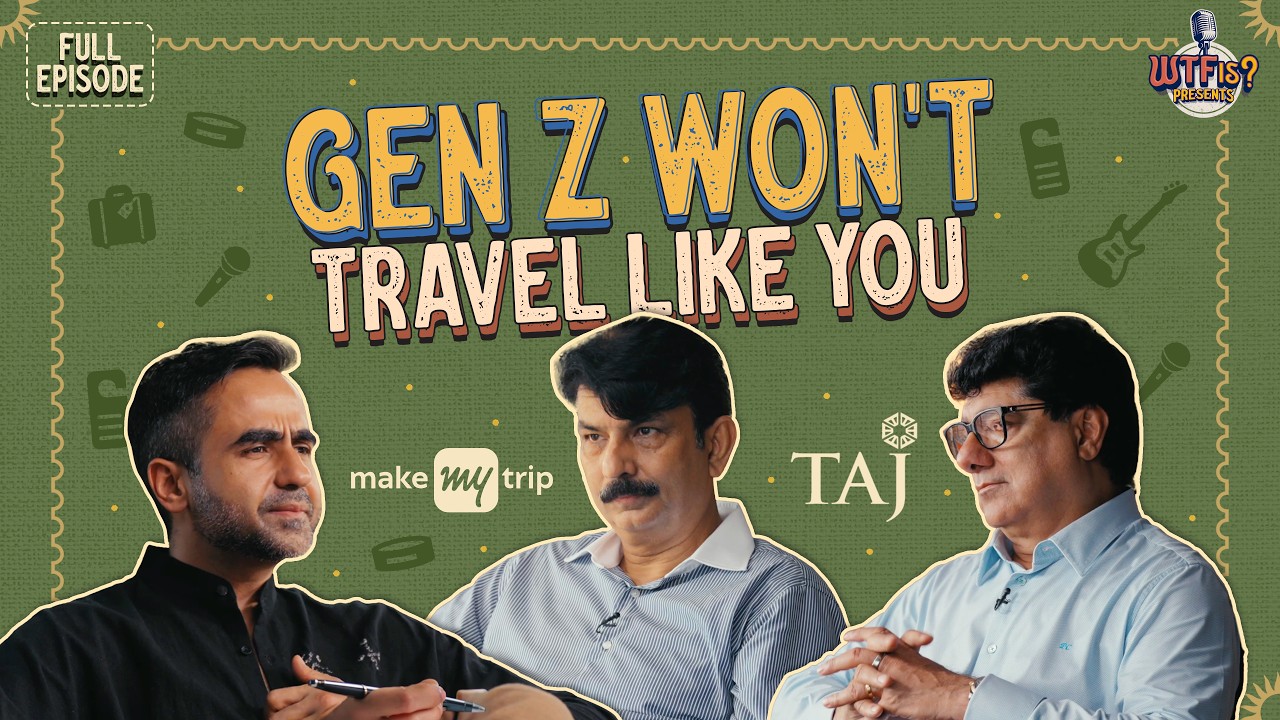
Nikhil Kamath sits down with MakeMyTrip co-founder Rajesh Magow and IHCL (Taj) MD and CEO Puneet Chhatwal, joined by founders Sidharth Gupta of Treebo, Amit Damani of StayVista, Sandhya Chandrasekharayya of Indiahikes and Bhaveeka Bakshi of Boketto Travels, to explain the business of Indian travel. The conversation covers why booking direct is not cheaper under rate parity, why boutique hotels are often better built by outsiders than hoteliers, how AI splits hospitality between automated budget stays and human premium service, and why voice booking could unlock tier-three India. They then take on the big question: why only ten million foreign tourists visit a country with more than forty UNESCO sites, what went wrong in Goa, why tourism being a state subject is the bottleneck, and the playbook to reach a hundred million tourists. The founders add the ground view: group-celebration homestays, twenty-five to fifty room hotels for tier-two and tier-three cities, membership clubs and Gen Z's shift to spiritual, cultural and event travel. FULL COVERAGE: the captions appear to cover the entire episode. All figures and claims are the speakers' own, not independently verified. Sponsor: none stated in the episode description. Nothing here is financial or business advice.
Key Takeaways
Booking direct is not cheaper - rate parity decides it
Rajesh Magow explains that rates are mostly the same across hotel websites and OTAs, so MakeMyTrip competes on selection, deals struck hotel by hotel and the full trip experience rather than undercutting on price.
Boutique hotels are better built by outsiders
Puneet Chhatwal argues it is very powerful when a hotel is built by a non-hotelier, citing Citizen M, started by the man who sold the Mexx fashion brand, and 25hours; Nikhil adds that MakeMyTrip's own founding team had almost nobody from travel, which brought fresh perspective.
AI splits hospitality in two
The panel's shared view: budget and affordable stays become more automated while premium stays human and handmade; customer-data personalization still fails at basics like remembering you switched from coffee to tea.
Robots are a social question in India, not just a margin question
Asked about robots in hotels, Puneet's answer is no: with a young population, either robots help people find jobs or they should not replace human beings, and service would be lost; kiosks and robots will still replace first-level automation like airport self-service.
Ten million foreign tourists is a policy failure, not a product failure
India has more than forty UNESCO sites, but Incredible India has not really happened for a while, cleanliness at monuments is uneven, last-mile links like the Havelock ferry force overnight stops, and tourism being a state subject lets projects fall between the cracks.
Domestic travellers replaced foreign mass tourism in Goa
Puneet notes Indians' ability to pay more in Goa went up, so Indians replaced the mass tourism from abroad - which he calls good for destinations, since quality and quantity have to balance.
Gen Z travels for meaning and events, not itineraries
The founders describe a shift to spiritual retreats, cultural travel, concerts, IPL games and festivals from Ziro to Tomatina, while StayVista sees about 20 percent of bookings for non-family group stays that need a full ecosystem of decor, catering and bartending.
The Conversation Breakdown
Booking direct is not cheaper - rate parity decides it
⏱ Untimed topicRajesh Magow explains that rates are mostly the same across hotel websites and OTAs, so MakeMyTrip competes on selection, deals struck hotel by hotel and the full trip experience rather than undercutting on price.
Boutique hotels are better built by outsiders
⏱ Untimed topicPuneet Chhatwal argues it is very powerful when a hotel is built by a non-hotelier, citing Citizen M, started by the man who sold the Mexx fashion brand, and 25hours; Nikhil adds that MakeMyTrip's own founding team had almost nobody from travel, which brought fresh perspective.
AI splits hospitality in two
⏱ Untimed topicThe panel's shared view: budget and affordable stays become more automated while premium stays human and handmade; customer-data personalization still fails at basics like remembering you switched from coffee to tea.
Robots are a social question in India, not just a margin question
⏱ Untimed topicAsked about robots in hotels, Puneet's answer is no: with a young population, either robots help people find jobs or they should not replace human beings, and service would be lost; kiosks and robots will still replace first-level automation like airport self-service.
Ten million foreign tourists is a policy failure, not a product failure
⏱ Untimed topicIndia has more than forty UNESCO sites, but Incredible India has not really happened for a while, cleanliness at monuments is uneven, last-mile links like the Havelock ferry force overnight stops, and tourism being a state subject lets projects fall between the cracks.
Domestic travellers replaced foreign mass tourism in Goa
⏱ Untimed topicPuneet notes Indians' ability to pay more in Goa went up, so Indians replaced the mass tourism from abroad - which he calls good for destinations, since quality and quantity have to balance.
Gen Z travels for meaning and events, not itineraries
⏱ Untimed topicThe founders describe a shift to spiritual retreats, cultural travel, concerts, IPL games and festivals from Ziro to Tomatina, while StayVista sees about 20 percent of bookings for non-family group stays that need a full ecosystem of decor, catering and bartending.
Core Frameworks & Ideas
Rate parity
When prices are contractually the same across channels, competition moves to selection, trust and experience - the OTA's real moat.
The asset-light brand model
Big hotel brands increasingly lend their name and standards for a royalty while owners hold the real estate - and the brand on the building carries the liability either way.
The 10-to-100 million tourism playbook
Fix the product first (clean sites, last-mile connectivity, functioning airports), then marketing, then central coordination so tourism stops falling between state governments.
Actionable Next Steps
- ✓If you are young and want into travel, look at building or running a small clean hotel of 25 to 50 rooms in a tier-two or tier-three city before another me-too app - Puneet's price point averages around 10,000 rupees a night.
- ✓Treat OTA listings as a working partnership, not a posting: the panel describes tiny teams on both sides reacting to data hotel by hotel.
- ✓Build for the group-celebration booking: a homestay plus decorators, catering and bartending bundled into one experience.
- ✓Watch voice-based booking in tier-three and tier-four India as the wedge that brings the next few hundred million internet users into travel.
Notable Quotes
“Incredible India has not really happened for a while.”
“See, if you go to a wedding, you will have only robots serving you?”
“We see about 20% of our bookings are taking place for non-family stays.”
The One Thing to Remember
A 25-year-old's opportunity in travel is not another app: it is a small, clean hotel in a tier-two city, because India has forty UNESCO sites, ten million foreign tourists and a domestic traveller who now pays more than the foreigners Goa lost.