


The $11B Bet That Voice Will Replace Everything | Mati Staniszewski x Nikhil Kamath | WTF Online
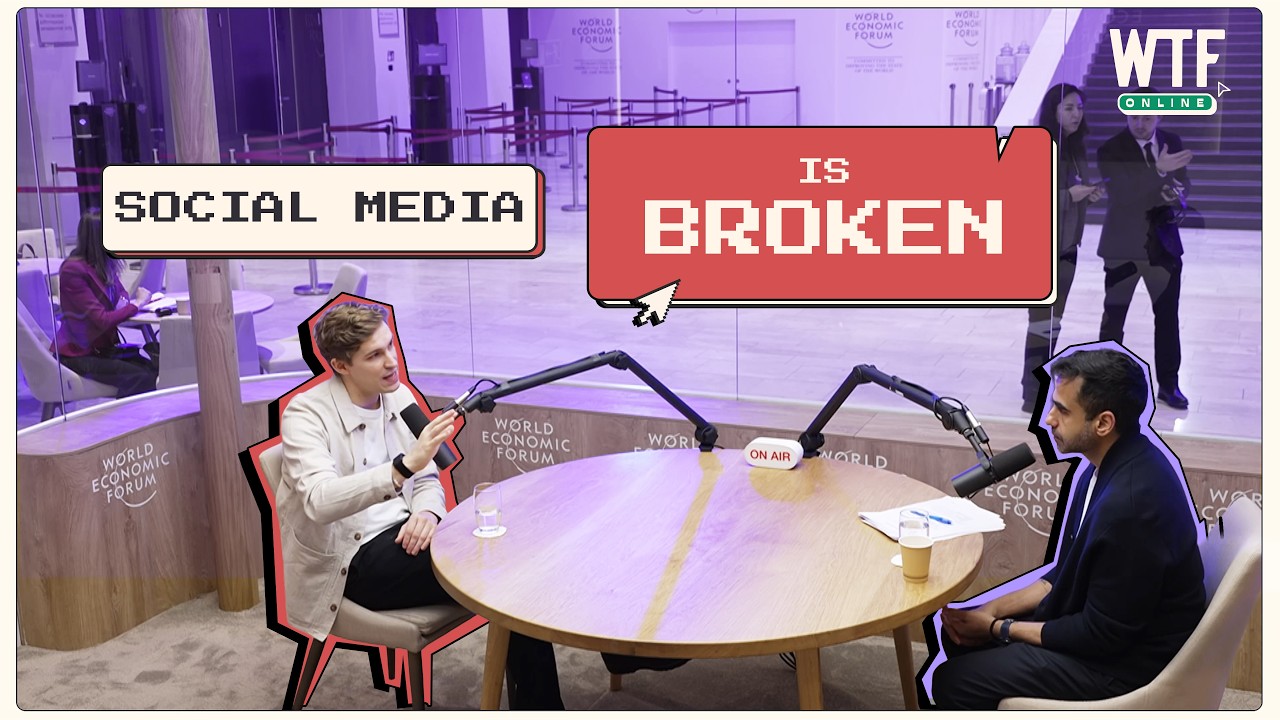
Executive Summary
ElevenLabs' Mati Staniszewski makes the case that voice is the next interface: technology folds into the background and the phone goes back in the pocket. Three things must be true first - voice quality indistinguishable from a human (interruptible, emotional, fast), knowledge and memory integration (your CRM, your history), and a form factor, which he thinks will be behind-ear headphones that can read mouth movements plus a pendant or wristband for capture. On the business side: creative tools and enterprise agents are a 50/50 split; dubbing an hour costs a few dollars automatically, but flagship work like the Lex-Modi podcast goes through human-in-the-loop correction; the voice marketplace has paid out over $11 million to 10,000 voice creators. His advice to founders: the clearest entry point is pairing a lagging domain (automotive, healthcare, e-commerce) with voice agents - start with customer experience, then abstract the solution across the industry. On bubbles: he sees clear revenue under most AI valuations, flags GPU inference providers as his scepticism pocket, and urges founders building on LLM platforms to hedge against the platform one day cannibalising the end product. FULL COVERAGE: captions appear complete. Sponsor: none stated. Not investment advice.
Key Takeaways
The three preconditions for the voice era
Mati's checklist: (1) foundational quality - a voice you can interrupt, with the right emotion, speed and intelligence; (2) knowledge access - integrations, memory, CRM data pulled into the agent; (3) form factor - unsettled, but he bets on behind-ear headphones that can detect mouth movements without you vocalising, plus a capture device like a pendant.
ElevenLabs is two businesses at 50/50
A creative platform (narration, voice-overs, localisation for creators and media companies) and an agents platform (voice agents for customer experience, training and education) - both built on their own foundational audio models so they do not depend on OpenAI for voice.
The Lex-Modi dub and the emotion problem
Automatic dubbing costs a few dollars an hour, but the Lex Fridman x PM Modi podcast used human-in-the-loop verification because every word mattered. Emotion carries across languages, but sentence re-ordering (German's trailing nouns) misplaces a smile - lip reanimation is coming, and small companies are being built on just that.
Voice agents as augmentation, not replacement
Meesho automates ~60,000 support calls a day in Hindi and English; TVS Motor's lead flow lets buyers talk to a voice agent first - both customer satisfaction and lead qualification improved. An agentic 'you' handles the known knowledge base; the human enters when the question goes deeper.
The founder's entry point: lagging domains
The most clear entry point is combining domain expertise in an industry with no recent innovation - automotive, healthcare, e-commerce. Start with one client's customer experience (his BMW example: support calls, then in-car interactive radio), then abstract it across the industry. 500 voice-agent companies are already building in India, 10,000 worldwide.
No bubble - with one scepticism pocket
Mati argues most AI valuations have clear value and revenue underneath, unlike past cycles; his caveat is GPU inference providers built on Nvidia. Research multiples still make sense because one incredible invention pays for the bet.
Hedge the platform you build on
If a platform might take over your space in a few years, be cautious - these platforms have to make money somewhere tomorrow. Build on the model for speed, but diversify and own the integrations, the legacy-system plumbing, the trust and the evaluation layer.
The Conversation Breakdown
Nothing, pendants and the AI-native device
⏱ Untimed topicCarl Pei's hardware bet, the dream of real-time translation earbuds, and the stealth startup building meeting-note pendants.
Three things before the phone goes in the pocket
⏱ Untimed topicHuman-level voice, knowledge and memory, and the unsettled form factor - why Mati picks behind-ear headphones over glasses.
What ElevenLabs actually does
⏱ Untimed topicFoundational audio models plus two platforms, the 50/50 creative-agents split, and why owning research keeps them independent of OpenAI.
Dubbing Modi and the emotion problem
⏱ Untimed topicA few dollars an hour for automatic dubbing, humans in the loop for the Prime Minister, and lip reanimation as the next company-sized opportunity.
Agents at work: Meesho, TVS, MasterClass
⏱ Untimed topic60,000 daily calls in Hindi and English, lead qualification that improved both sides, and learning negotiation from an AI Chris Voss.
Valuations, bubbles and platform risk
⏱ Untimed topicWhy Mati sees revenue under the multiples, the GPU-provider caveat, and the founder's hedge against being cannibalised by the model layer.
Nikhil's social media thought experiment
⏱ Untimed topicA verified, low-bias network for real discourse, Mati's voice-companion interface idea, and the multipolar-world debate over WhatsApp's moat.
Core Frameworks & Ideas
The Three-Layer Voice Stack
Evaluate any voice product across quality (human-level interaction), knowledge (integrations and memory) and form factor (where the agent physically lives) - a weakness in any layer blocks mainstream adoption.
Domain + Interface
The clearest founder entry point: pair deep expertise in a lagging industry with the new interface. The model is the starting point; the moat is the deployment work - legacy integrations, telephony, evaluations, trust.
Augment, Then Replace
Deploy agents as an augmentation of an existing flow first (a voice option beside the lead form, an AI tutor beside the course): both conversion and satisfaction improve, and the human still handles what lies outside the knowledge base.
Actionable Next Steps
- ✓Founders: list industries you know deeply that have seen no interface innovation in a decade - then prototype one voice agent for its most repetitive conversation (support, booking, qualification).
- ✓If you produce content, cost out dubbing one episode into Hindi and Spanish automatically, then add human review only where every word matters.
- ✓Product teams: add a voice-agent option to one existing form or support flow and measure completion and satisfaction against the old path.
- ✓If you build on a foundation model, write down your hedge: what happens the day the platform ships your feature - and which integrations or data would still be yours.
Notable Quotes
“the most clear entry point is combining a domain expertise in one of the domains that you know well or you want to know well and learn quickly.”
“Because these platforms have to make money somewhere tomorrow.”
“the most valuable part was kind of learning how to learn.”
The One Thing to Remember
Voice wins when the technology disappears: once a voice agent sounds human, knows your context and lives in your ear, the phone goes back in the pocket - and the companies that get there combine deep domain knowledge with the interface, not just the model.