


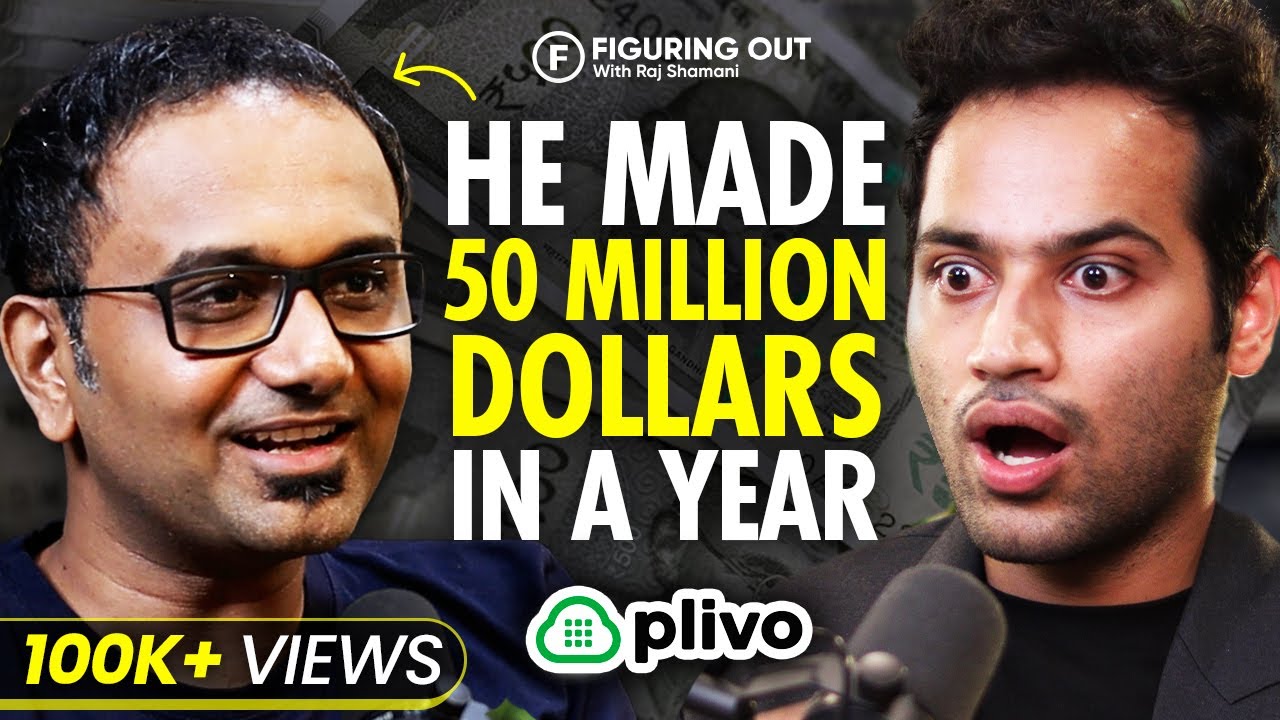
EXPOSING Startups & VC Money Secrets - Plivo Founder Venky | FO 118 - Raj Shamani
Executive Summary
A Figuring Out with Raj Shamani conversation with Venky, founder of Plivo, a phone masking and communications company, about small opportunities in India, how venture capital and corporate money change competition, and examples such as Zudio and diapers. The caption has no speaker labels or punctuation, so claims are attributed to the host or the guest as best the text allows. PARTIAL COVERAGE: the episode runs about 56 minutes and the available caption text is cut off near the end, so the final minutes are not covered. Economic figures, including remarks about China's GDP and India's growth, are the speakers' opinions and are unverified. This is a summary, not financial advice.
Key Takeaways
Phone masking
The host explains that delivery apps call you from masked numbers, and says Plivo is in phone masking.
Small opportunities
The host says there are many small opportunities in India that normal people do not see, which can grow into big businesses.
India's outlook
They discuss India as optimistic for the next five to seven years, with a young democracy, and the host says the World Bank has projected a larger economy by 2032.
What VC money does
The guest says venture capital puts a small company on a level field with a conglomerate that has hundreds of crores to spend.
Zudio
He says Tata's Zudio opened good stores for a year and focused on supply chain, and credits the Tata balance sheet, not only execution.
Diapers
He says a Japanese brand lost 100 to 150 crore a year for six years on brand building in India to win share against Pampers and Huggies.
Capital efficiency
He says most successful startups raised enough capital but not too much, and that SoftBank-style large rounds may give way to smaller cheques across more companies.
The Conversation Breakdown
Phone masking
⏱ Untimed topicThe host explains that delivery apps call you from masked numbers, and says Plivo is in phone masking.
Small opportunities
⏱ Untimed topicThe host says there are many small opportunities in India that normal people do not see, which can grow into big businesses.
India's outlook
⏱ Untimed topicThey discuss India as optimistic for the next five to seven years, with a young democracy, and the host says the World Bank has projected a larger economy by 2032.
What VC money does
⏱ Untimed topicThe guest says venture capital puts a small company on a level field with a conglomerate that has hundreds of crores to spend.
Zudio
⏱ Untimed topicHe says Tata's Zudio opened good stores for a year and focused on supply chain, and credits the Tata balance sheet, not only execution.
Diapers
⏱ Untimed topicHe says a Japanese brand lost 100 to 150 crore a year for six years on brand building in India to win share against Pampers and Huggies.
Capital efficiency
⏱ Untimed topicHe says most successful startups raised enough capital but not too much, and that SoftBank-style large rounds may give way to smaller cheques across more companies.
Core Frameworks & Ideas
Level playing field - the guest's view of VC
Outside capital lets a small company compete with a conglomerate.
Long runway - the guest's P&G example
Large companies commit to years of spending before profit.
Enough capital, not too much - the guest's view
Raise in steps tied to milestones.
Actionable Next Steps
- ✓List one small, overlooked problem in your market that you could solve.
- ✓Compare how much runway you would need to dominate a category.
- ✓Check how much capital your closest competitors have raised.
- ✓Check the market and GDP figures quoted against public sources.
Notable Quotes
“there have to be more startups dominating certain verticals”
“have raised enough Capital not too much capital”
“I really am optimistic that one day there will be some founder who will come with large chunk of capital and absolutely dominant the market in just a decade”
The One Thing to Remember
The guest says he hopes for a founder who raises a large amount of capital and dominates a market within a decade, as large companies have done.