

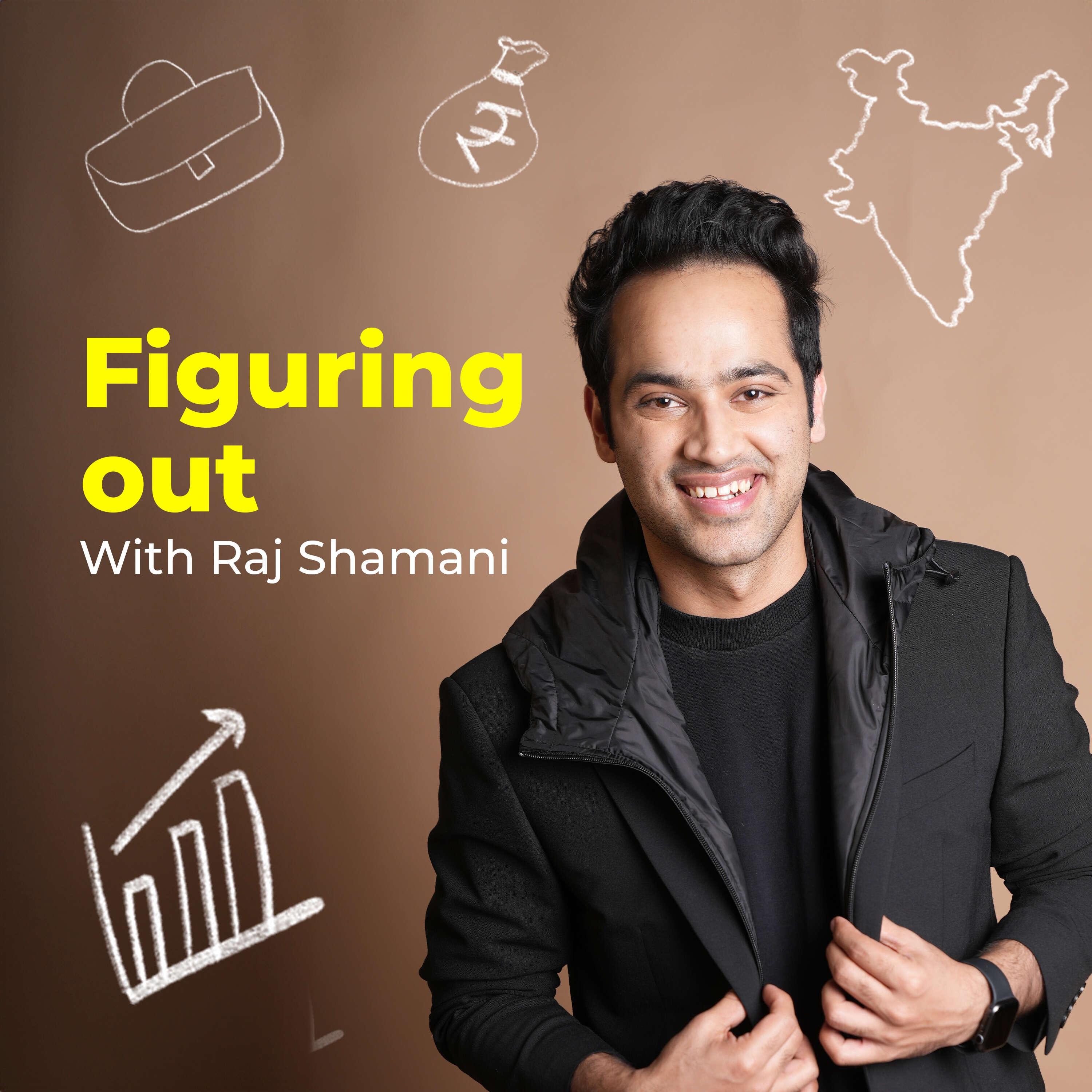
Future Of Gaming In India, Income Of Gamers, E-Sports, GTA 6 - Nitish Mittersain | FO155 Raj Shamani
with Nitish Mittersain

Executive Summary
Nitish Mittersain, founder of Nazara Technologies, traces India's gaming story and his own: coding games at seven on a ZX Spectrum, a dot-com crash that left him with 3 crore of debt at 21, a 2004 mobile-gaming reboot powered by operator billing, landing Sachin Tendulkar as brand ambassador to unlock an Airtel deal, and building 200-250 crore of profit on just 12 crore raised before Rakesh Jhunjhunwala committed roughly 200 crore after one meeting. He maps today's landscape - esports entering the Asian Games and possibly the Olympics, prize pools growing, creators earning crores, India's 2-3 billion dollar market versus America's 150 billion - and argues the US-India lag is over for mobile gaming. He covers GTA 6 and age-gating, why no Indian AAA title exists yet, Nvidia's position, and why Nazara's biggest threat is the pace of technological change. All views and claims are the speakers' own.
Key Takeaways
Gaming is already a real career in India
Mittersain's evidence: esports featured at the Asian Games for the first time and is in Olympic conversation for 2028, Indian tournament prize pools have reached 2-4 crore, top gamers and creators earn crores a year, and the government has set up an AVGC task force to support game development. On the 30% tax on winnings, his view is that it matches any other income and counts as nation building.
Start before the market, survive the crash
He began coding games at seven and founded his company in 1998-99 - ten to twelve years too early. The dot-com crash left him at 21 with 3 crore of borrowed debt (about 30 crore in today's terms). He repaid it all by 2004 through side businesses, then rebooted in gaming just as Nokia's Series 60 phones made mobile gaming possible.
One audacious ask can unlock the whole distribution chain
Unknown and unable to close Airtel for operator billing, he went to Sachin Tendulkar - Airtel's brand ambassador - with a working demo of Sachin's own game character, and got him as brand ambassador at a then-record million-dollar endorsement. The Airtel deal followed immediately, and the CNBC coverage of that deal brought WestBridge Capital calling the next day.
Lean and mean compounds quietly
Between 2007 and 2014 Nazara raised only about 12 crore but produced 200-250 crore of profit, ending with roughly 250 crore in the bank. His operating motto, borrowed from Muhammad Ali: float like a butterfly, sting like a bee - stay asset-light and capitalize hard when opportunity appears.
Capital efficiency is the pitch
Rakesh Jhunjhunwala committed roughly 200 crore after a single 45-minute meeting, drawn to the capital efficiency, the profitability, and the gaming megatrend he could see in his own home. The Kamath brothers invested about 100 crore with no pitch at all - for a listed, liquid, profitable gaming play, Nazara was the only option.
The US-India lag is over for gaming
The old five-year lag from US trends to India has collapsed in gaming, he argues, because the mobile phone is an equalizer and Indian audiences are globally exposed. Esports innovation is now being designed in India and exported to other markets.
India's AAA gap is economics plus design talent
A AAA title costs around 500 crore to build - GTA-scale games run 700-800 crore but can return 7-8 thousand crore. India's home market could not monetize that, and while India had animation, graphics and coding talent, game-design talent had to be trained through global companies' back offices from 2010. He believes an Indian AAA attempt is close.
The Conversation Breakdown
Gaming as a career: Asian Games, Olympics and the 30% question
⏱ Untimed topicThe episode opens on whether gaming is a sustainable career in India: youngsters earning crores, esports debuting at the Asian Games, Olympic talk for 2028, Indian prize pools reaching crores per tournament, and US leagues offering 200-300 crore. On the 30% tax on winnings, Mittersain says it matches any income tax and is a contribution to nation building.
Nazara's portfolio: Kiddopia to Sportskeeda
⏱ Untimed topicNazara is a gaming and sports media platform: Kiddopia's gamified learning for 2-8 year olds (with an organic Tim Cook tweet), World Cricket Championship at roughly a crore of monthly players, and Sportskeeda at about 100 million monthly users and a top-five US ranking - built organically and through acquisitions, with new work in VR, web3 and AI.
Origin: ZX Spectrum, Shammi Kapoor and the dot-com debt
⏱ Untimed topicCoding games in BASIC at seven on a gifted ZX Spectrum, a textile-family childhood, eight lectures attended in five years of BCom, and an unlikely friendship with Shammi Kapoor - he 16, the actor 60 and an early internet pioneer. He founded the company in 1998-99, lost heavily in the dot-com crash, carried 3 crore of debt at 21, and repaid everything by 2004.
The Sachin gambit and the operator-billing era
⏱ Untimed topicThe 2004 reboot rode Nokia phones and cricket games, but charging users meant operator billing - and Airtel would not sign an unknown company. His workaround: pitch Sachin Tendulkar, Airtel's ambassador, with a demo of Sachin's own game character; a record million-dollar endorsement followed, the Airtel deal closed, and the CNBC Young Turks interview about it brought WestBridge Capital to his phone the next day.
2007-2014: 12 crore in, 250 crore out, and the big backers
⏱ Untimed topicThe lean years: only 12 crore raised, 200-250 crore of profit made, about 250 crore in the bank by 2014. Rakesh Jhunjhunwala committed roughly 200 crore after one 45-minute meeting - capital efficiency, profitability, and a megatrend visible in his own kids. The Kamath brothers put in about 100 crore with no pitch: listed, liquid and profitable made Nazara the only gaming option of its kind.
GTA 6, violent games and the influencer question
⏱ Untimed topicOn GTA 6 and violence he argues for movie-style ratings and age-gating over blame, pointing to gaming's positives: early tech exposure for kids, his 90-year-old grandmother competing on word-game leaderboards, stress relief. On creators: influencer careers are short and tied to games that can get banned, so they must diversify and keep evolving; and on Scout's claim that Indian esports is unprofitable he asks 'for whom?', arguing the missing piece is a media-rights ecosystem like cricket's.
AAA economics, Nvidia, monopolies and Nazara's next test
⏱ Untimed topicWhy no Indian AAA yet: 500-crore build costs against a home market that could not monetize them, and a game-design talent gap only now closing after a decade of global back offices. Nvidia makes the GPUs gaming and AI both need, but he expects no tech monopoly to last - Intel gave way to Microsoft, Google faces AI, and he names Amazon the hardest to beat. Nazara's opportunity: India becoming the gaming nation of the world. Its threat: the pace of change in web3, VR and AI, which could remake gaming within three to four years.
Core Frameworks & Ideas
Float like a butterfly, sting like a bee
Mittersain's operating model, borrowed from Muhammad Ali: keep the business asset-light and profitable, move fast and spend hard only when a real opportunity appears. It produced 200-250 crore of profit on 12 crore of capital between 2007 and 2014.
Distribution through borrowed credibility
When a gatekeeper will not sign an unknown company, win the person the gatekeeper already trusts. Sachin Tendulkar's endorsement unlocked Airtel's operator billing; the press coverage of that deal then unlocked institutional investors.
Capital efficiency as the investor magnet
Jhunjhunwala's checklist, as Mittersain tells it: value for capital deployed, profitability over loss-making growth, and a visible megatrend. Building the company to 250 crore bank balance on 12 crore raised ticked all three and closed roughly 200 crore in one meeting.
Player economics vs creator economics
Two distinct gaming incomes: esports athletes earn prize money, sponsorships and endorsements through teams, while gaming influencers earn through streaming and content - overlapping but different businesses, and the influencer's is shorter-lived and game-dependent, requiring constant evolution.
Actionable Next Steps
- ✓Before raising money, audit your capital efficiency: how much output have you built per rupee raised so far?
- ✓If a gatekeeper keeps saying no, list the three people whose endorsement would change their answer - and pitch one of them with a working demo.
- ✓If your income depends on one platform or title, write down your two-year diversification plan this week.
- ✓Parents: replace a blanket gaming ban with age-appropriate ratings and time rules, as you would for movies.
- ✓Track one adjacent technology shift (AI, VR, web3) for an hour a week - the pace-of-change risk applies to every career, not just gaming.
Notable Quotes
“India will become the gaming nation of the world.”
“I pitched my story to him and I managed to get him to agree to become my brand ambassador.”
“Gaming is playing a positive role in one way or the other.”
“I'm thinking I can't.”
“Between 2007 and 2014, I raised only 12 crore. (translated from Hindi)”
“Influencers have to maximize it in the time they have. (translated from Hindi)”
“We should all contribute to nation building. (translated from Hindi)”
The One Thing to Remember
Nazara was built on 12 crore of capital into 250 crore of bank balance - Mittersain's proof that capital efficiency, not capital volume, is what investors like Rakesh Jhunjhunwala actually buy.