


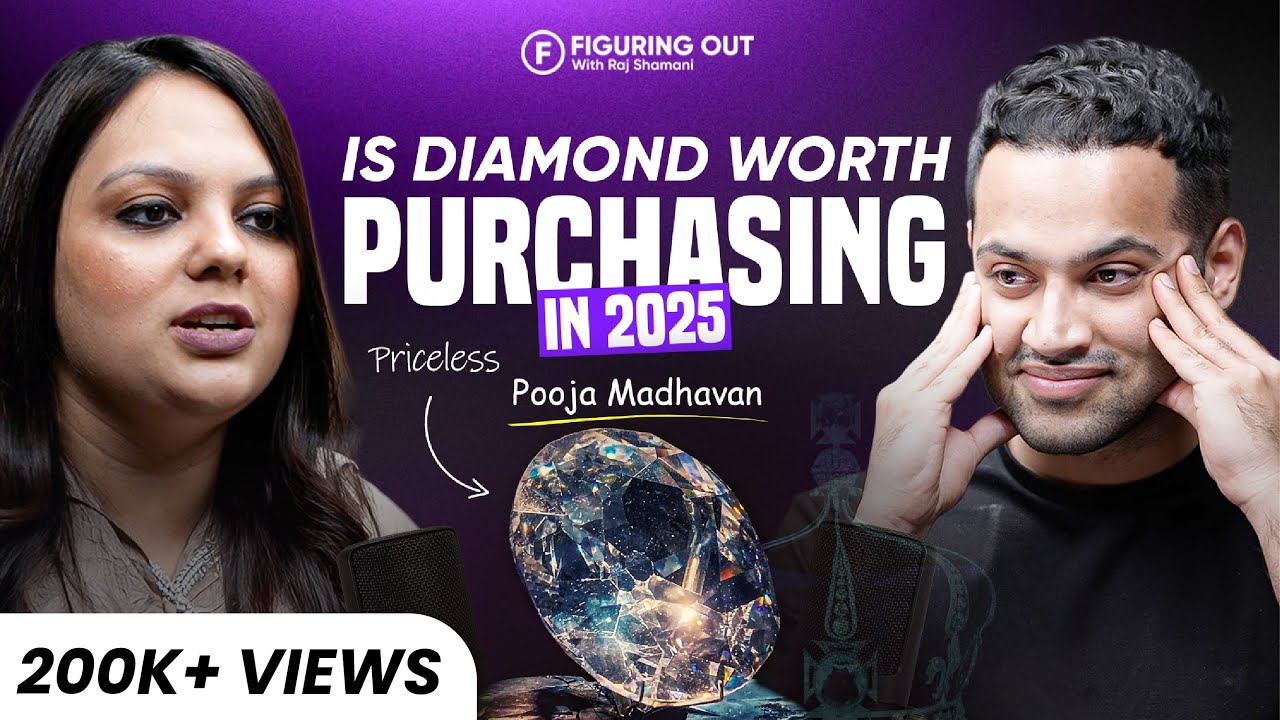
Gold Vs Diamonds, Lab Grown Vs Natural, Business & Investment | Limelight | FO367 Raj Shamani
Executive Summary
Raj Shamani with the founder of Limelight, India's largest lab-grown diamond brand, on why the diamond industry is being rewritten. The economics first: gold is a store of value with transparent, traded pricing - natural diamond never was; there was no transparency and no benchmark, and now 'natural diamond has technology against it.' The De Beers marketing machine gets dissected: the two-month salary rule was a manufactured narrative ('they made whole narrative'), 'diamonds are forever' - but, as she puts it, what they don't say is the damage is forever after: one carat of natural diamond shifts about 250 tons of earth and emits significant carbon. Lab-grown (CVD) diamonds are molecularly identical - same structure, same 57-facet cut, same certification through IGI/SGL - and Limelight's are Type 2A, the pure-carbon category shared with the Kohinoor, free of nitrogen and boron impurities; only about 2% of natural diamonds qualify. The pricing example she walks through: a 1-carat natural solitaire ring around Rs 5 lakh versus a Limelight lab-grown ring at Rs 80,000 - and at Rs 80,000 you get better VS-GH color clarity than the natural average at the price. The customer math is generational: instead of locking funds into one natural diamond ring, buyers take the lab-grown ring and put the Rs 4.2 lakh difference into gold bars. Industry structure: natural diamond's long chain (miner to cutter to wholesaler to retailer) carries corporate overheads; lab-grown compresses the value chain. She is candid about the price crash - growers who bought machines at 800 saw prices fall to 400 and 300 as new capacity rushed in; rationalization of profit is underway, and nobody entering manufacturing today does it casually. Limelight's moat is vertical integration: backed by the Emerald Jewel Industry Group, among Asia's largest lab-grown producers, controlling supply chain, Italian design, finish, buyback and exchange promises. The numbers: Rs 125 crore top line this year, first lab-grown brand profitable within three years, margins 12-24% before tax, franchise model opening to partners. The cultural shift: LV and Prada are entering lab-grown; Oscars attendees wore them as 'sustainable diamonds'; ultra-luxury buyers now purchase 20-carat pieces they could never have attained in natural. Her validation moment: showing Type 2A CVD diamonds to the royal family at Lakshmi Vilas Palace in Baroda - the Maharani's excitement that India produces them. She closes with the new everyday-luxury series (solitaire rings, earrings, pendants designed for post-wedding Diwali pujas, not just lockers) and three customer promises: buyback, exchange, and certified transparency.
Key Takeaways
Gold stores value, diamonds sold a story
Gold has transparent traded pricing; natural diamond never had a benchmark - its value rested on narrative, and technology now undercuts it.
'Forever' marketing hid the damage
The two-month salary rule was manufactured; mined diamonds shift ~250 tons of earth per carat - 'what they don't say is the damage is forever after.'
Identical molecule, one-sixth the price
CVD lab-grown diamonds match natural structure, cut and certification - Rs 80,000 versus Rs 5 lakh for a 1-carat solitaire, at better average clarity.
Type 2A is the purity crown
Limelight's CVD stones are Type 2A - the Kohinoor's pure-carbon category that only ~2% of natural diamonds reach, per the founder.
The crash already happened
Machine economics drove prices from 800 to 300-400 as capacity rushed in; profit rationalization is underway and casual entry into manufacturing is over.
Vertical integration is the moat
Emerald Jewel Industry Group backing gives Limelight supply-chain control, Italian design, and credible buyback/exchange promises - Rs 125 crore top line, profitable in three years.
Luxury is moving, not just mass
LV and Prada entering, Oscars appearances, ultra-luxury buyers taking 20-carat pieces, and royal-family excitement over Indian Type 2A technology.
The Conversation Breakdown
Gold versus diamond economics
⏱ Untimed topicStore of value, pricing transparency, and why natural diamond fails the investment test.
The De Beers narrative machine
⏱ Untimed topicThe salary rule, 'diamonds are forever,' and the environmental cost nobody advertised.
Lab-grown science and Type 2A
⏱ Untimed topicCVD reactors, identical molecular structure, the fifth C, IGI/SGL certification, and Kohinoor-grade purity.
The price ladder and the new buyer
⏱ Untimed topicRs 5 lakh versus Rs 80,000, better clarity at the price, and the invest-the-difference-in-gold mindset.
Industry structure and the price crash
⏱ Untimed topicLong natural value chains versus compressed lab-grown ones, machine economics, and profit rationalization.
Limelight's model and numbers
⏱ Untimed topicVertical integration, Rs 125 crore top line, 12-24% margins, franchise partners, and the three customer promises.
Culture, celebrities and royalty
⏱ Untimed topicLV and Prada's entry, Oscars sustainability statements, ultra-luxury 20-carat buyers, and Baroda's Maharani validating Indian Type 2A.
Core Frameworks & Ideas
Narrative-versus-asset test
Before paying a premium, ask whether the price rests on transparent traded value or on a story - stories collapse when technology replicates the product.
Value-chain compression
Each removed intermediary (miner-cutter-wholesaler-retailer) returns margin to price or brand; compressed chains win affordability battles.
Capacity-rush rationalization
When machine economics invite a capacity rush, prices fall to the new cost curve - enter manufacturing only with a moat, never for supernormal margins alone.
Certified-trust retail
In categories plagued by misinformation, third-party certification plus buyback/exchange promises become the brand's core product.
Actionable Next Steps
- ✓Before buying any solitaire, compare certified lab-grown and natural quotes at the same color-clarity grade - the spread is the narrative premium.
- ✓Treat jewelry purchases as consumption, not investment, unless the asset has transparent traded pricing like gold.
- ✓Ask for IGI or SGL certification and the diamond's type (2A or not) before paying a purity premium.
- ✓If considering a franchise, model 12-24% pre-tax margins and the breeding time she warns about - 'you have to give it some time.'
- ✓Watch the lab-grown price curve before inventory bets; capacity rushes keep compressing prices toward cost.
Notable Quotes
“natural diamond has technology against it”
“what they don't say is the damage is forever after.”
“So today Limelight stands as the largest lab-grown diamond brand in the country.”
“So this year we closed at 125 crores top line.”
The One Thing to Remember
The diamond's moat was never rarity - it was narrative; once technology made an identical, purer, certified stone at one-sixth the price, the only defensible businesses left are brand, design and trust.