


How to protect Your Accounts, Business,Laptop and Phones from getting hacked? : Cyber security Guide
Executive Summary
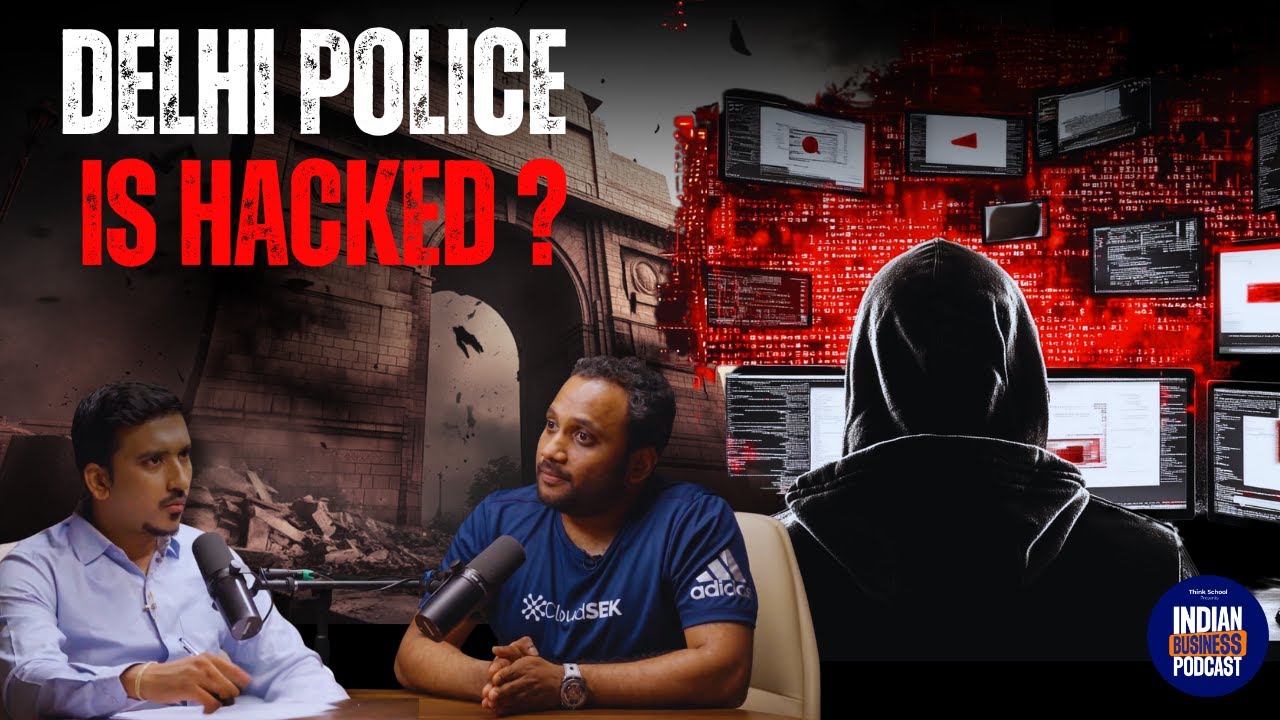
Ganeshprasad sits down with Rahul Sasi, founder of cybersecurity firm CloudSEK, after two creator friends lost their YouTube channels to hackers - and the agenda is a full-stack safety guide for individuals and businesses. The threat map: content creators are a targeted category; session-cookie theft can hand an attacker your authenticated login without any password; hijacked channels get used to push fake Bitcoin and deepfake clips (a fabricated vulgar clip of the host crossed a million views); fake apps (a cloned 'launch pass') and lookalike domains (ad0be for adobe) do the rest. The defense stack for a person: an endpoint security (antivirus) solution, fast software updates (patched holes are why casual drive-by hacks fail), extreme caution with mobile apps (rate them 1-10 for trust and skip anything below five), VPNs for anonymity (they protect identity in transit, not data on the device), and never forwarding calls or SMS to a number a stranger gives you - the trick that hijacked hundreds of WhatsApp accounts. For businesses: supply-chain attacks are the new front (the pager-battery example, ATM vendors, hospital insurance portals with no security), 'there's not one solution or one vendor who could give you a comprehensive coverage,' and the toolkit runs endpoint, cloud, dark-web monitoring, brand monitoring and takedowns. Plus: iPhone vs Android security trade-offs, smart bulbs as a route into your Wi-Fi, Aadhaar photocopies at hotels, and why 'educating people is going to help so much' is the part he doubts.
Key Takeaways
Creators are a targeted category, and passwords aren't the way in
Two creator friends lost their channels the same season; the mechanism is often session-cookie theft - steal the cookie, replay it on another machine, and you hold the authenticated session without ever touching the password. Hijacked audiences then get monetized with fake Bitcoin clips and deepfakes.
The individual stack: endpoint, updates, app discipline, VPN
Rahul's hierarchy for a person: an endpoint security solution (modern antivirus), installing updates fast (patched vulnerabilities are why 'just visiting a website' usually can't hack a current phone), rating every app 1-10 for trust and installing nothing below five, and a VPN for anonymity - knowing it protects your identity in transit, not the data sitting on your device.
The WhatsApp hijack is a phone feature, not an app flaw
Attackers convinced users to dial a code or send an SMS that silently enabled call-forwarding to the attacker's number - the verification call goes to them, and hundreds of WhatsApp accounts were hijacked that way, then used to run more scams. The failure is process awareness, not encryption.
Zero-days are why 'fully patched' still isn't 'safe'
A zero-day is a vulnerability only the attacker knows about - nobody has a patch. Governments and intelligence buyers pay a million dollars where Google pays half that, precisely for these. Defense therefore assumes breach: monitoring and response, not just walls.
Supply-chain attacks: you are your weakest vendor
Airline crew cab portals (delay flights by scrambling pickups), the third-party company managing every bank's ATMs, hospital access to insurance claims portals with no security - attackers enter through whoever holds your critical data with the least protection. His fix: extend security monitoring across your vendor chain.
iPhone vs Android is a trade-off, not a verdict
Apple's walled garden makes cracking in harder, but a successful breach can hide undetected for ages; Android's openness exposes more surface (sideloaded apps make 'your phone like somebody else's phone') but detects and responds differently. The bigger lever either way: updates and app hygiene.
Everything smart is an entry point - even the bulb
A compromised smart bulb on your Wi-Fi can be a beachhead to your phone and every device on the network; smart TVs and their microphone remotes are equally reachable. And at the city scale: twenty hospitals' data on the most valuable patients, or one pilot-pickup portal, is enough to 'drive the entire city of Mumbai crazy.'
The Conversation Breakdown
Why this episode exists
⏱ Untimed topicTwo creator friends lost their YouTube channels, a fake vulgar clip of the host crossed a million views, and the fear crystallized: if you don't care about cybersecurity, you don't care about your data, your messages or your money - whether you run a one-crore or a hundred-crore company.
How the hacks actually work
⏱ Untimed topicCookie theft and session replay, hijacked channels pushing fake Bitcoin clips, lookalike domains (ad0be for adobe), fake apps topping search results, zero-days sold to governments, and why fast updates close the casual drive-by attack.
Protecting yourself: the personal stack
⏱ Untimed topicEndpoint security, update discipline, the 1-10 app trust rating (below five, don't install), what VPNs do and don't protect, the call-forwarding WhatsApp hijack, and iPhone-versus-Android as a genuine trade-off.
Protecting a business: supply chains and critical systems
⏱ Untimed topicThe airline cab portal that could delay flights nationwide, ATM vendors, hospital insurance portals, the pager-battery supply-chain example, and why security spending follows regulation - aviation after 9/11, banking after losses - with hospitals warned as the next target.
The business toolkit and brand attacks
⏱ Untimed topicThe layered stack: endpoint, cloud security, dark-web monitoring for leaked credentials ($5 passwords), brand monitoring against lookalike sites (the fake 'Thing School' store that took customers' money), deepfake-detection tools and the takedown process - 6,000 infringing sites identified in one sweep.
The connected-home frontier and closing advice
⏱ Untimed topicSmart bulbs as Wi-Fi beachheads, TV microphones, Aadhaar photocopies at hotels, fake SIM cards sold to scammers, why awareness alone won't save people, the Instagram-hack postmortem, and the closing frame: brands belong to customers, so their safety is the brand's problem.
Core Frameworks & Ideas
Layered defense, no silver bullet
'There's not one solution or one vendor who could give you a comprehensive coverage.' Security is assembled as layers - endpoint, updates, app hygiene, VPN, monitoring - each covering what the others cannot, because the threat surface keeps moving.
The 1-10 app trust gate
Before installing anything, rate the security behind the app on a 1-10 scale - developer reputation, permissions requested, verification signals - and treat five as the floor. Mobile apps hold access to nearly everything on the phone, making them the most common incident source he sees.
Assume breach, monitor the dark web
Since zero-days make perfect prevention impossible, the posture shifts to detection: watch dark-web markets for your leaked passwords and data (his firm's core service), freeze damage fast, and treat response time as the real security metric.
Actionable Next Steps
- ✓Install an endpoint security (antivirus) solution on your laptop and phone, and turn on automatic updates - patched devices defeat the common drive-by attack.
- ✓Audit your phone's apps with the 1-10 test: uninstall anything below five, and question every permission an app asks for, starting with your camera and microphone.
- ✓Never dial codes or send SMS formats a stranger gives you, and never set call-forwarding you didn't initiate - that is the WhatsApp hijack pattern.
- ✓Business owners: map which vendors hold your critical data (payroll, logistics, customer records) and ask each one what security they actually run - your chain is only as strong as its least-protected link.
- ✓Check whether your passwords have leaked using a dark-web monitoring tool (the guest's company offers a free check), and change any that appear.
Notable Quotes
“people are by fundamental nature afraid of things they don't understand”
“there's not one solution or one vendor who could give you a comprehensive coverage”
“personally don't think asking people and educating people is going to help so much”
“the customers are the custodian of the brand”
The One Thing to Remember
Layered defense beats perfect defense: no single tool or vendor covers you, so stack endpoint protection, fast updates, app discipline and monitoring - and assume every connected device, down to the smart bulb, is an entry point.