


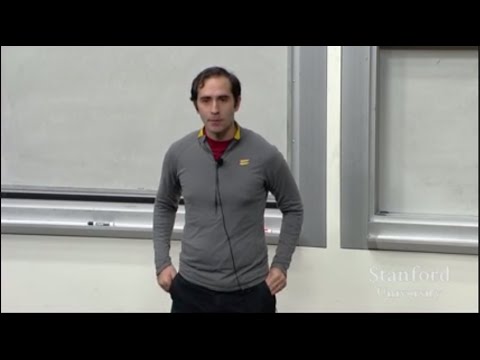
Lecture 16 - How to Run a User Interview (Emmett Shear)
Executive Summary
Emmett Shear explains how conversations with broadcasters helped Twitch move beyond assumptions made at Justin.tv. In this historical Stanford lecture, he demonstrates a user interview, separates current behavior from feature requests and compares existing users, competitors' users and people who have not adopted any service. Notes cover selected public auto-caption passages for the 46-minute lecture, with speaker identity checked against the official Stanford CS183B archive. The date is the November 13, 2014 video upload. Twitch examples, platform comparisons and language-market observations reflect 2014. The captions include audience questions; interview-method claims are Shear's guidance rather than universal research rules.
Key Takeaways
Founders avoid talking to users
His first startup, Kiko Calendar, was built by two non-calendar users who never talked to any, and it was sold on eBay. His second, Justin.tv, used the trick of being its own consumer.
Who is your user
The first question for almost any startup is who your user is and where to find them. He had the class write down five types of people to interview and pick the most important.
Live practice interview
A volunteer was interviewed about taking notes in class, with follow-up questions about how she merges Evernote, Google Docs and paper notes and whether she goes back to them.
Do not ask if a feature is good
The question you cannot ask is whether a feature is good, since people say yes to ideas but do not switch when it is built. Use diagrams and workflows to learn what they do instead.
Talk to non-users
Interviewing only competitors' users keeps you from growing the market. At Twitch, non-streamers said their computers were too slow or they feared giving away strategy, which drove outreach and built-in broadcasting.
Use interactive interviews responsibly
Shear favors live conversations because a follow-up question can uncover what a short answer misses. He recommends asking permission before recording and using the recordings to help colleagues understand the evidence behind a product decision.
Recognize language gaps
Shear says the team found it easier to understand English-speaking users. He describes hiring Korean speakers and working with translators to learn needs in other markets, rather than assuming feedback from one language represents everyone.
The Conversation Breakdown
Founders avoid talking to users
⏱ Untimed topicHis first startup, Kiko Calendar, was built by two non-calendar users who never talked to any, and it was sold on eBay. His second, Justin.tv, used the trick of being its own consumer.
Who is your user
⏱ Untimed topicThe first question for almost any startup is who your user is and where to find them. He had the class write down five types of people to interview and pick the most important.
Live practice interview
⏱ Untimed topicA volunteer was interviewed about taking notes in class, with follow-up questions about how she merges Evernote, Google Docs and paper notes and whether she goes back to them.
Do not ask if a feature is good
⏱ Untimed topicThe question you cannot ask is whether a feature is good, since people say yes to ideas but do not switch when it is built. Use diagrams and workflows to learn what they do instead.
Talk to non-users
⏱ Untimed topicInterviewing only competitors' users keeps you from growing the market. At Twitch, non-streamers said their computers were too slow or they feared giving away strategy, which drove outreach and built-in broadcasting.
Use interactive interviews responsibly
⏱ Untimed topicShear favors live conversations because a follow-up question can uncover what a short answer misses. He recommends asking permission before recording and using the recordings to help colleagues understand the evidence behind a product decision.
Recognize language gaps
⏱ Untimed topicShear says the team found it easier to understand English-speaking users. He describes hiring Korean speakers and working with translators to learn needs in other markets, rather than assuming feedback from one language represents everyone.
Core Frameworks & Ideas
Choose people before questions
Identify whose experience matters to the product. Shear explains why broadcasters, not just viewers, shaped Twitch's research and why the easiest people to contact may not be the right sample.
Behavior before feature approval
Ask how someone currently works, what gets in the way and what they use. A positive answer about a proposed feature does not establish that they would switch to it.
Compare three groups
Existing users reveal friction they tolerate. Competitors' users reveal reasons to choose another service. Non-users reveal barriers to expanding the category itself.
Actionable Next Steps
- ✓List five types of potential users and pick the most important to interview first.
- ✓Ask users about what they do now, not whether your idea is good.
- ✓Interview someone who has never used any product in your category.
- ✓Get permission before recording an interview and agreeing how the recording will be used.
Notable Quotes
“the one question you can't ask is this feature actually good or not”
“You want to talk to people who aren't even trying to use one of these things, yet”
“we were our own consumer”
The One Thing to Remember
the one question you can't ask is this feature actually good or not