


Magnus Carlsen on Retirement, Gukesh, Elon Musk, AI, & India's Future In World Championship
Executive Summary
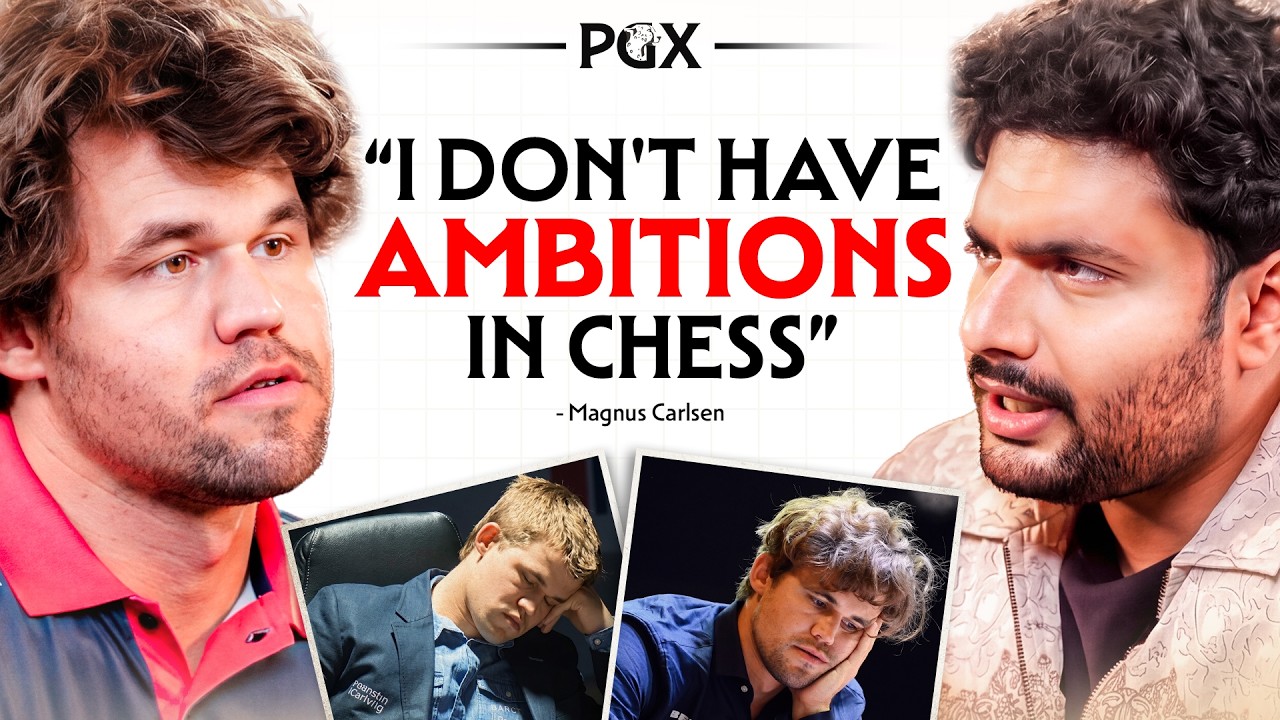
Prakhar Gupta sits with Magnus Carlsen for a blunt assessment of chess after his own era. On the upcoming Gukesh-Sindarov title fight, Carlsen calls Sindarov a significant favorite - better rounded, and coming off a Candidates where everything clicked - while diagnosing Gukesh's visible weakness: he overextends, taking far more risks than positions justify, and with his confidence low he has no safety net of just switching gears. Yet matches stay coin-flippy because the drawing margin in chess is huge. On the young wave (Prag, Arjun, Gukesh, Sindarov, Firouzja): their peaks are already on par with practically everyone, but nobody has set themselves apart, and on anyone matching his 13-year domination 'the smart money is always going to be on no.' His rapid-fire ranking of the greats: Kasparov, then Fischer, then Karpov, Vishy, then Kramnik; his own rivals: Caruana first in classical, then Nepo, Nakamura, Karjakin. He explains his famous intuition as structureless pattern recognition - he knows the right move before he can say why, then deliberately checks his bias against that first instinct. The personal thread is retirement: 'I'm more and more certain that I'm never coming back' to the classical World Championship - he never particularly liked it, felt the frustration as early as 2014 and 2016, asked himself before every match 'should I even play,' and won each time expecting to, so 'every time it was more relief than anything else.' Karjakin came closest to actually taking the title (one repetition away in game 10 in 2016); Caruana 2018 was the most equal match; Vishy's 2014 approach was much better than 2013. He enjoys the trickier stylists - Aronian, Morozevich, Ivanchuk, Kramnik. On Elon Musk's claim that AI will solve chess: we're generally terrible at predicting the future, but in a higher sense chess is already solved - engines already outplay everyone. Off the board: Real Madrid, Haaland scoring for Norway, Messi over Ronaldo on career, and contentment in fatherhood - a champion with no ambitions left in chess, and at peace with it.
Key Takeaways
Sindarov is his title-fight pick
Carlsen calls Sindarov a significant favorite over Gukesh - better rounded, Candidates form peaking - while warning chess's drawing margin keeps any match close.
Gukesh's flaw is overextension
He takes far more chances than positions justify; with confidence low, he lacks the safety net of simply switching gears - dangerous if he falls behind early.
Nobody is the next Carlsen
The young generation's peaks are already elite, but relative parity rules; on a successor to his domination: 'the smart money is always going to be on no.'
Intuition first, then distrust it
He sees the right move before he can explain why, then deliberately checks his bias against that first instinct and evaluates alternatives.
Winning felt like relief, not joy
Favorite in every match except Caruana 2018, each title defense was 'more relief than anything else' - and he asked 'should I even play' before every one.
Karjakin came closest to dethroning him
One move repetition away in game 10 of 2016; Caruana 2018 was the most equal match; Vishy's 2014 approach was far better than 2013.
Chess is 'already solved' in a higher sense
On Musk's AI-solving-chess claim: engines already outplay everyone; full solution is a different magnitude, and we're terrible at predicting the future.
The Conversation Breakdown
Gukesh vs Sindarov: the forecast
⏱ Untimed topicWhy Sindarov is the favorite, Gukesh's overextension and confidence problem, and why short matches stay close anyway.
The young generation: parity, not dominance
⏱ Untimed topicPrag's strengths and time management, the elite peaks of the new wave, and why smart money says no next Carlsen.
How Carlsen's intuition actually works
⏱ Untimed topicStructureless pattern recognition, knowing the move before the reason, and the deliberate bias-check against first instinct.
Retirement: never coming back
⏱ Untimed topicThe frustration that started in 2014-2016, asking 'should I even play' before every match, and relief rather than joy at winning.
The rivals and the rankings
⏱ Untimed topicKarjakin's near-miss, Caruana's equality, the two Vishy matches, and his rapid-fire rankings of the all-time greats.
AI, Elon and a solved game
⏱ Untimed topicMusk's claim, engines' practical supremacy, and why predicting the future of chess is a fool's game.
Life after the crown
⏱ Untimed topicReal Madrid, Haaland for Norway, Messi over Ronaldo, fatherhood, and a champion with no chess ambitions left.
Core Frameworks & Ideas
Intuition plus bias check
Trust pattern-recognition for the first candidate move, then deliberately interrogate that instinct before committing - speed with an error-catch layer.
Drawing-margin match math
In chess the draw compresses skill gaps over short series, so even an 80/20 favorite often faces an even match - plan for variance, not just strength.
Safety-net gearing
Elite performers need the ability to switch gears when confidence drops; Gukesh's lack of a conservative fallback is what makes his style fragile.
Peak vs separation
A generation can reach elite peaks without anyone separating; dominance requires sustained separation, not just high peaks.
Actionable Next Steps
- ✓In your own field: write down your first-instinct answer, then argue against it before deciding - Carlsen's bias check works anywhere.
- ✓Watch Gukesh-Sindarov for the overextension pattern: if Gukesh falls behind early, does he keep pressing or find a safety net?
- ✓Coaches: train a conservative 'gear' alongside a primary style - resilience needs a fallback mode.
- ✓Don't extrapolate dominance from peak performances; look for sustained separation before crowning the next great.
- ✓Treat 'should I even do this' as a valid annual question, not disloyalty - Carlsen asked it before every title defense.
Notable Quotes
“I only know when I sit down at the board, I am better than the other guy.”
“Um I think the smart money is always going to be on no”
“I'm rarely kind of very happy with with my games.”
“So every time every time it was more relief than than anything else.”
The One Thing to Remember
Carlsen's edge was never calculation alone: an intuition built from pattern recognition, deliberately distrusted and checked, plus honest self-assessment - the same objectivity that now tells him his era is over and nobody in the young generation has separated from the pack yet.