


Michael Douglas on Falling Down, Hollywood Power and Why History Keeps Repeating
Executive Summary
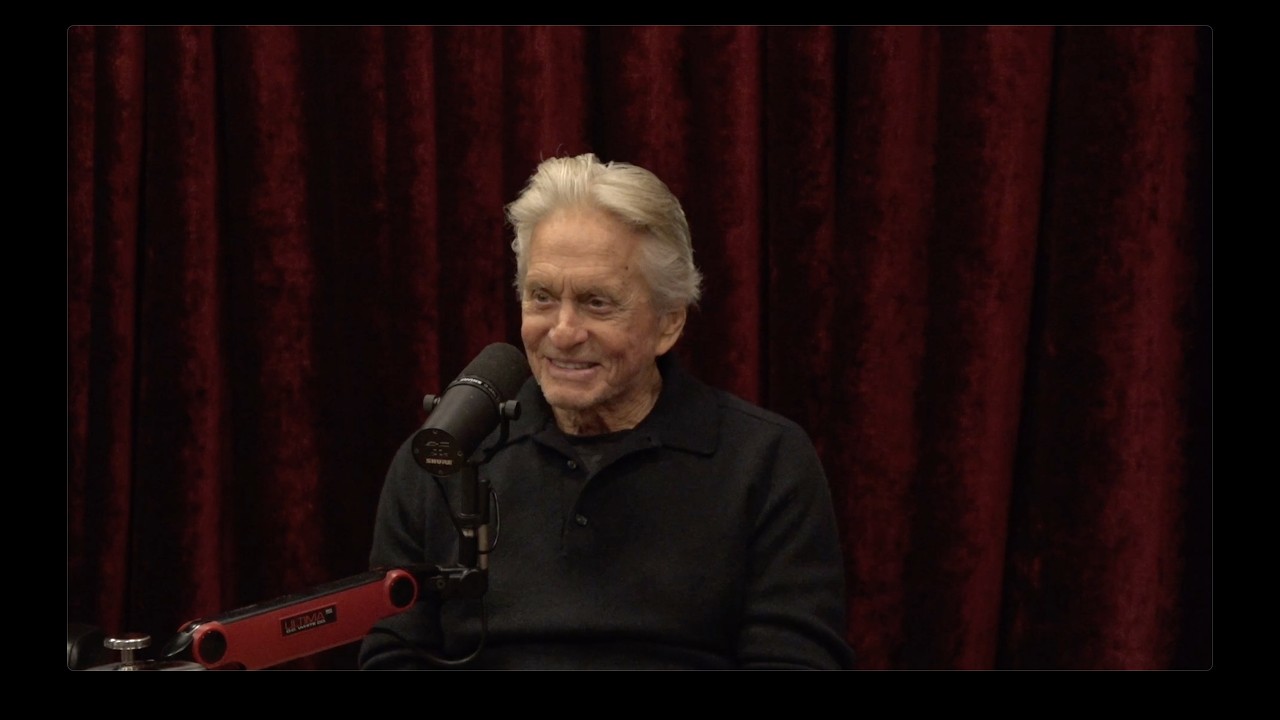
Michael Douglas, the actor and producer behind Wall Street, Fatal Attraction and The Kominsky Method, sits down with Joe Rogan around his book One Helluva Ride. They start with Falling Down and why its anger still lands, then move through Hollywood's old good-guy/bad-guy storytelling, Vietnam, the China Syndrome, and a long, opinionated stretch on policing, immigration enforcement and public trust. Partial-coverage note: this summary draws on the opening portion of a 2h10m episode. Political and policy statements are the speakers' own opinions, not facts verified here, and nothing here is advice.
Key Takeaways
Falling Down still resonates
Douglas and Rogan discuss how the 1993 film's scenes, like the confrontation at the road works, still feel current. Douglas calls it a dark comedy with caricatured characters, and both note how depressing it is that so little has changed in thirty years.
A studio fix for a controversy
Douglas recalls being called to the studio over complaints from a Korean grocers' association about the film's grocery store scene. He says he listened, and weeks later saw staff in his local Korean grocery wearing smile buttons.
Power and resources drive war, per Rogan
Rogan argues that conflicts follow a repeating pattern: leaders, and the people behind them, want control of resources, while a small group affects a very large one. He says he finds some hope in how transparent this has become.
Vietnam and a changed view of government
The pair discuss how, in their telling, public trust in government fell sharply in the 1960s and 70s during Vietnam. Rogan says he thinks more people today see how the war made little sense.
Growing up with white hats and black hats
Douglas describes his father's post-World War II career, where heroes and villains were clear, and says his own generation grew up into gray areas. He says that is why moral choices in his films interest him.
The China Syndrome and speaking up
Douglas raises one of his earliest producing credits, The China Syndrome, as an example of a film that tackled institutional risk. He asks Rogan for his view on how such stories land with audiences.
Policing, enforcement and public trust
In a heated later stretch, Rogan says masked, unidentified federal agents set a worrying precedent and also that cutting police funding was a mistake. These are his political opinions and the note does not verify them.
The Conversation Breakdown
Falling Down, thirty years later
⏱ Untimed topicDouglas and Rogan open on the film's cultural afterlife, its dark humor, and the enduring image of an ordinary man who snaps.
The grocery store scene and its fallout
⏱ Untimed topicDouglas tells the story of the studio meeting with a grocers' association and the aftermath at his neighborhood store.
War, power and resources
⏱ Untimed topicRogan lays out his view that leaders chase resources while ordinary people absorb the cost, and the hosts connect that to Vietnam.
Old Hollywood versus gray areas
⏱ Untimed topicDouglas contrasts his father's era of clear heroes and villains with the moral ambiguity he has explored in his own work.
Policing and enforcement debate
⏱ Untimed topicThe conversation turns to law enforcement, immigration and public accountability, with Rogan sharing strong opinions that are his own.
Core Frameworks & Ideas
Dark comedy as social mirror
Douglas describes Falling Down as a caricatured dark comedy whose exaggeration is what lets audiences recognise real frustration.
Gray-area storytelling
He contrasts black-hat/white-hat films with stories where right and wrong are hard to tell apart.
Transparency as slow progress
Rogan says the world is more transparent than before and expresses hope that society is learning, even if slowly.
Actionable Next Steps
- ✓Rewatch a classic film and ask which of its frustrations still apply today.
- ✓When you hear a strong political claim, separate the speaker's opinion from checkable facts.
- ✓Look for the gray areas in a story before sorting people into heroes and villains.
- ✓Read Douglas's book One Helluva Ride if you want his full account of his career.
Notable Quotes
“I was introduced to Mr. Ho who was chairman of the Korean grocerers association and they said uh we have a real beef here.”
“I wish we learned quicker, but we don't. We learn slowly, but I think we're learning.”
“So I've always been fascinated in this gray area.”
The One Thing to Remember
In Douglas's telling, stories that feel like dark comedy can keep their force for decades because the underlying frustrations with systems and power barely change.