


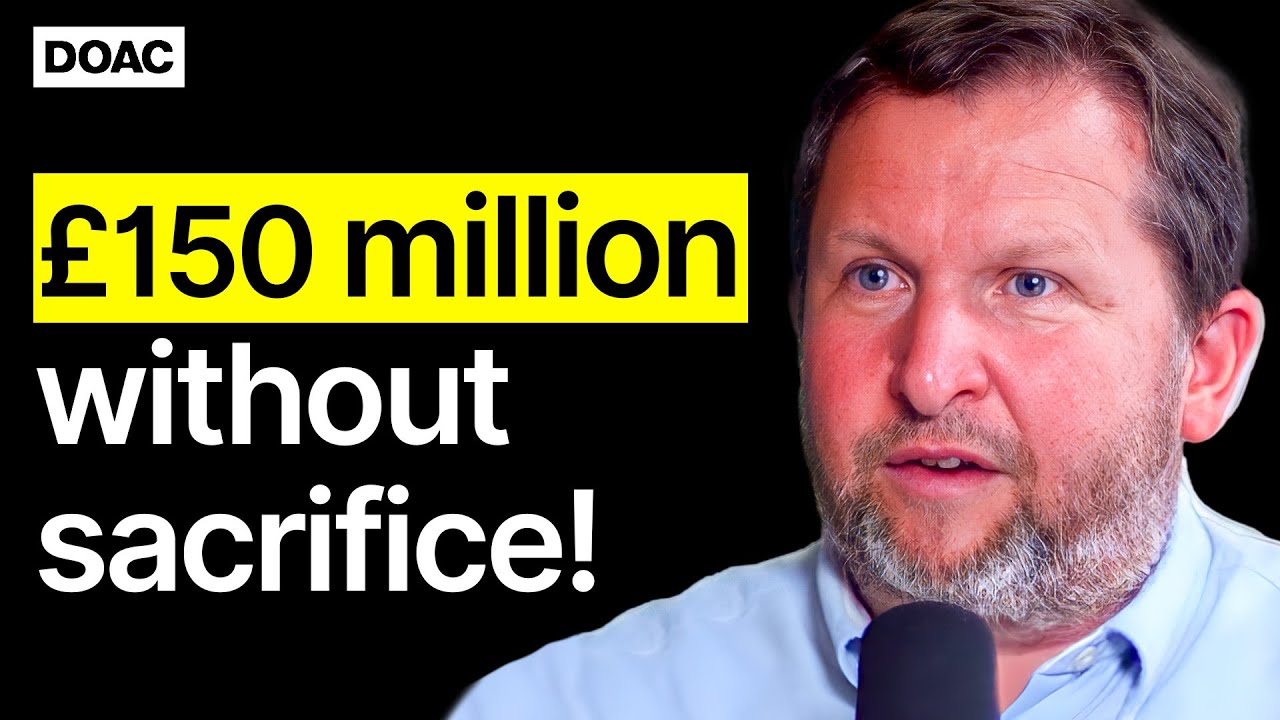
Moonpig Founder: How I Built A $150 Million Business WITHOUT Sacrifice: Nick Jenkins | E97
Executive Summary
Steven Bartlett talks with Moonpig founder Nick Jenkins about finding a product that becomes better online, testing an idea cheaply and staying focused through years of building a business. Jenkins describes personalised cards, early marketing and the difference between wealth and a successful life. These notes cover selected business passages from the first roughly 50,000 characters of the public YouTube auto-captions of episode E97. Later Dragons' Den material is not covered. Captions may contain errors; company figures and practices are the speakers' account at the time, not verified current facts.
Key Takeaways
Eleven years to an overnight success
He says Moonpig, his first proper business, had ups and downs and took 11 years. He confesses he stumbled onto it and now sees it as accidentally a very good business model.
Sell what you can improve online
He saw that online retailers selling identical products compete on price and squeeze margin. He looked for something he could improve online, and personalisation is hard to do in a store because of floor space and equipment. He considered personalised CDs first and is glad he did not do that.
Where the card idea came from
He used to buy cards and tip out the caption to write something funnier, and journalist friends made spoof magazine covers that took a day and a half of design time. Digital printing and the internet made it possible to order a single personalised card.
Viral effect carried the early years
Everything spent on traffic was too expensive. They measured everything, and for every customer they gained about a third of a customer because the recipient sees moonpig.com on the back of a card.
Manual early affiliate deals
He phoned companies, put adverts on their sites, offered commission and sent weekly spreadsheets, with a separate contract for each in a filing cabinet.
Test the central assumption before funding scale
The hosts discuss a gym concept and a cheap physical test before raising money for multiple locations. The shipping-container example is Bartlett's contribution, not a Moonpig practice attributed to Jenkins. The shared point is to collect evidence about the customer's behaviour before buying a full-scale version of the idea.
Focus is part of an investor's decision
Jenkins says he would not invest in a founder running several startups at once. His concern is that a founder can move attention to the business going well and leave another behind. He describes his own strict investment preference; that is not a universal restriction on owning or starting another company.
The Conversation Breakdown
Eleven years to an overnight success
⏱ Untimed topicHe says Moonpig, his first proper business, had ups and downs and took 11 years. He confesses he stumbled onto it and now sees it as accidentally a very good business model.
Sell what you can improve online
⏱ Untimed topicHe saw that online retailers selling identical products compete on price and squeeze margin. He looked for something he could improve online, and personalisation is hard to do in a store because of floor space and equipment. He considered personalised CDs first and is glad he did not do that.
Where the card idea came from
⏱ Untimed topicHe used to buy cards and tip out the caption to write something funnier, and journalist friends made spoof magazine covers that took a day and a half of design time. Digital printing and the internet made it possible to order a single personalised card.
Viral effect carried the early years
⏱ Untimed topicEverything spent on traffic was too expensive. They measured everything, and for every customer they gained about a third of a customer because the recipient sees moonpig.com on the back of a card.
Manual early affiliate deals
⏱ Untimed topicHe phoned companies, put adverts on their sites, offered commission and sent weekly spreadsheets, with a separate contract for each in a filing cabinet.
Test the central assumption before funding scale
⏱ Untimed topicThe hosts discuss a gym concept and a cheap physical test before raising money for multiple locations. The shipping-container example is Bartlett's contribution, not a Moonpig practice attributed to Jenkins. The shared point is to collect evidence about the customer's behaviour before buying a full-scale version of the idea.
Focus is part of an investor's decision
⏱ Untimed topicJenkins says he would not invest in a founder running several startups at once. His concern is that a founder can move attention to the business going well and leave another behind. He describes his own strict investment preference; that is not a universal restriction on owning or starting another company.
Core Frameworks & Ideas
Improve the product online
Look for something the internet lets you do better, not merely sell more cheaply. Jenkins found personalisation more practical online than inside a conventional card shop.
Evidence before scale
Test the assumption that makes the business work with a low-cost version. Use actual behaviour and willingness to pay to decide whether more investment makes sense.
One-business focus
Protect sustained attention for the company you are building. Jenkins explains why focus matters to him as an investor, particularly when the business becomes difficult.
Actionable Next Steps
- ✓Find a product category where you can add value, such as personalisation, rather than compete on price.
- ✓Test your central hypothesis with the cheapest possible version first.
- ✓Pick one business and give it your full focus.
- ✓Choose evidence that would disprove your main business assumption before you run the test.
Notable Quotes
“it took 11 years”
“i wouldn't invest in anybody that had multiple startups”
“you have to be a successful human being”
The One Thing to Remember
it took 11 years