

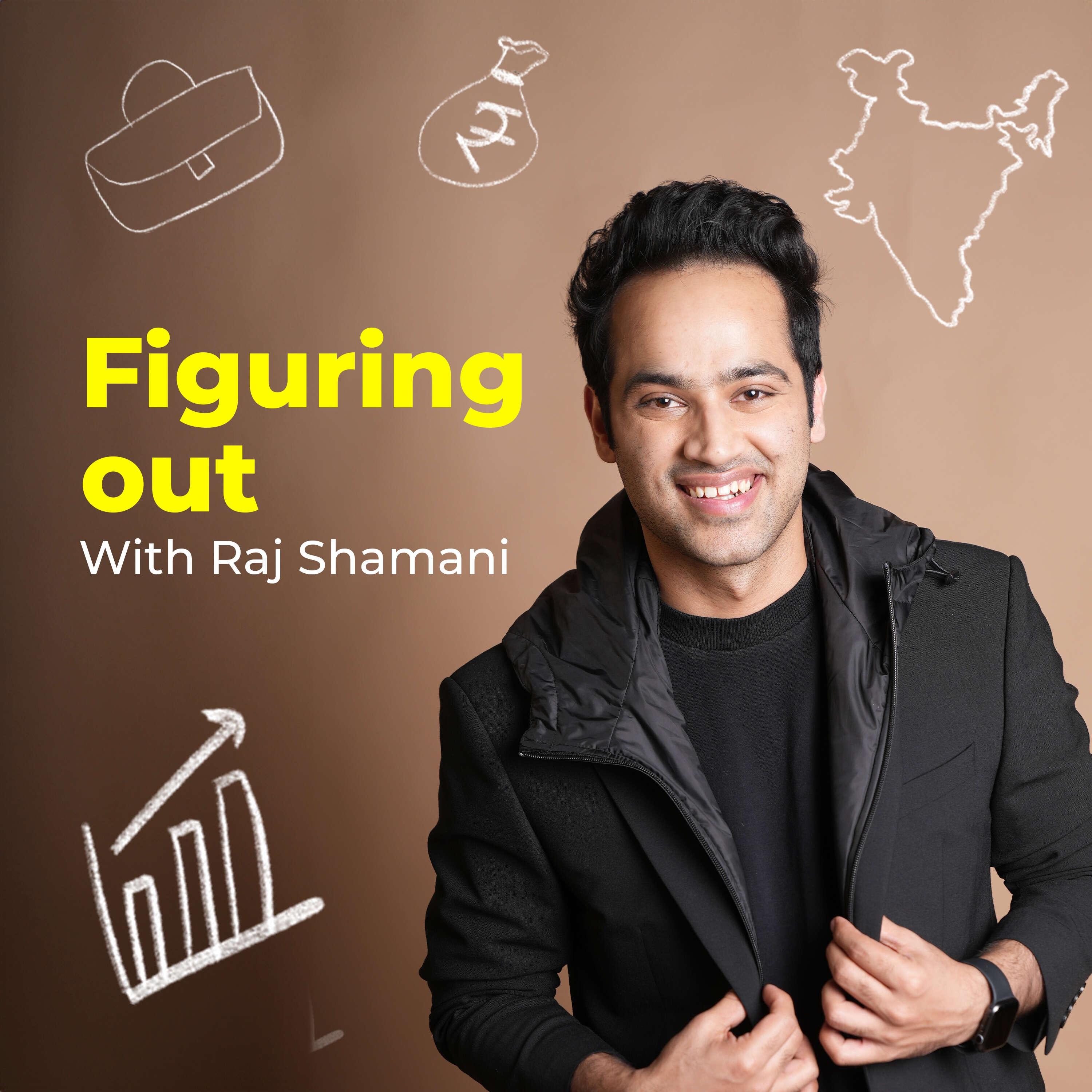
Protecting the President: Security, VIP Threats & ADC Life | Major Rishabh | FO560 Raj Shamani

Executive Summary
As ADC to the President of India, Major Rishabh was the execution arm for everything presidential: if the President wants to speak to the Prime Minister, the ADC gets the other side online first; if she steps out of her bedroom officially, a kilometer around her is sanitized of arms and metal; even her water glass is checked because 'you don't know who has kept it there.' He describes the selection gauntlet - 30 officers shortlisted on career record, five surviving service-headquarters interviews, fourteen days of daily interviews at Rashtrapati Bhavan where they attack your weakest subject for hours until you fix it yourself - and why the job assumes everyone is a potential threat: one rogue handshake can destroy the image of the presidency. From his Para SF life: the 90-day probation, a 72-hour stress phase without food, water or sleep, and a diving tank where you are held under until the moment you are about to give up - the point being to find humans who don't break, because 'the enemy will not be your friend.' His military mindset has four pillars: situational awareness, emotional discipline (a three-second pause before reacting), team trust, and after-action review of everything. He retired for his parents after twelve years of service, served under a no-marriage rule as ADC, and says the one advice nobody should follow is 'be practical': 'no one in life has ever achieved something significant by being practical. They've all been delusional.'
Key Takeaways
Why no one may touch the President
Handshakes and feet-touching are barred because 'you don't know the intentions of the individual.' A slap or a grab means jail for the attacker - but 'the image of the president is destroyed.' Out of millions, it takes one rogue person, and you cannot identify them in advance.
The smallest detail is the biggest threat
Asked for the tiniest thing he cares about, Rishabh answers: the glass the President drinks from. 'You don't know who has kept it there. You don't know something is on the glass or not.' Meals are tested in advance, a chef travels ahead even for banquets, and one kilometer around any venue is sanitized of arms and metal.
ADC selection is a one-vacancy funnel
Services shortlist 20-30 officers on career record, physical standards and confidential reports; headquarters interviews cut it to five; those five spend fourteen days at Rashtrapati Bhavan in daily interviews - his single longest ran two and a half hours - testing knowledge, situational awareness and natural instinct, for one vacancy. Interviewers deliberately hammer your weak subject to see if you fix it unprompted.
President vs Prime Minister security
The President's security rests with police services; the Prime Minister has the specialized SPG (whose personnel also come from police). NSG sits under the home ministry, not defence. Para SF 'provide security to the country,' not to VIPs - though army assets add a layer in active counter-terrorism areas like Srinagar.
Para SF probation is engineered to break you
Roughly 90 days of controlled stress: 70-80 kg loads, food, water and sleep deprivation, and a 72-hour stress phase where difficulty rises every hour. In the diving tank, instructors hold you under until you are at the edge of giving up - 'we are looking for a human who doesn't break,' because a captured soldier must hold out as long as possible.
The four pillars of the military mindset
Situational awareness (what can go wrong, what can I use), emotional discipline (emotions are suppressed, not absent - 'take a pause. 3 seconds... it makes me think and I end up taking a good decision'), team mindset (trust that keeps you from going wrong), and after-action review of everything you do. Fear itself is never removed, only layered over until you act despite it.
The cost of standing next to power
ADCs cannot marry while serving and live apart from family; Rishabh had not lived with his mother since 2014. He read and watched ten hours of material on Raj before the interview - he background-checks everyone, expects betrayal as a contingency, and credits the President's motherly warmth (the umbrella photo was instinct, not protocol) for his closest bond. He is retiring because 'I have a responsibility as a son... I had to make a sacrifice.'
The Conversation Breakdown
What an ADC actually does
⏱ Untimed topicAide-de-camp is a French term: the President's execution arm. 'We are not the planning part... the execution part is solely our responsibility.' Personal side: she says 'helmet' and the ADC already knows the color and design she will pick, activates teams, gets samples and bills. Professional side: if she wants to speak to the Prime Minister, the ADC's office gets the other side online, puts them on hold, then connects her. Nothing reaches the President except through the ADC on duty. New ADCs get an 11-12 page checklist; with time it moves to the back of your head - every step she will take, and what could go wrong at each.
Protocols, tours and the one-kilometer bubble
⏱ Untimed topicEvery event is scripted: how she arrives, who meets her, the PA system, electricity, carpet, rain umbrellas, rehearsed by local teams with video sent to Delhi for approval. On tour, minimum three events a day; from the moment she leaves the car until she is back in it, everything is the ADC's responsibility. The hardest part is liaison - getting India's heterogeneous communities, languages and elder dignitaries aligned without hurting anyone's dignity, all by phone. A minimum one-kilometer area is sanitized ('no arms, no metal'); Republic Day means the entire NDMC area. Even a joke threat is taken seriously; the final call on cancelling rests with the President, but agencies' expertise is respected.
Why distrust is the default setting
⏱ Untimed topic'We look at everyone with the same eyes that anything can go wrong.' Emotional outbursts - people rushing to touch her feet on live television - are the uncontrollable variable. The same lens applies personally: strangers who befriend young ADCs are assumed to want something ('the moment you come to know that he's seeking something out of you, cut it'), seniors track whom junior ADCs meet, and Rishabh admits he trusts no one new until confidence is earned: 'one day the person sitting in front of me will backstab me... I'm prepared for the contingency.'
The uniform, decoded
⏱ Untimed topicWhite in summer, dark blue winter ceremonial, olive-green working dress. The maroon beret: 'we have bled to get this.' Balidan badge: the sacrifice of your soul to the cause, earned after probation. The aiguillette sits on the right shoulder only because he served the senior-most office; posted out, he could not wear it at all. President's Staff India title for military staff of the Rashtrapati Bhavan. Medals mark where you served (75th independence, high altitude, sea, special service); commendations - his from the Vice Chief and Chief of Army Staff, one for leading the best marching contingent at Republic Day 2021 - mark excellence.
Ninety days of breaking points
⏱ Untimed topicPara SF probation: a cut-off world of controlled stress, 'sleepless nights... you hardly sleep.' The stress phase: 72 hours, no rest, no water, no food, difficulty rising hourly - logs on shoulders, 30 kg packs, continuous marching. Then the tank: thirsty enough to drink the diving water on entry, then pushed under repeatedly, resisting until muscles fail and 'I want to breathe or I'll die' - instructors trained to pull you out at the exact give-up moment so water never reaches your lungs. The purpose: find people who hold out, because captivity and interrogation are real scenarios. Observation training too: walk a circular route under load, then answer 'what did you observe' - the helmet behind the tree.
Special forces work and the India posture
⏱ Untimed topicPara SF run cross-border and specialized operations; 4 Para SF, 'the daggers,' are permanently in J&K - he references Operation Mahadev (the Pahalgam response named by the home minister in parliament) and a February cave operation where three hiding terrorists were neutralized. 'Neutralize, eliminate, assimilate - the essence is same.' Surgical strikes, he says, were being done long before they were publicly claimed. On agencies: each is best in its own charter - Marcos in water, IB's input collection impresses him - and on posture: 'from a reactive defense posture we have come down to a proactive and deterrence-based defense posture.'
Fear, mirrors and the child in the uniform
⏱ Untimed topicPinned down up north with his team asking for a call over the radio, his heart pounding, what cut through fear was one thought - I have to go back and see my family - and the call came in under a minute. At NDA, a public-school boy who had never seen boarding school survived three years by nightly visualization: the child who wanted the uniform, seen in the mirror and the black laptop screen. 'Does courage exist without fear? No.' He retired after twelve years because his parents needed him, served under the ADC no-marriage rule, guards one hour of daily solitude, and ends with the advice nobody should follow - 'be practical' - plus his definition: a good man is one who is happy from inside, and 'the situations force people to do wrong. Nobody wants to do wrong.'
Core Frameworks & Ideas
The four pillars of the military mindset
Situational awareness (scan for what can go wrong and what you can use), emotional discipline (suppress the immediate reaction - a 3-4 second pause), team mindset (trust that catches your errors), and after-action review (review everything you do so weaknesses become known and then overcome). Built as layers over fear, not instead of it.
Assume the one rogue actor
Security design starts from the fact that out of millions you cannot identify the one person with intent - so the protocol removes the opportunity entirely (no handshakes, checked glasses, sanitized kilometers) rather than trying to judge people. Useful anywhere the cost of one bad actor exceeds the cost of the rule.
Attack the weakness until it self-corrects
The ADC interview method: find the candidate's weakest subject, question it for hours, then stay silent and watch whether they go home, study, and come back improved. Selection for whether someone takes responsibility for their own gaps, not for polished strengths.
Actionable Next Steps
- ✓Run the three-second pause: before reacting in aggression, happiness or sadness this week, count three seconds and let the thinking catch up - then decide.
- ✓Do one after-action review tonight: pick the day's most important thing you did, write where you fell short, and name what you will do differently next time.
- ✓Pre-mortem your next high-stakes event like an ADC: list every step from 'getting down from the car' to 'back in the car,' and write what could go wrong at each one.
- ✓Take one good quality from one person you interact with today and consciously practice it for a week - his compounding rule: ten people, ten things, even two absorbed is an addition.
Notable Quotes
“The first time I met the president, it felt like my mother is standing in front of me.”
“we look at everyone with the same eyes that anything can go wrong we are always prepared”
“no one in life has ever achieved something significant by being practical. They've all been delusional.”
The One Thing to Remember
Being prepared is the whole mindset: train for the day you are not ready - rehearse the contingencies in peace so that when things go wrong you are not thinking about what can fail, but how to counter it.