

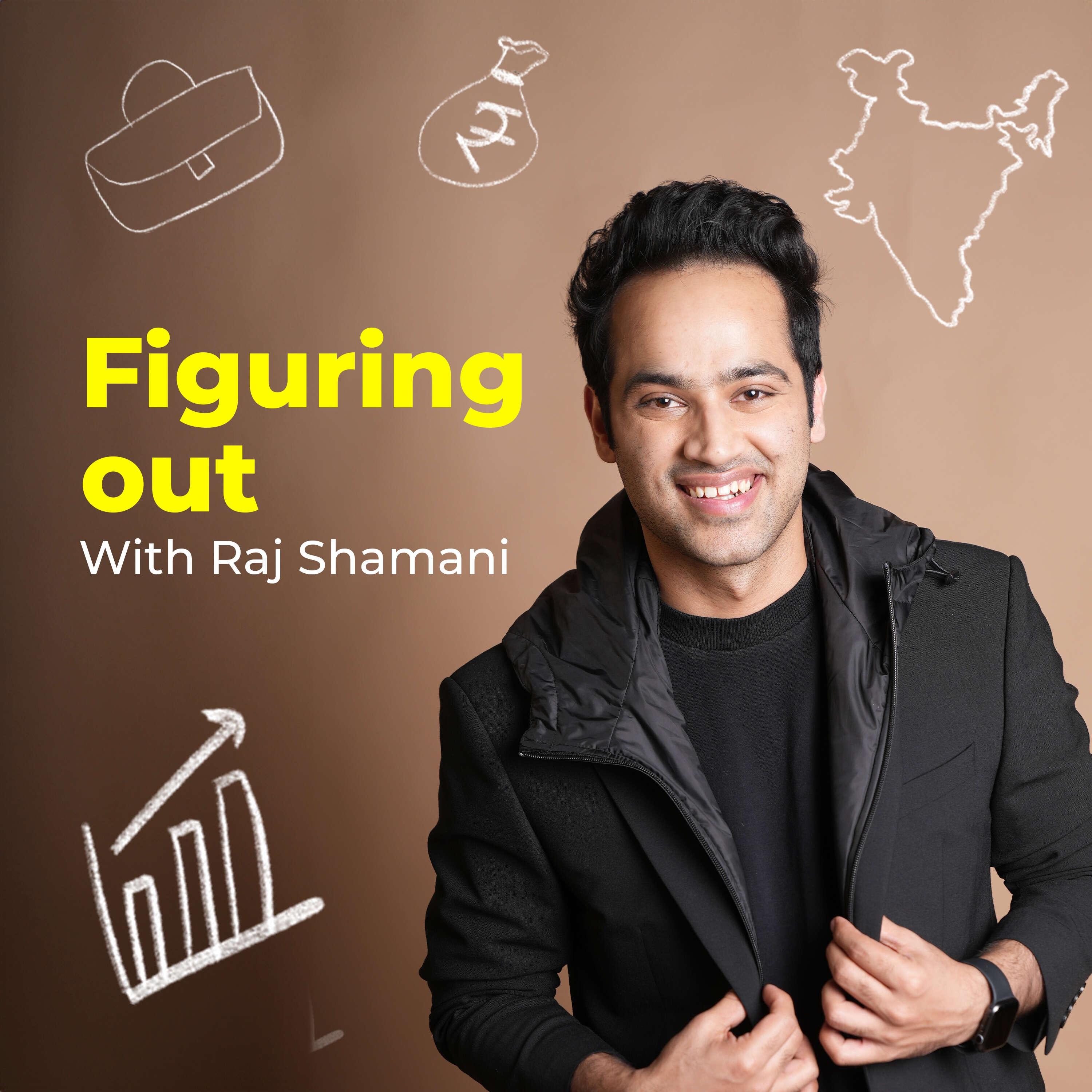
Secrets Of Ultra Rich: Wealth Formula & Billion-Dollar Bets | Srini Sriniwasan | FO533 Raj Shamani
with Srini Sriniwasan

Executive Summary
Srini Sriniwasan, MD of Kotak Alternate Asset Managers, has spent 30 years raising and investing billions of dollars for the world's biggest investors and ultra-rich families in India. In this conversation with Raj Shamani he explains how global capital actually sees India: the three questions every investor asks (why India, what in India, why you), why exiting a listed company is Hotel California, and why a fund's consistency matters more than its best year. He walks through his first 5-crore investor and the 450-crore real estate deal built on 'give it to me in writing', why India's protected industries killed innovation until 1991, why EPFO and LIC barely touch alternate assets while global pension funds buy India's roads and InvITs, the 2020 data-center bet before the AI hype, healthcare at 20% of US cost, and what the ultra-rich actually have that others don't - better information sources, pattern recognition, and respect for how hard money is to make.
Key Takeaways
Global investors ask three questions: why India, what in India, why you
Srini's pitch structure from 30 years of fundraising: the country story, the sector story, then your own track record. Consistency beats peak performance - institutions avoid managers who are one fund and done.
Rupee depreciation quietly eats foreign investors' India returns
His worked example: a 20% rupee gain shrinks to roughly 13% after capital-gains tax and currency depreciation, which is why where the rupee moves is a real factor in whether India allocations deliver.
Listing in India is Hotel California - easy in, nearly impossible out
In the era when an IPO was the only source of capital, companies listed and stayed listed; delisting regulations make exit so difficult that public-market investors simply press a button and leave when global sentiment turns.
Protected industries killed India's incentive to innovate
Until the 1991 reforms, artificial protection from international competition meant Indian industries had no incentive to innovate or invest in the future - unlike Korea, Taiwan or the Netherlands, whose TSMC, ASML and Samsung became globally concentrated champions.
India's own pools of capital barely invest in India
EPFO and the National Pension System sit mostly in public equity ETFs, LIC is a top-10 global insurer that hardly invests in alternates, and 55% of listed InvITs are foreign-owned - a gap Srini calls the intention-action gap in Indian policy.
Kotak's 2020 data-center bet was a digital-backbone thesis, not an AI bet
Before the AI hype, the logic was Aadhaar, Jan Dhan and digitization generating massive data that needed infrastructure; the same instinct-driven India reading led to a gaming investment that returned over 30%.
The ultra-rich edge is information access and pattern recognition, not insider tips
They meet policymakers and top entrepreneurs, young founders come to them for capital, and they are well traveled - so their instincts and pattern recognition are simply tuned by better inputs, and they deeply understand preserving wealth.
The Conversation Breakdown
How global capital reads India: three questions and the rupee problem
⏱ Untimed topicSrini frames the India pitch as three steps: why India, what in India, why you. He explains relative value - money moves to whichever market is cheapest for its growth - and works through the arithmetic of a 20% Indian return shrinking to about 13% for a foreign investor after tax and rupee depreciation.
Hotel California listings and the exit problem
⏱ Untimed topicWhen IPOs were the only source of capital, startups listed and stayed listed because delisting rules make exit nearly impossible - his Hotel California analogy: you can check in any time you like, but you can never check out. Public market investors, by contrast, exit at the press of a button when sentiment turns.
Policy risk, overnight bans and reform by crisis
⏱ Untimed topicHe recounts losing a billion dollars to an overnight government ban and waiting three years for an order he was told was normal - yet notes Mahabharata began with gambling, and India always reforms with its back to the wall, as in 1991. His advice: read the reforms, because that is where the next wealth gets made, which is why he welcomes crises.
The first 5-crore cheque and the 450-crore building
⏱ Untimed topicHis first investor was a 5-crore family; the early real estate play bought a fully-approved piece of ground, pre-leased floors to international software companies at 87,000 sq ft per floor, bought the whole building mid-negotiation, and - as a fiduciary - insisted on every commitment in writing before refinancing through lease rental discounting.
Why Korea got Samsung and India got protection
⏱ Untimed topicComparing concentrated national champions - TSMC in Taiwan, ASML in the Netherlands, Novo Nordisk in Denmark, Samsung in Korea (whose citizens donated household gold in a crisis) - he argues India's protected pre-1991 industries had no incentive to innovate, and that today's entrepreneurs also need incubation support, not just VC copies of Amazon and Flipkart.
EPFO, LIC and the missing Indian investor in Indian assets
⏱ Untimed topicIndia's own capital pools sit on the sidelines: EPFO and NPS are confined largely to public equity ETFs despite a 5% alternates allowance, LIC is a top-10 global insurer investing hardly anything in alternates, and 55% of listed InvITs are foreign-owned. He wants tax and regulatory changes so Indians - not just global pension funds buying toll roads - own India's growing-yield infrastructure.
Data centers, healthcare at 20% cost, and how the ultra-rich actually think
⏱ Untimed topicThe 2020 data-center bet rode Aadhaar and Jan Dhan digitization before AI was hot; healthcare is the next economics-shift with cancer care at 20% of US cost and $10 doctor visits foreigners cannot imagine. On the ultra-rich: not insider information but better information sources, travel, pattern recognition, listening (Uday Kotak's memory), execution through problems, a 25-year senior team in a revolving-door industry - and knowing that after about 50 crores, money stops mattering unless vanity takes over. His last word: gut instinct is sometimes better than data.
Core Frameworks & Ideas
Three-gate India pitch
Global capital evaluates in order: why India (country story), what in India (sector), why you (track record) - and at the last gate, consistency of performance beats one spectacular fund.
Relative value rotation
Capital continuously compares markets on price-versus-growth; money leaves an overvalued market for a cheaper one with similar potential, regardless of how good the story is.
Backs-to-the-wall reform cycle
India reforms under crisis, not comfort (1991 being the template); investors who read a crisis as the start of the next reform wave position ahead of the wealth it creates.
Information-edge compounding
The ultra-rich see trends earlier because policymakers, founders and global travel feed them better inputs; tuned pattern recognition - not secret tips - is the actual insider advantage.
Actionable Next Steps
- ✓Ask the three-gate question of your own venture or career: why this market, what in this market, and why you - and make sure the third answer is a consistent track record, not one win.
- ✓Before celebrating a return, net it out: subtract tax and currency or inflation effects to see what you actually earned.
- ✓Map your exit before entry: for any investment or commitment, ask how hard it is to get out, because easy entry with hard exit is the Hotel California trap.
- ✓Read the next crisis as a reform map: list which regulations are likely to change and which sectors those changes would enrich.
- ✓Apply the fiduciary rule: get every verbal commitment that matters in writing before you act on it.
Notable Quotes
“I always welcome a crisis.”
“What is necessary is you are a consistent performer.”
“The evolved ultra-rich understand that they have enough and more”
“The rich understand that. They know it's very difficult to make money.”
“Money doesn't matter. Until you get into vanity.”
“Sometimes that answer is better than data.”
“Here, there is a huge gap between intention and action. (translated from Hindi)”
The One Thing to Remember
One thing to remember: It is not necessary to be the best performing fund - what is necessary is to be a consistent performer, because investors avoid managers who are one fund and done.