

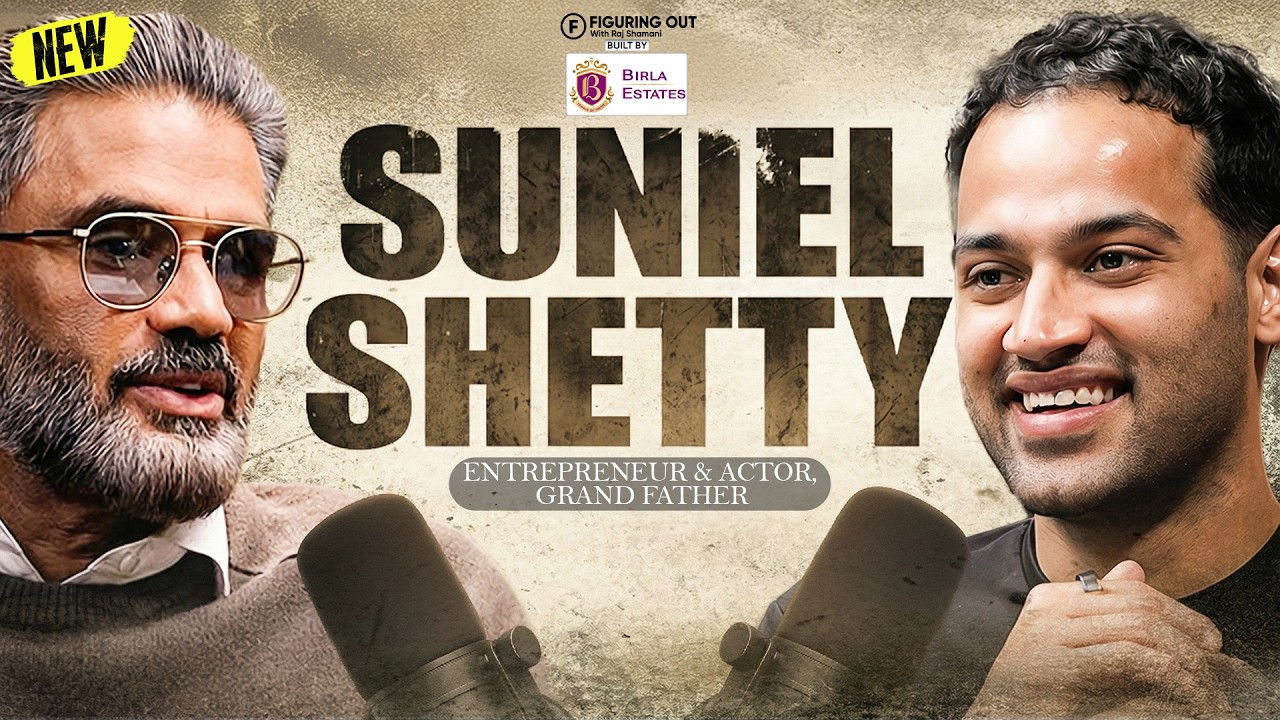
Suniel Shetty on Bollywood’s Reality, Father’s Death, Career & Value of a Home | FO477 Raj Shamani
Executive Summary
Raj Shamani Figuring Out episode, part of the Birla Estates Real Advice series, in which Raj talks with actor and entrepreneur Suniel Shetty, nearly 140 films deep, about Bollywood's realities, loss, and the value of community and home. Shetty's industry read: after 2010, success and failure stopped being about the quality of films and became about marketing and sales, and the consistent blockbuster deliverers are all 55-plus with hundred-film careers. He traces his own pivot from the macho image that typecast him into family comedies, and credits his Tulu community for his protector instinct - migrants who built South Indian restaurants as a super-fast, hygienic, affordable food chain, ran zero-interest chit funds instead of banks, gave each other jobs, and made Mangalore a banking hub through education and mutual support. His most personal passages are about his father: he prayed God would take him before his parents, went numb when his father passed, and still begins and ends every day praying to him - while his weakest point as a father is being unable to handle his children's struggles. PARTIAL COVERAGE: this summary highlights the career and community lessons; the real-estate discussion is not covered. These are Shetty's own views and experiences, not independently verified.
Key Takeaways
Marketing over quality
His post-2010 read: a film's fate is decided by marketing and sales, not craft.
The 55-plus club
Consistent blockbuster actors are the hundred-film veterans, not newcomers.
Breaking the macho mold
He deliberately switched to family comedies to escape typecasting.
The chit fund system
His community pooled money at zero interest - no banks, no institutions.
Super fast food first
South Indian restaurants were affordable, hygienic fast food before the American chains.
Take me first
His nightly prayer was to go before his parents; losing his father left him numb.
Weakest as a father
His children's struggles are the one thing that breaks him.
The Conversation Breakdown
Marketing over quality
⏱ Untimed topicHis post-2010 read: a film's fate is decided by marketing and sales, not craft.
The 55-plus club
⏱ Untimed topicConsistent blockbuster actors are the hundred-film veterans, not newcomers.
Breaking the macho mold
⏱ Untimed topicHe deliberately switched to family comedies to escape typecasting.
The chit fund system
⏱ Untimed topicHis community pooled money at zero interest - no banks, no institutions.
Super fast food first
⏱ Untimed topicSouth Indian restaurants were affordable, hygienic fast food before the American chains.
Take me first
⏱ Untimed topicHis nightly prayer was to go before his parents; losing his father left him numb.
Weakest as a father
⏱ Untimed topicHis children's struggles are the one thing that breaks him.
Core Frameworks & Ideas
Community flywheel - Shetty's model
Shared jobs, pooled capital and free education compound across a migrant community.
Typecast escape - his career move
Change the work you take before the market finishes defining you.
Marketing reality check - his industry rule
Quality is table stakes; distribution decides winners.
Actionable Next Steps
- ✓Ask whether your product loses on quality or on marketing.
- ✓List who your chit fund is - the people who would carry you.
- ✓Do one thing this week that breaks your own typecasting.
- ✓Call the person you pray about and say the unsaid thing.
Notable Quotes
“not necessarily to do with the quality of films”
“God take me before you take my parents”
“it's my community that has given me”
The One Thing to Remember
Suniel Shetty's grounding: films now win on marketing not quality, and everything he is came from a community that carried each other.