


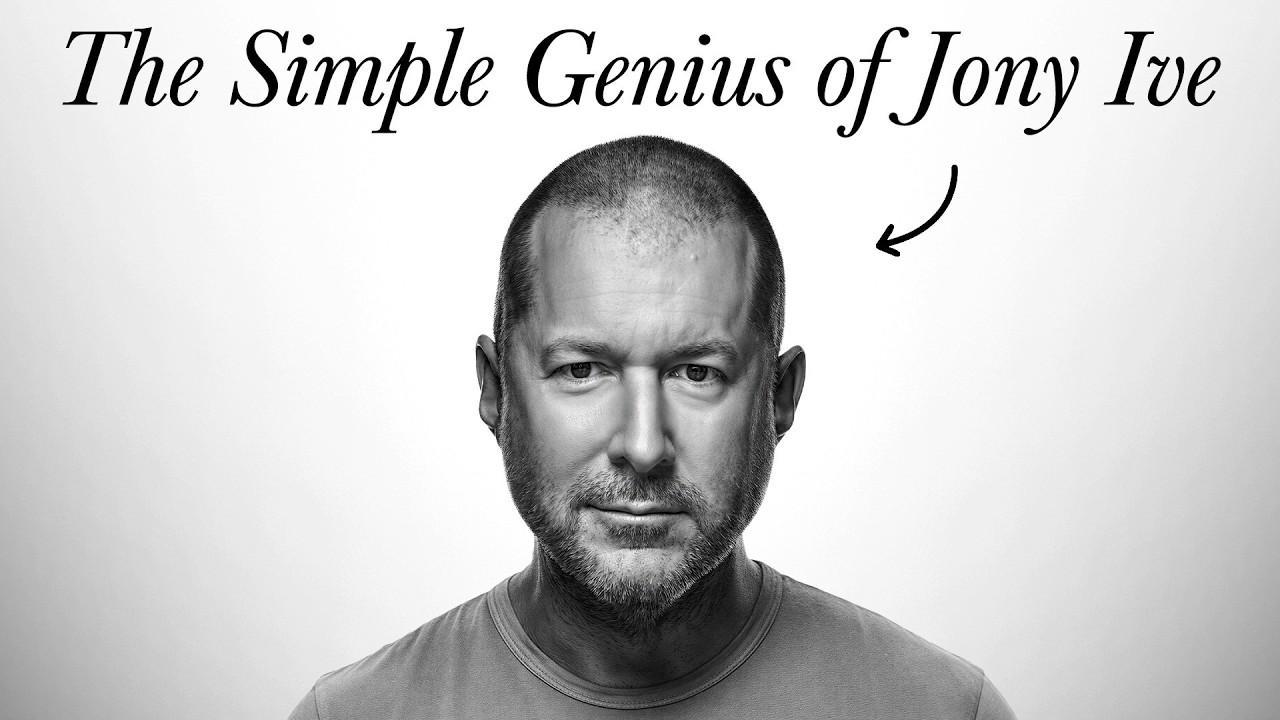
Executive Summary
David Senra reads Leander Kahney's Jony Ive: The Genius Behind Apple's Greatest Products. Selected passages trace Ive's workshop upbringing, design practice, move to Apple and collaboration with Steve Jobs. The discussion links product simplicity with prototyping, clear decisions and manufacturing work. This is a biography-based narrative, not an interview with Ive. Quotes are exact public-caption excerpts read by Senra, not independently authenticated recordings of Ive. These notes cover selected business and design passages from captions that stop partway through the iPhone discussion, not the complete 52:31 video. June 10, 2026 is the verified YouTube upload date; historical details are presented as the episode's account. Sponsor claims and the SARS quarantine anecdote are omitted.
Key Takeaways
Raised in a workshop
Ive's father was a gifted craftsman who gave him unfettered workshop access; Ive says he always understood the beauty of things made by hand.
The leap
After building a design career, he accepted a full-time Apple job at 27 through what he called a reckless sense of faith.
Design was dying
His first task was fixing the Newton-era product line; before Jobs returned, design briefs took four years to reach the market and Apple was set to lose its design talent.
Great products first
When Jobs returned, the philosophy became making great products rather than just making money, which changed every decision; Apple had 40 confusing products on the market and cut the lineup.
Speed at the top
Jobs approved the iMac color range in half an hour; Ive says in most places that decision would have taken months, and Jobs wanted Apple to be the world's fastest company.
Manufacturing is part of design
Senra describes designers spending substantial time with manufacturing teams to turn sketches and prototypes into products that could actually be made. The episode presents implementation as a core design responsibility.
The Conversation Breakdown
Raised in a workshop
⏱ Untimed topicIve's father was a gifted craftsman who gave him unfettered workshop access; Ive says he always understood the beauty of things made by hand.
The leap
⏱ Untimed topicAfter building a design career, he accepted a full-time Apple job at 27 through what he called a reckless sense of faith.
Design was dying
⏱ Untimed topicHis first task was fixing the Newton-era product line; before Jobs returned, design briefs took four years to reach the market and Apple was set to lose its design talent.
Great products first
⏱ Untimed topicWhen Jobs returned, the philosophy became making great products rather than just making money, which changed every decision; Apple had 40 confusing products on the market and cut the lineup.
Speed at the top
⏱ Untimed topicJobs approved the iMac color range in half an hour; Ive says in most places that decision would have taken months, and Jobs wanted Apple to be the world's fastest company.
Manufacturing is part of design
⏱ Untimed topicSenra describes designers spending substantial time with manufacturing teams to turn sketches and prototypes into products that could actually be made. The episode presents implementation as a core design responsibility.
Core Frameworks & Ideas
Simplify by testing what is essential
The opening passage describes repeatedly asking whether a part is needed and whether one part can do several jobs. Reduction aims to make a product easier to build and use, rather than merely look different.
Start with the product story
Ive asks what a product should mean in everyday life and how a person will first encounter it. The Newton lid and iMac handle make the first interaction concrete.
A smaller lineup and a faster decision path
Senra connects Jobs's consumer/professional and portable/desktop grid with clearer priorities. Color approval illustrates how an accountable decision-maker can reduce delay.
Actionable Next Steps
- ✓Choose one product interaction and prototype several ways to make it simpler.
- ✓Map your product lineup against distinct user needs; flag overlapping options that confuse customers.
- ✓Name who makes the final call on one stalled design decision and prepare the evidence they need.
Notable Quotes
“I've always understood the beauty of things made by hand”
“Through some sort of reckless sense of faith, I got to yes.”
“our goal is not just to make money, but to make great products”
The One Thing to Remember
Start with the experience a product should give its user, then make and test the details that deliver it.