


Tobi Lütke — From Snowboard Shop to Billion Dollar Company | The Tim Ferriss Show (Podcast)
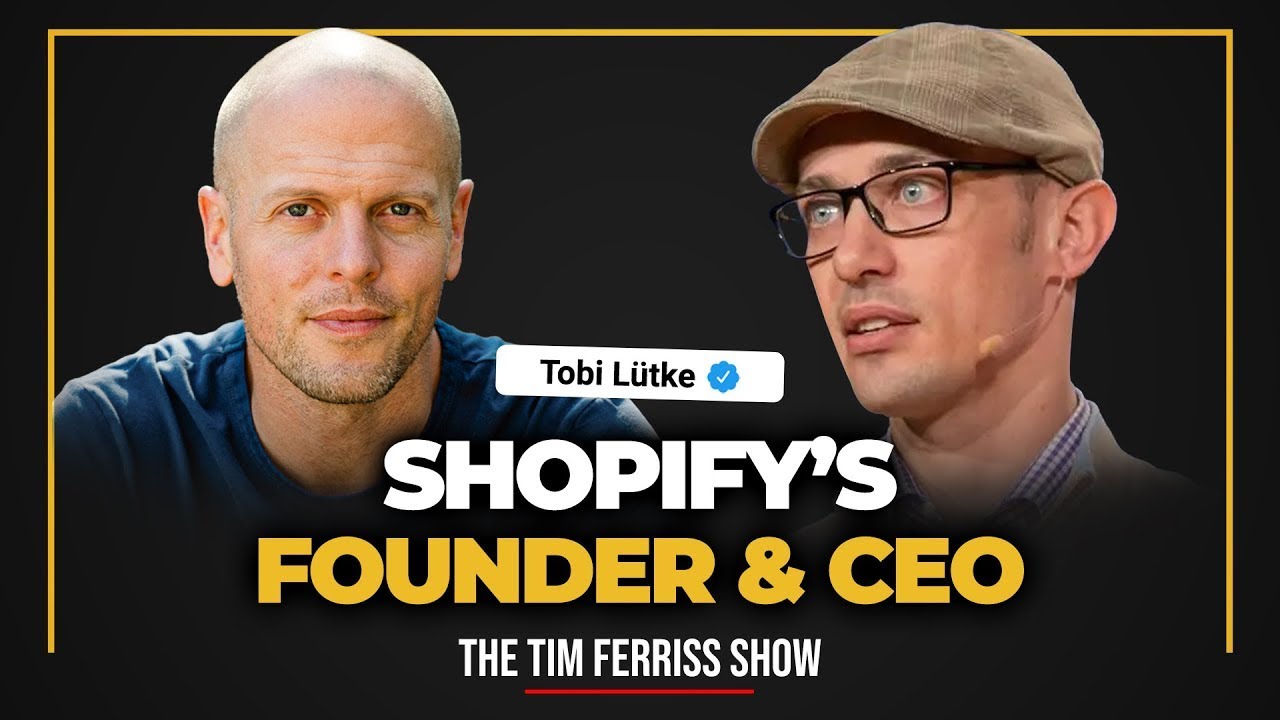
Executive Summary
Tobi Lütke discusses learning beyond programming, expert conversations and taking responsibility as a founder's role changes. Selected official transcript coverage excludes political and clinical claims, financial figures, gaming details and unrelated personal passages. Historical accounts are his recollections, not current Shopify practices. Date is this video's YouTube publication date. Untimed editorial topics are not video chapters. Original transcript: https://tim.blog/2019/02/11/the-tim-ferriss-show-transcripts-tobi-lutke/
Key Takeaways
Do not leave necessary work as a black box
Lütke describes wanting to focus on programming while someone else handled business. As the company changed, that division stopped being sufficient. A project can require learning beyond the work its founder originally intended to do.
Use expert conversations as a map of what to learn
He says he sought places where knowledgeable people discussed technical problems. Unfamiliar terms gave him something to investigate. Listening to experts can reveal the questions and concepts a beginner has not yet thought to ask.
Chip away at unfamiliar language
Lütke describes not initially understanding the conversation and gradually learning enough to follow it. Confusion was a starting point rather than a reason to leave. Break a topic into terms and questions instead of claiming understanding after one exposure.
Choose learning material for the task at hand
He recalls asking people for books when he needed to understand the business side. The choice followed a concrete gap rather than a general wish to read more. Use a real responsibility to decide which subject needs attention next.
Take ownership when the role changes
He recounts searching for a CEO before an investor urged him to try the role himself. This is a particular transition, not a rule that every founder should remain CEO. The useful question is who can carry the responsibility and what they need to learn.
Combine challenge with support for a learner
Lütke describes an apprenticeship mentor giving him a task that felt beyond his current understanding while believing he could do it. A stretch task can develop skill when the situation and support are understood. This is not an invitation to hand a beginner uncontrolled risk.
Do not read success as proof of every choice
He emphasizes contingency in Shopify's path. A successful result does not establish that every earlier decision was right or repeatable. Preserve the difference between a useful lesson and a guarantee drawn from hindsight.
The Conversation Breakdown
Do not leave necessary work as a black box
⏱ Untimed topicLütke describes wanting to focus on programming while someone else handled business. As the company changed, that division stopped being sufficient. A project can require learning beyond the work its founder originally intended to do.
Use expert conversations as a map of what to learn
⏱ Untimed topicHe says he sought places where knowledgeable people discussed technical problems. Unfamiliar terms gave him something to investigate. Listening to experts can reveal the questions and concepts a beginner has not yet thought to ask.
Chip away at unfamiliar language
⏱ Untimed topicLütke describes not initially understanding the conversation and gradually learning enough to follow it. Confusion was a starting point rather than a reason to leave. Break a topic into terms and questions instead of claiming understanding after one exposure.
Choose learning material for the task at hand
⏱ Untimed topicHe recalls asking people for books when he needed to understand the business side. The choice followed a concrete gap rather than a general wish to read more. Use a real responsibility to decide which subject needs attention next.
Take ownership when the role changes
⏱ Untimed topicHe recounts searching for a CEO before an investor urged him to try the role himself. This is a particular transition, not a rule that every founder should remain CEO. The useful question is who can carry the responsibility and what they need to learn.
Combine challenge with support for a learner
⏱ Untimed topicLütke describes an apprenticeship mentor giving him a task that felt beyond his current understanding while believing he could do it. A stretch task can develop skill when the situation and support are understood. This is not an invitation to hand a beginner uncontrolled risk.
Do not read success as proof of every choice
⏱ Untimed topicHe emphasizes contingency in Shopify's path. A successful result does not establish that every earlier decision was right or repeatable. Preserve the difference between a useful lesson and a guarantee drawn from hindsight.
Core Frameworks & Ideas
Black-box check
Identify necessary parts of the project you cannot yet explain.
Expert-language learning
Follow a primary expert discussion and investigate unfamiliar terms.
Supported stretch
Define a learning task with understood limits, help and a review afterward.
Actionable Next Steps
- ✓List one necessary responsibility outside your current specialty.
- ✓Investigate three unfamiliar terms from an expert conversation.
- ✓Choose a learning source for a specific live problem.
- ✓Separate a historical lesson from what chance may have contributed.
Notable Quotes
“I was a programmer. We don’t like business.”
“And then I just don’t understand anything that they’re talking about. But then, I chip away at it, and I would come into the knowledge.”
“Because he thought I could do it.”
The One Thing to Remember
Learn the language of responsibilities the project needs, even when they fall outside your original craft.