

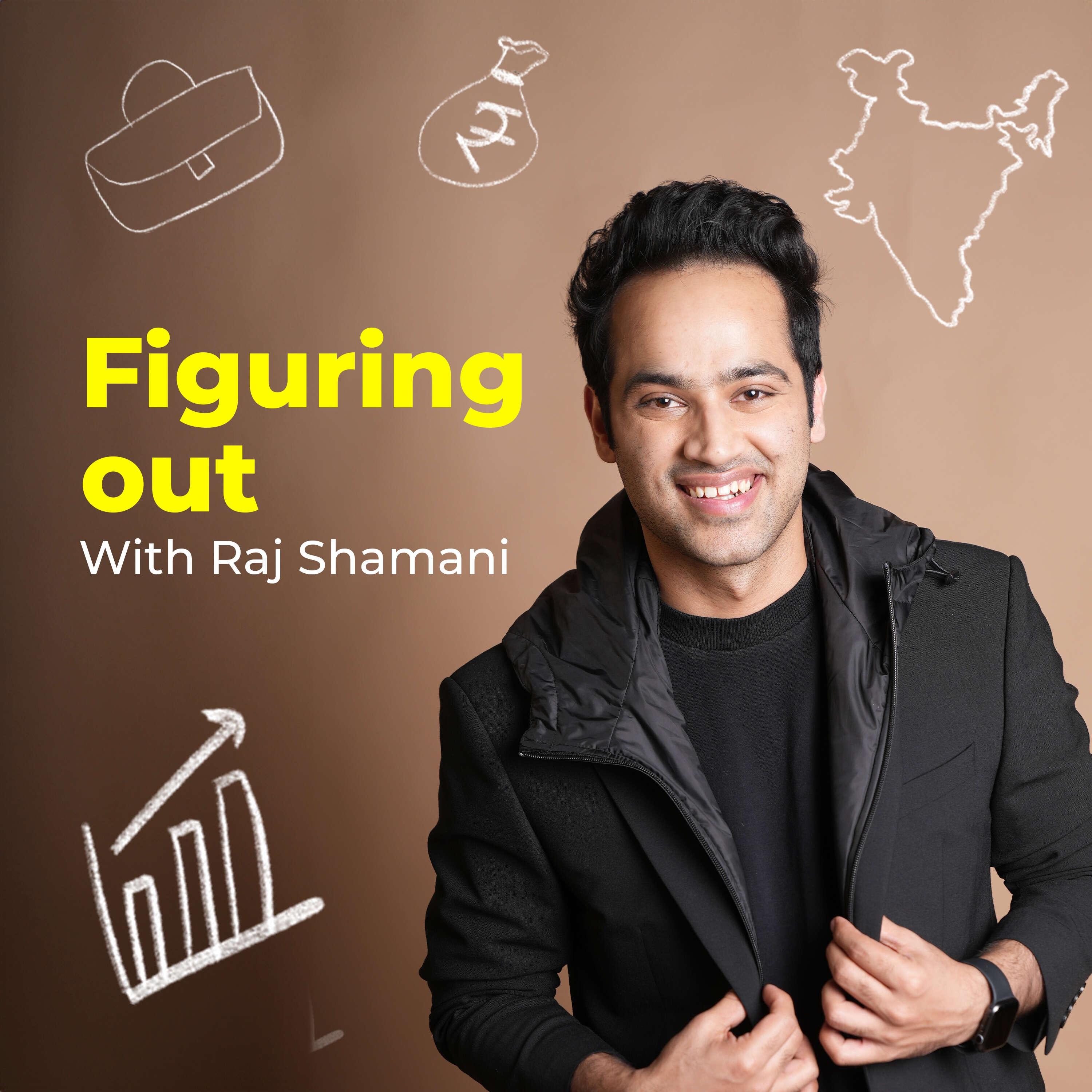
Vikas Divyakirti on Relationships, Money, Fame, Cheating & Social Norms | FO435 Raj Shamani

Executive Summary
Dr. Vikas Divyakirti, educator, author and founder of Drishti IAS, sits with Raj Shamani for a sweeping conversation on love, marriage, money and fame. He explains why the relationships of people at the very top are almost always broken or single, why cheating is far more common than any data will ever show, and why male loneliness is the bigger epidemic. He opens up about growing up in financial scarcity from 17 to 25 and how it left him unable to spend without vigilance even today, why fatherhood is a cultural rather than natural arrangement, how the contraceptive pill in 1961 quietly rewired marriage, and why his public image as an ideal man is only one side of his personality. A rare, honest look at the biology and sociology underneath modern relationships. (Sponsor: Porter.)
Key Takeaways
Extreme success and stable relationships rarely coexist
Divyakirti observes that the relationships of people who reach the very top are almost always broken, or they stay single - relationships tend to survive only at middle levels of achievement, because family structure naturally slows down the total focus that extreme ambition demands.
Cheating is built into evolution and social structure, and data understates it
He argues people cheat because of how humans evolved and how our social structures are built, and that real cheating happens far more than any dataset will ever capture, since almost nobody admits it honestly in surveys.
Male loneliness is the bigger epidemic because men are not expressive
Loneliness is rising worldwide, but male loneliness is considered the larger epidemic: since men do not express themselves, their circle keeps shrinking, while women tend to stay expressive and maintain wider emotional networks.
Perception is a game - and fake perception only survives in small circles
Big film stars do not write their own dialogues and many use teleprompters, yet are called the greatest minds; managing perception works, but a fake perception collapses quickly among the small circle of people who actually know you.
Early financial scarcity leaves a lifelong trauma response around money
Having lived through hard financial terms from about 17 to 25, he cites research that 91% of people report anxiety about money, inability to enjoy wealth and hypervigilance about spending - he still irons his own clothes rather than pay Rs 100-200, even though he could easily afford it.
Fatherhood is a cultural arrangement, not a natural one
In most species - dogs, monkeys, most birds - the father is simply not part of the family; human fathers became family members socially over thousands of years, and are only now becoming emotional parents who cry for their children.
Marriage was redesigned by risk and then by the contraceptive pill
For centuries the biggest danger for a woman was pregnancy outside marriage, which ended her life socially; the first contraceptive arriving in the UK in 1961 removed that risk and quietly changed what marriage, dating and relationships could be.
The Conversation Breakdown
Extreme success and stable relationships rarely coexist
⏱ Untimed topicDivyakirti observes that the relationships of people who reach the very top are almost always broken, or they stay single - relationships tend to survive only at middle levels of achievement, because family structure naturally slows down the total focus that extreme ambition demands.
Cheating is built into evolution and social structure, and data understates it
⏱ Untimed topicHe argues people cheat because of how humans evolved and how our social structures are built, and that real cheating happens far more than any dataset will ever capture, since almost nobody admits it honestly in surveys.
Male loneliness is the bigger epidemic because men are not expressive
⏱ Untimed topicLoneliness is rising worldwide, but male loneliness is considered the larger epidemic: since men do not express themselves, their circle keeps shrinking, while women tend to stay expressive and maintain wider emotional networks.
Perception is a game - and fake perception only survives in small circles
⏱ Untimed topicBig film stars do not write their own dialogues and many use teleprompters, yet are called the greatest minds; managing perception works, but a fake perception collapses quickly among the small circle of people who actually know you.
Early financial scarcity leaves a lifelong trauma response around money
⏱ Untimed topicHaving lived through hard financial terms from about 17 to 25, he cites research that 91% of people report anxiety about money, inability to enjoy wealth and hypervigilance about spending - he still irons his own clothes rather than pay Rs 100-200, even though he could easily afford it.
Fatherhood is a cultural arrangement, not a natural one
⏱ Untimed topicIn most species - dogs, monkeys, most birds - the father is simply not part of the family; human fathers became family members socially over thousands of years, and are only now becoming emotional parents who cry for their children.
Marriage was redesigned by risk and then by the contraceptive pill
⏱ Untimed topicFor centuries the biggest danger for a woman was pregnancy outside marriage, which ended her life socially; the first contraceptive arriving in the UK in 1961 removed that risk and quietly changed what marriage, dating and relationships could be.
Core Frameworks & Ideas
Genetic monogamy vs social monogamy
Divyakirti's distinction between parenting exclusively with one partner (genetic monogamy) and merely appearing to society as a couple (social monogamy) - history, including royal families, shows how often the two diverged.
Money trauma as a scarcity hangover
Financial hardship in the formative years creates hypervigilance and guilt around spending that persists long after wealth arrives - recognising it as a trauma response is the first step to enjoying what you earned.
It's Not You, It's Biology
Citing the book on evolutionary psychology, he argues that however much we claim to choose partners on our own parameters, the actual decision is driven unconsciously by biology - beauty ideals like fairness are cultural, but mate selection instincts are not.
Actionable Next Steps
- ✓Protect one hobby - reading, poetry, sport - and keep practising it weekly no matter how busy work gets, the way Divyakirti still reads and memorises poetry today.
- ✓Tell the full truth inside your small inner circle, even if you manage perception outside it - fake images collapse fastest among people who actually know you.
- ✓If you grew up with money scarcity, name your spending vigilance out loud and ask whether each specific saving habit still serves you or is just old fear.
- ✓Men: schedule regular honest conversations with friends about how you actually feel, before your circle quietly shrinks to nobody.
Notable Quotes
“After very big successes, and before more success arrives, relationships break. (translated from Hindi)”
“If you understand and live even a little philosophy, anger simply stops coming. (translated from Hindi)”
“Do not become so mad behind work that you kill your hobbies. (translated from Hindi)”
The One Thing to Remember
Do not become so mad behind work that you kill your hobbies - a complete human performs with hunger in their field while still living every age of life as it was meant to be lived.