


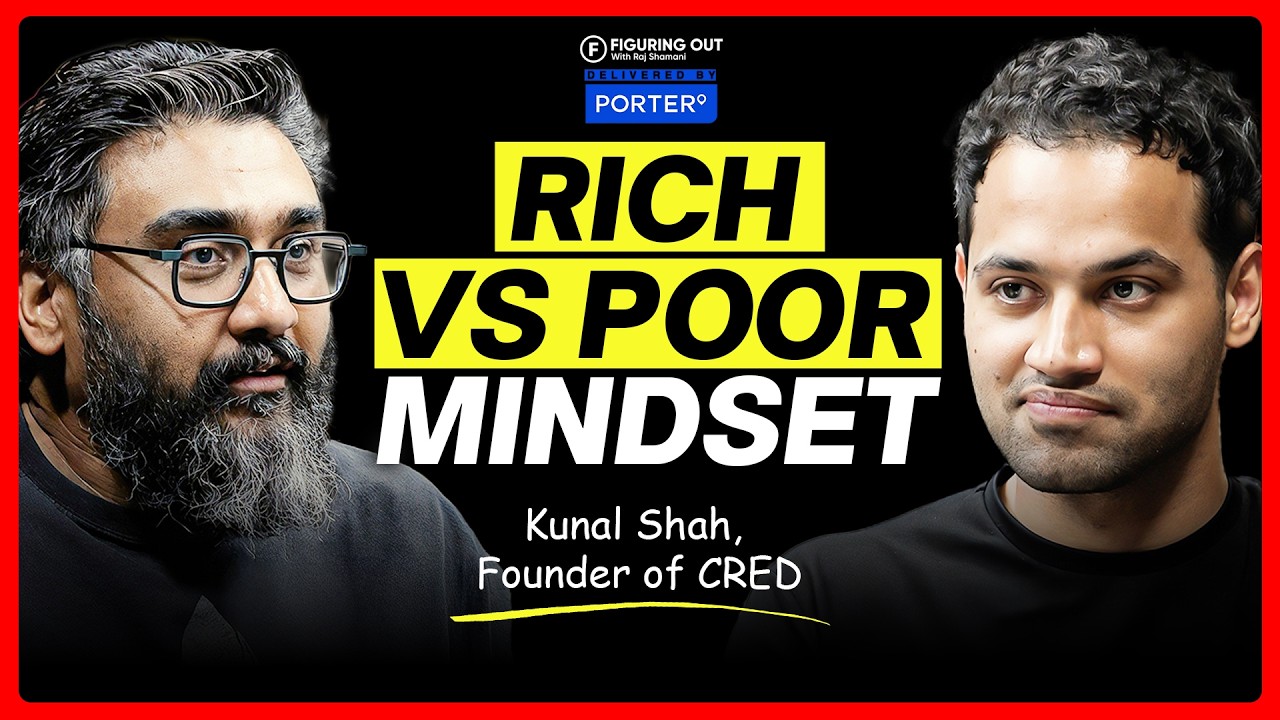
Why the Rich Think Differently: Millionaire Mindset & Wealth Secrets - Kunal Shah |FO389 Raj Shamani
Executive Summary
A Figuring Out with Raj Shamani conversation with Kunal Shah, founder of CRED, about keeping secrets and trust, ambition, why most people stay average, work from home, and why hard work alone does not create wealth. A delivery service sponsor is read at the start (named Porto in the captions). PARTIAL COVERAGE: the episode runs about 3 hours and the available caption text is cut off, so this summary covers roughly the first quarter (including the section on mediocrity and the final captioned answer on wealth and work), and not the rest. These are Shah's opinions and are unverified. This is a summary of his views, not financial advice.
Key Takeaways
Keeping secrets
Shah says successful people are extraordinary at keeping secrets and that wealth tends to go away when a later generation cannot keep them.
Ambition
He says most ambitious people never say they are ambitious, and are just doing and building, without tag words on their profiles.
Protecting time
He says he will be there for people who need him but protects his time, because it is the currency few have much of.
Against working from home
He says he opposes work from home when it just avoids commute and rent, because growth happens in the company of great people.
Reels and averages
He says people now spend more time on short videos than with good people, so many are like their last ten reels with little substance.
Mediocre is a spectrum
He says A-plus people often feel they are mediocre, and that ranking is relative and differs by topic.
Why hard work stays poor
He says the question is what your work solves, with a surgeon's life-and-death problem paying well and a replaceable service not, and that AI may change which jobs pay.
The Conversation Breakdown
Keeping secrets
⏱ Untimed topicShah says successful people are extraordinary at keeping secrets and that wealth tends to go away when a later generation cannot keep them.
Ambition
⏱ Untimed topicHe says most ambitious people never say they are ambitious, and are just doing and building, without tag words on their profiles.
Protecting time
⏱ Untimed topicHe says he will be there for people who need him but protects his time, because it is the currency few have much of.
Against working from home
⏱ Untimed topicHe says he opposes work from home when it just avoids commute and rent, because growth happens in the company of great people.
Reels and averages
⏱ Untimed topicHe says people now spend more time on short videos than with good people, so many are like their last ten reels with little substance.
Mediocre is a spectrum
⏱ Untimed topicHe says A-plus people often feel they are mediocre, and that ranking is relative and differs by topic.
Why hard work stays poor
⏱ Untimed topicHe says the question is what your work solves, with a surgeon's life-and-death problem paying well and a replaceable service not, and that AI may change which jobs pay.
Core Frameworks & Ideas
What does your work solve? - Shah's frame
Wealth follows the size and difficulty of the problem solved.
Environment of growth - Shah's view
Spend time where people constantly make each other better.
Time as currency - Shah's view
Protect your time even while helping people.
Actionable Next Steps
- ✓Write what problem your current work solves and who values it.
- ✓List the five people you spend most time with and what you learn from them.
- ✓Block time this week for something that improves you.
- ✓Check Shah's claims about AI and jobs against labour-market data.
Notable Quotes
“Most ambitious people will never say they're ambitious.”
“my time is something that I protect because that's the currency”
“the frame to apply is what does your work solve?”
The One Thing to Remember
Shah says wealth follows solving problems people value, and that you grow by spending your time among people who make you better.