Explore curated summaries and key insights in Finance. Get the essence of each conversation in 5 minutes.
WTF is with Nikhil Kamath
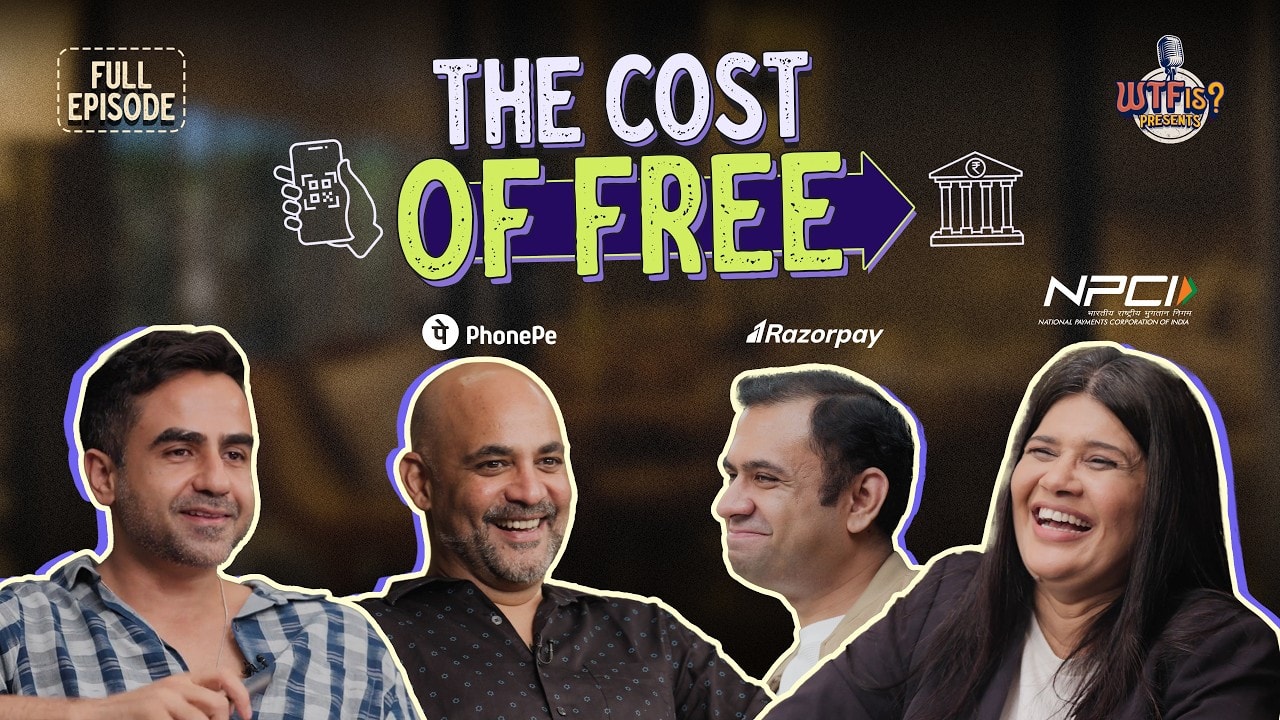
Nikhil Kamath sits with the three people who run India's payment rails - Sohini Andani (ED Growth, NPCI), Harshil Mathur (co-founder, Razorpay) and Sameer Nigam (co-founder & CEO, PhonePe) - for a four-hour map of how money actually moves in India. They draw the six-party UPI diagram live (why your 100-rupee transfer is about 10 API calls across PhonePe, a sponsor bank, NPCI and two banks), break down who pays for 'free' UPI (an estimated 25 bips ecosystem cost, a 15-50 paise switching fee, and the zero-MDR decision that froze private investment), and retell the Flipkart Big Billion Day when 75-80 million waiting shoppers took down bank core systems. The conversation ranges across card economics (who really keeps the 2%), the regulation debate (caps, monopolies, banking licences, 'process is the punishment'), what payment data reveals about real India (tier-2+ is 65-70% of digital payments; 70% of e-commerce spend comes from 15 million households; a GST cut study), cross-border, CBDCs vs stablecoins, agentic commerce, and a closing panel with founders of Seven (payment rings), Dodo Payments (merchant of record) and PayGlocal (cross-border). All figures and views are the speakers' own. FULL COVERAGE: the captions appear to cover the entire episode. Sponsor: none stated. Nothing here is investment, legal or financial advice.
Think School: Indian Business Podcast
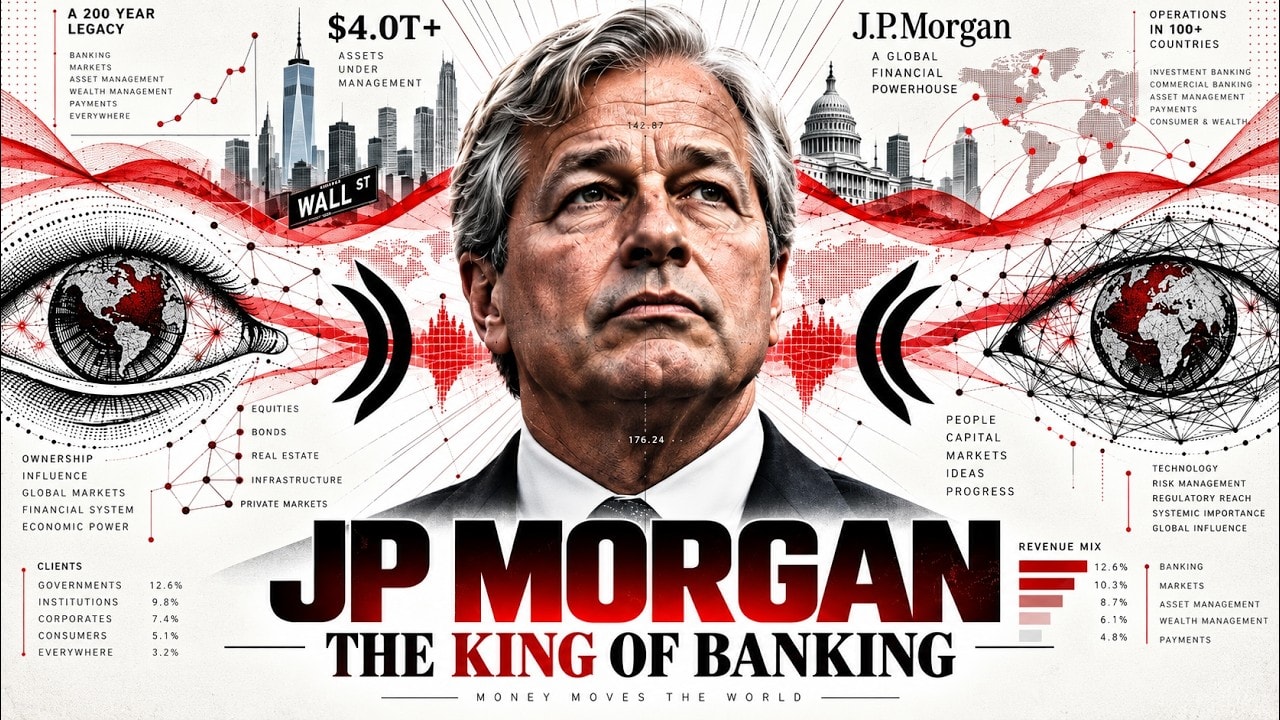
In 2008, while Lehman Brothers went bankrupt and Citigroup lost $27.7 billion, JP Morgan made a $5.6 billion profit - and bought a bank over a weekend. This Think School case study breaks down how Jamie Dimon turned the worst financial crisis of the century into an opportunity: why JP Morgan lent carefully while Wall Street laughed at him for playing too safe, how the Bear Stearns deal worked (a $1.2 billion price tag covered by the bank's own 47-storey Manhattan tower, with the Federal Reserve's Maiden Lane LLC absorbing $29 billion of $30 billion in risky mortgages), and how the Washington Mutual acquisition delivered over 2,000 branches, $160 billion in deposits and two of America's richest markets for $1.9 billion. By 2009, JP Morgan was the world's number one investment bank by fees. FULL COVERAGE: the captions appear to cover the entire episode. All figures and claims are the episode's own narration, not independently verified. Sponsor: Neuro (Neurogum). Note: YouTube's auto-captions garble several names (Jamie Dimon as 'Jamie Diamond', Lehman Brothers as 'Layman Brothers', Bear Stearns as 'Bear Stones', Citigroup as 'Croup'); these notes use the correct spellings while quotes stay verbatim from the captions. Nothing here is investment advice.
Figuring Out with Raj Shamani
Economic analyst Jayant joins Raj Shamani to unpack India's real crisis - gold imports, the falling rupee, the squeezed middle class, the many-Indias income divide, real estate as an investment asset, and the country's technology dependence. Figures and analysis shared are the guest's own. Sponsor: none stated in this episode. Notes based on the publisher's full audio edition. Episode is largely in Hindi; notes are in English. FULL COVERAGE: these notes cover the complete episode from start to finish.
People by WTF
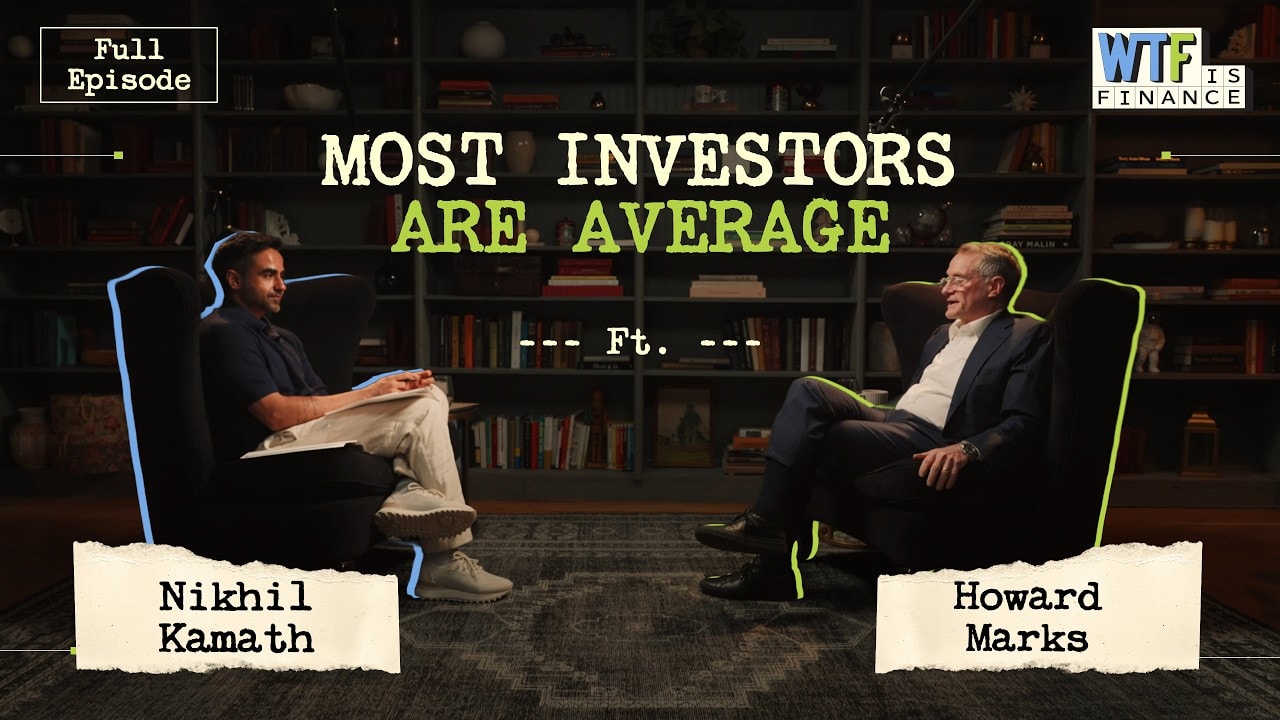
Nikhil Kamath asks Oaktree co-founder Howard Marks how he moved from Queens to Wall Street, why he chose bonds over stocks, and how market cycles and AI change investing. The conversation links careful credit analysis with second-level thinking and a willingness to keep learning. Educational summary, not investment advice.

Figuring Out with Raj Shamani
Raj Shamani with real estate lawyer Harsh Parikh on rich vs middle-class thinking about property, the single largest buying mistake (glamour over legal reality), how 2008 and demonetization/GST separated genuine builders from the rest, reading builder intent and skin in the game, red flags (unclear title, government land, IOD disapproval), return math across residential, commercial and the new asset classes (warehousing, data centers, logistics, senior living), negotiation realities (scientifically calculated timelines, no free lunches, written over spoken), post-possession builder liability and penalties, the allotment letter - agreement for sale - conveyance deed chain, and a 10-step under-construction checklist starting with RERA. FULL COVERAGE: notes span the entire episode (full ~61:13 audio transcribed). Sponsor: none stated in the episode. All return figures, legal readings and market assessments are the guest's views as of March 2026; nothing here is legal, financial or investment advice.
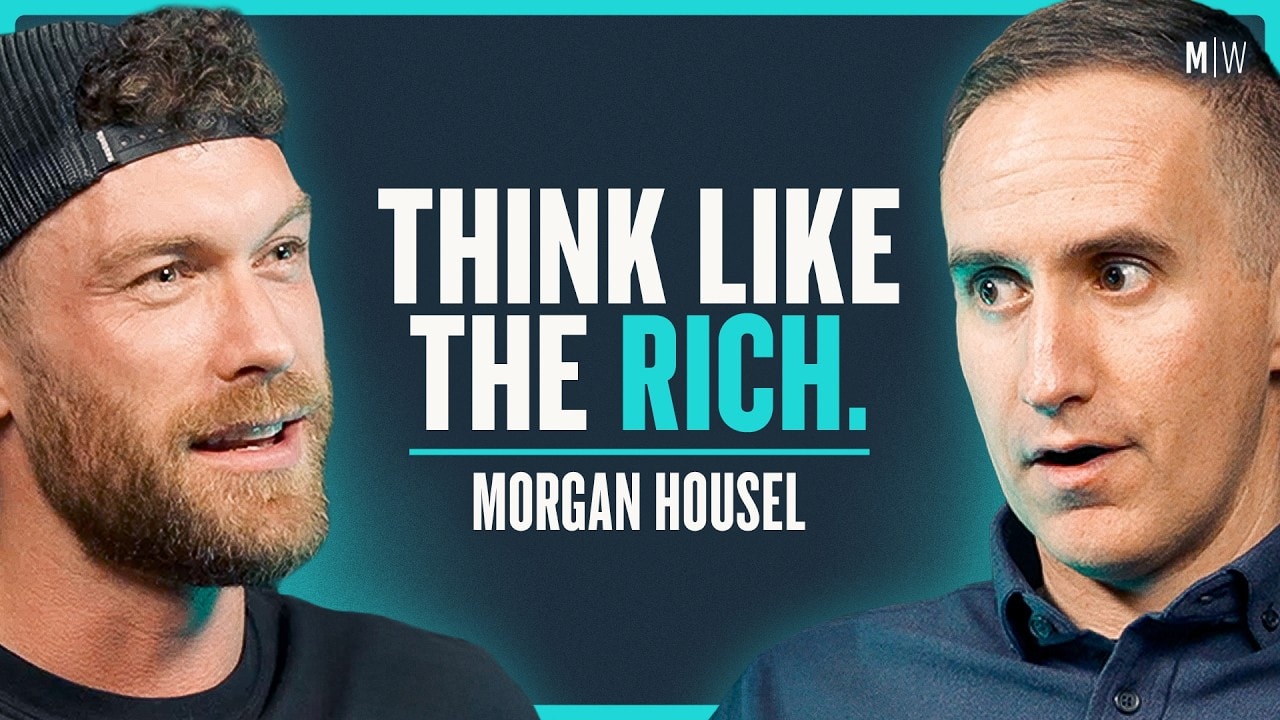
Modern Wisdom
Morgan Housel on spending, identity, independence, purpose and the comparison trap. Selected early discussion, not the later inheritance, housing, parenting or storytelling sections. Anecdotes and generalizations are his perspective, unverified here; not investment advice. Untimed editorial topics are not video chapters.
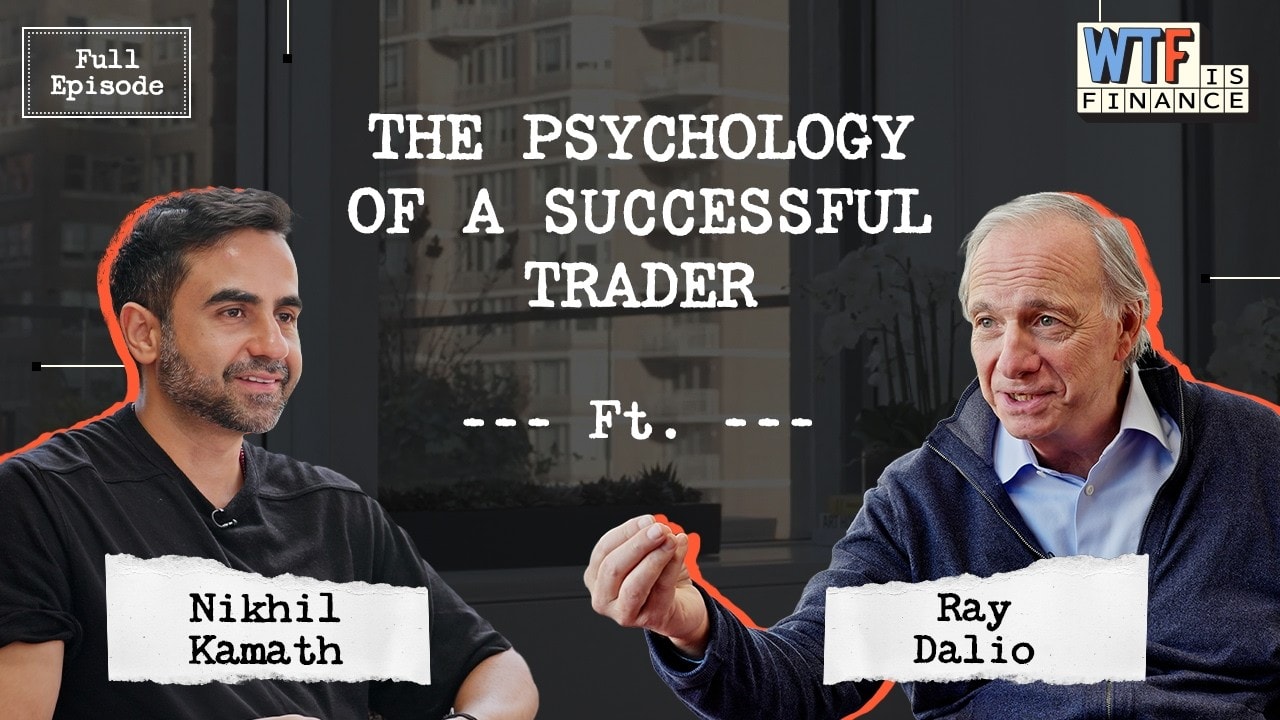
WTF is with Nikhil Kamath
Ray Dalio speaks with Nikhil Kamath about money, wealth and investing. They examine how wealth can rise faster than the money available to realize it, how bubbles form, and what that means for young Indian investors. The conversation also covers gold, Bitcoin, portfolio construction, decision rules and the forces shaping markets.
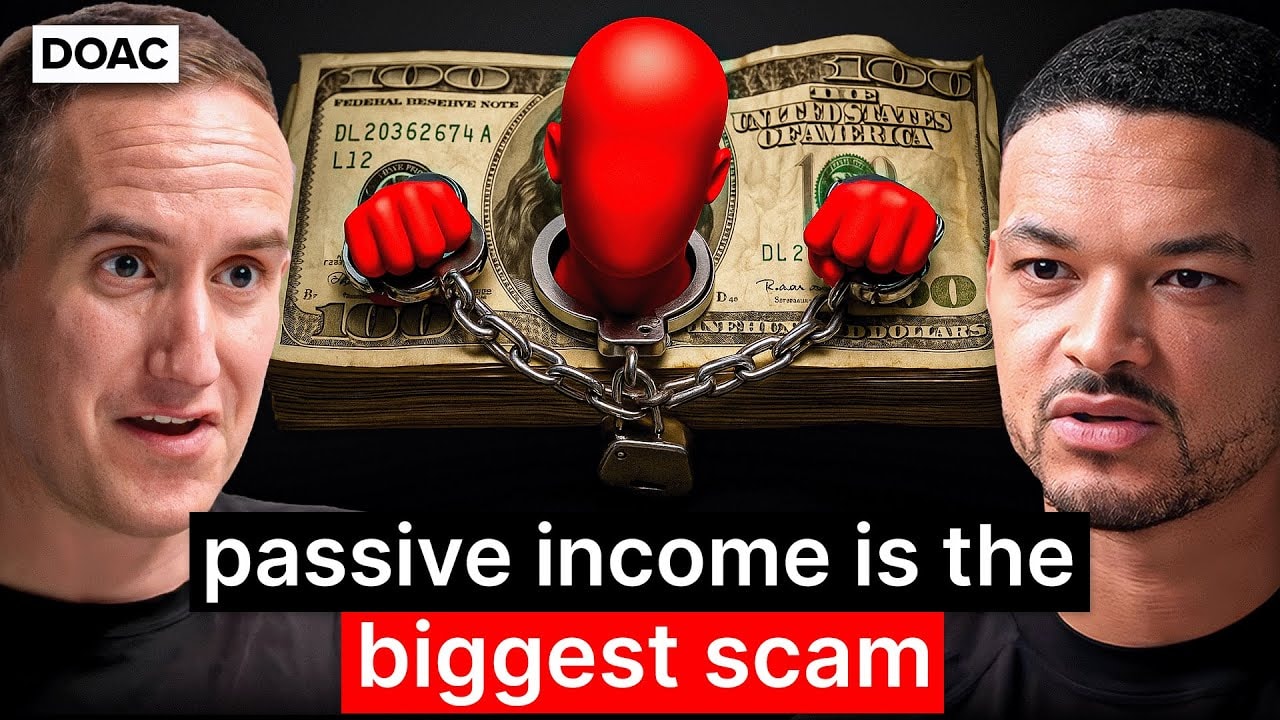
The Diary Of A CEO with Steven Bartlett
Morgan Housel and Steven Bartlett discuss spending, status, trade-offs and the difference between having money and feeling content. Housel presents saving as buying control over time and argues for independence together with purpose. This summary focuses on those personal-finance reflections, not political sections, and is not investment advice.
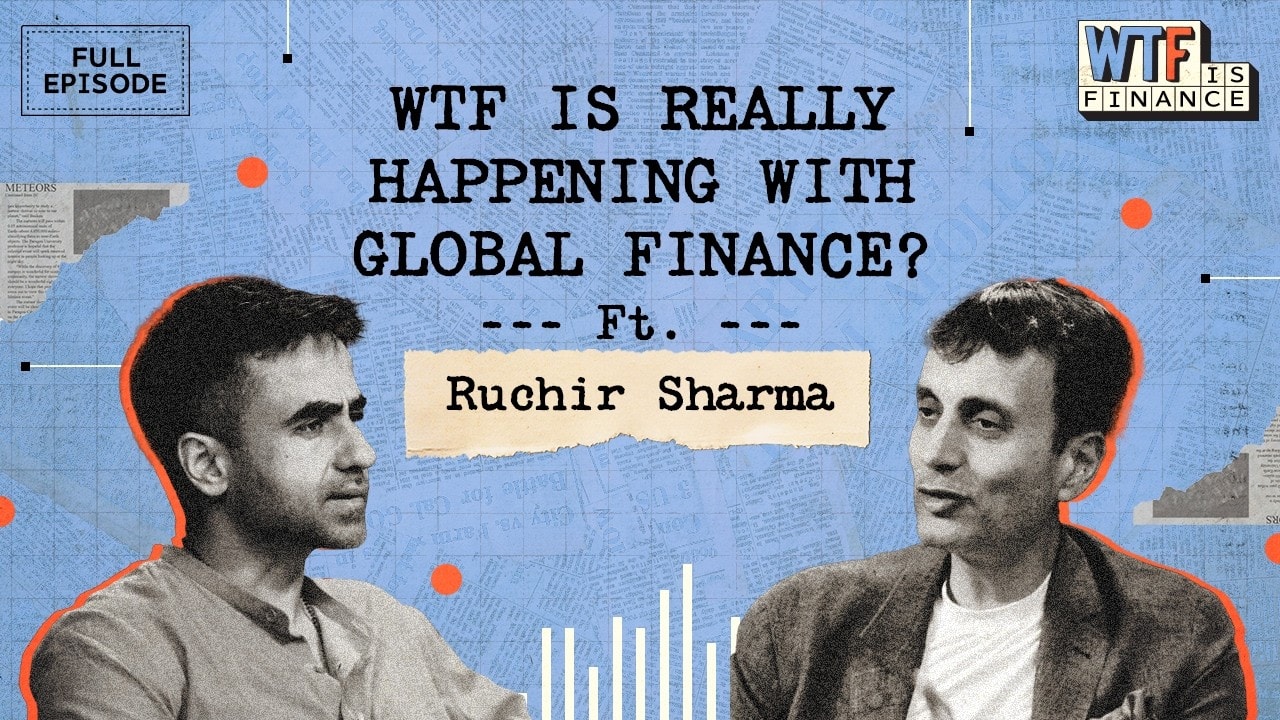
WTF is with Nikhil Kamath
Nikhil Kamath opens the WTF is Finance series with Ruchir Sharma - author of What Went Wrong With Capitalism, founder of Breakout Capital, and formerly Morgan Stanley's global emerging markets head for 25 years. Sharma traces his path from a Navy childhood (Wellington, Coonoor), a Singapore school under Lee Kuan Yew's model, and the 1987 crash at age 13, to writing the Forex Watch column for The Economic Times while hiding that he was an SRCC undergrad, and a $100,000 Morgan Stanley offer in 1996 that ended his PhD plans at 22. The conversation then builds his worldview: capitalism is economic freedom, not equal outcomes; East Asia grew by building infrastructure before welfare states while India's premature welfare and import substitution kept it uncompetitive, reconciling it to roughly 6% growth; regulation is pro-incumbent (America adds 3,000 rules a year and removed about 20 in 20 years; hedge-fund compliance costs are up 10x); and India's real strengths are competitive federalism (Karnataka's rise, Tamil Nadu's bureaucracy) and a potential DOGE-style deregulation drive. Markets get the full treatment too: the AI mania's echo of 1999-2000, why he expects the rest of the world to outperform the US over the next 5-10 years (own US only for AI), a weaker dollar, gold and Bitcoin as anti-dollar plays, China's debt-and-demographics drag versus its technology edge, America's seven-company concentration, and why he would ban big-tech acquisitions. All figures, forecasts and views are the speakers' own, not verified by us. FULL COVERAGE: the captions appear to cover the entire episode. Sponsor: none stated. Nothing here is investment, legal or financial advice.
Figuring Out with Raj Shamani
Raj Shamani with Riyasat Infra founder Sumer Saini (Hindi) on his journey from selling vegetables in Jhunjhunu to plotted real estate, the sabzi-mandi rules of buying cheap and never cheating the scale, refusing a commissioner's 12.5% JDA cut and winning, pooling 35 people's money for a land deal, the 45-minute four-partner split, his first Jaipur plot at Rs 350 per gaj with leverage math, plots versus flats and why land beats stocks, business cycles, the Mumbai 3.0 investment thesis (Navi Mumbai airport, Atal Setu, townships, big developers entering plotting), his anti-fraud checklist (clean title, big developers, Google research), why he doubts Dubai's 10% rental yields, villa build-and-sell economics, and his three sales tips. FULL COVERAGE: notes span the entire episode (full ~54:37 audio transcribed; Hindi, notes in English, quotes translated and marked). Sponsor: none stated in the episode. All figures, project claims, market views and developer references are the guest's account as of January 2025; nothing here is investment or legal advice.
Think School: Indian Business Podcast
FULL COVERAGE: the complete 27-minute episode was transcribed from its own audio and summarized. Sponsor: Scaler School of Business, named in the episode as education partner. This Think School case study decodes Hyundai Motor India's planned 25,000-crore IPO - at the time the biggest IPO in Indian market history and the first by an automaker since Maruti Suzuki in 2003. It traces Hyundai's 1996 entry against Maruti's 60% market share, the Santro built for Indian conditions, the i10 and i20 mid-range launches of 2007-08, and the Creta's rise to 10 lakh domestic sales by February 2024 with a 30% mid-sized SUV share. It then walks through the numbers: EBITDA margins of 12.7% for the nine months to December 2023 versus Maruti's 13% and Tata Motors' 6.1%, profit of 65,355 rupees per vehicle versus Maruti's 40,939 in FY23, free cash flow at 93% of profit after tax between FY21 and the first nine months of FY24, a working capital cycle of minus 26.5 days versus Maruti's minus 22.5 (as cited from an Economic Times article), and return on capital employed of 27.19% versus 19.72%. Finally it covers the three risks the video highlights from Hyundai's 436-page DRHP: Chennai plants running at 103% and 92% utilization with waiting periods up to 24 weeks, an offer-for-sale IPO whose proceeds go to the South Korean promoters rather than Indian growth, and a royalty to the parent raised from 2.5% to 3.5% of revenue a week before the IPO. All figures and claims are the video's own, attributed to its reading of the DRHP and cited articles; the video itself states it is educational and not investment advice, and these notes are a summary of the video, not financial advice.
The Knowledge Project
Morgan Housel and Shane Parrish discuss independence, social comparison, rich versus wealthy and the hidden costs of success. This focused summary covers those money-and-life themes, not the full investment, housing or later writing discussion. Housel’s definitions and observations are his views, not financial advice or a guaranteed wealth-building plan.

