

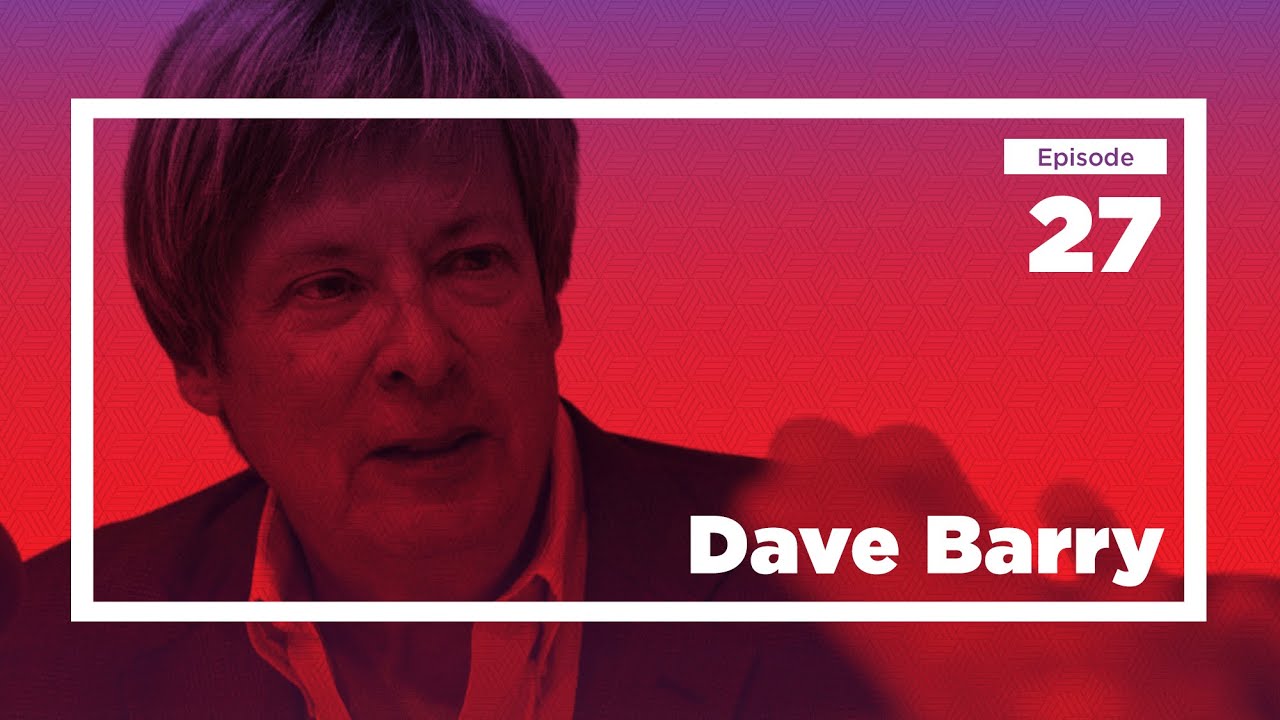
Dave Barry on Humor, Writing, and Life as a Florida Man | Conversations with Tyler
Executive Summary
Dave Barry talks with Tyler Cowen about written humor, sentence structure, clear business writing and trying new forms without losing your sense of play. These notes cover selected craft and career passages. Political satire, sensitive joke examples and dated regional claims are omitted rather than treated as current fact. Humor judgments and career recollections are Barry's. Release date follows the official August 16, 2017 episode; the linked YouTube copy was uploaded later. Full official transcript: https://conversationswithtyler.com/episodes/dave-barry/ . Topic labels are untimed.
Key Takeaways
Distribution changes do not erase original voices
Barry describes faster online humor and memorable accidental moments, but still sees room for people whose comedy is distinctly their own. His discussion is from 2017, not a current industry forecast. New channels change the way humor is delivered without proving deliberate craft has disappeared.
Character humor sometimes needs time
In his reading of Abbott and Costello, familiar roles become funnier as an audience recognizes what is coming. The joke is partly a relationship built over repeated encounters. An isolated line is not always the right unit for assessing comedy.
Silliness is different from being cool
Barry admires Robert Benchley's willingness to take unexpected turns and be genuinely silly. He contrasts that with merely sounding superior or snide. The example emphasizes a comic commitment rather than a polished attitude of detachment.
A joke needs a landing point
Barry explains that written humor uses spacing and punctuation where a performer can use timing and emphasis. He says the funny part should come last, then the writing should move on. Extra explanation after the landing can weaken its effect.
A business document should state its purpose
His writing-seminar experience exposed documents that delayed the important message behind an account of the writer's process. He wants the main point in the first sentence. Clear writing requires identifying the information the reader needs, not just shortening formal phrases.
Try adjacent forms with a realistic bridge
Barry describes moving from humorous essays toward a novel as a sequence of funny scenes with a plot. He wanted novelty that he felt he could attempt competently. The account offers a bridge from an existing skill rather than a promise that every medium is interchangeable.
A novel changes the pressure on a humorist
He says a humor book pushes him to make each sentence funny or lead to a funny next sentence. In a novel, he can concentrate on what characters say and do. A change in form changes the immediate job of the sentence.
The Conversation Breakdown
Online humor and individual voice
⏱ Untimed topicThe opening considers accidental funny moments and faster circulation. These are historical comments from the interview, not current market findings. The notes focus on the continued role of original comic voices.
Character and silliness
⏱ Untimed topicBarry's examples from Abbott and Costello and Robert Benchley show two sources of humor: a relationship that builds over time and an unexpected willingness to be silly.
Written timing
⏱ Untimed topicSpacing, punctuation and sentence order provide comic control on the page. The funny part needs its position, and the writer needs to stop rather than explain the joke afterward.
Business writing as a reader's task
⏱ Untimed topicBarry's teaching account criticizes delayed points and meaningless formal language. The problem can be a failure to decide what the reader needs, not merely a lack of grammatical polish.
Changing the form of the work
⏱ Untimed topicHis move toward novels gave him a different kind of storytelling pressure. Music with the Rock Bottom Remainders also offered enjoyment outside an area where he claimed mastery. The selected notes omit the sensitive joke discussion and political segments.
Core Frameworks & Ideas
Different landing positions
A business message and a joke have different sequencing needs. Put the main point early for information and the comic turn last for a joke.
Reader purpose versus writer diary
Organize a document around what someone needs to know instead of replaying every step you took.
Adjacent creative experiment
Use a known skill as the bridge into a new form while respecting what that form asks you to learn.
Actionable Next Steps
- ✓Rewrite a business document's first sentence so it states the important message.
- ✓Trim a humorous sentence after its funny turn and compare the effect.
- ✓Identify a familiar character relationship that makes a scene funny without a separate punch line.
- ✓Try a small creative project in an adjacent form and name the new constraint it introduces.
Notable Quotes
“Silliness is an underrated part of humor.”
“You don’t have your reader’s attention very long, so get to the point.”
“I just found very few people are naturally clear, concise writers.”
The One Thing to Remember
Put the information where the reader needs it: the point early in a business document, the funny part last in a joke.