

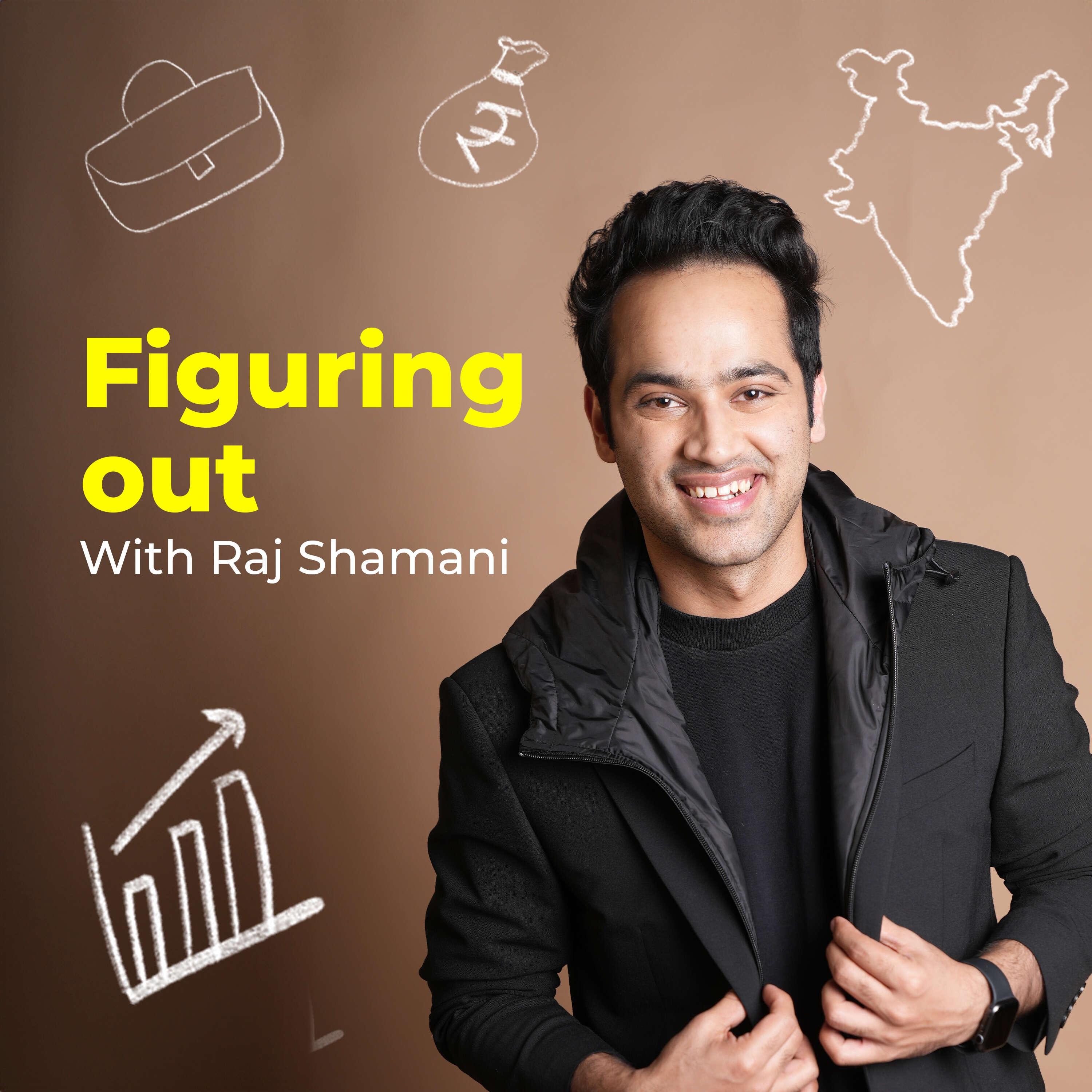
Inside The IIT Race: JEE, Placements & Future Of Engineering | Vishwa Mohan | FO508 Raj Shamani
with Vishwa Mohan

Executive Summary
Vishwa Mohan - IIT alumnus, former Amazon engineer, now building a code-first engineering school - joins Raj Shamani for a brutally honest map of the IIT race and what comes after it. He describes the crack-switch-EMI loop students are trained into: crack 10th, crack JEE at Kota, crack placements, then switch jobs to pay the EMI, with no one asking what the student actually wants to build. He takes Raj inside big-tech hiring at Amazon, Google and LinkedIn - the DSA rounds, the hypothetical system-design situations, the culture-fit checks - and inside big-tech firing: profitable companies like Block and Oracle cutting staff for AI, employees told to surrender laptops and not return to their desks. His claims are stark: nobody cares about your 10th, 12th or engineering marks; 30-40% of engineering college time has nothing to do with your branch; and India risks becoming a 'permanent slave' in the AI revolution if it does not build hands-on capability. His answers: flexibility over fixed plans, depth and specialization over generalization, interdisciplinary AI-plus-domain skills, quantum awareness - and the school he is building where students write code from day one and get seed funding for their own startups.
Key Takeaways
The crack-switch-EMI loop runs Indian engineering
Students are trained to crack 10th, then JEE, then placements - then switch jobs to service the EMI. Vishwa says the loop never asks what the student wants to build, and breaking it requires depth over switching.
Nobody cares about your marks anymore
His blunt claim: your 10th percentage, 12th percentage and engineering CGPA will not get you a job in today's market - companies test what you can do, not what you scored.
30-40% of engineering college time is off-branch
He argues the system is built around generalization: a computer science student spends nearly a third of college on physics and biology labs, while the industry wants deep specialization.
Inside big-tech interviews: DSA first, then hypotheticals
From his own Amazon, Google, LinkedIn and Uber interview loops: early rounds test hands-on data structures and algorithms, later rounds drop you into hypothetical design and business situations, and culture fit is weighed as seriously as code.
Profitable companies are still firing for AI
He points to Block's 'fired because of AI' memo and Oracle's cuts as the new pattern - hard firings where employees surrender laptops on the spot - and warns it will accelerate because stock markets reward it.
Flexibility and depth are the survival skills
With everyone - companies included - confused about AI, his prescription is to be flexible ('change is the only constant'), keep learning daily, and go deep in a domain that stays timeless when paired with AI.
He is building the school he wished existed
His answer to the system's gaps: a UGC-recognized, code-first engineering program - students write code from day one, work on real industry problem statements, and get seed funding of around 5 lakh for their own startup pitches.
The Conversation Breakdown
India and the AI revolution: build or serve
⏱ Untimed topicThe episode opens with Vishwa's warning: India stands at the edge of an AI revolution with US models far ahead and China pushing DeepSeek and Qwen - if India does not build hands-on capability, it risks becoming the 'permanent slave' of this wave as it was of earlier technology shifts.
The IIT race from inside
⏱ Untimed topicKota preparation, the cyber-cafe result day with his father, and the psychology of the crack-switch-EMI loop - plus the side effect nobody discusses: an entire generation measuring itself only by the next exam.
The marks illusion and the generalization problem
⏱ Untimed topicWhy he says nobody cares about 10th, 12th or BTech marks, why a third of engineering college time is spent off-branch, and why even MIT will not entertain a candidate without genuine depth.
Big-tech hiring, decoded
⏱ Untimed topicHis interview loops at Amazon, Google, LinkedIn and Uber: coding rounds on data structures and algorithms, open-ended generic CS rounds, system design on real business decisions, and the culture-fit evaluation - plus how candidates can train their brains for interview pressure.
The firing reality
⏱ Untimed topicBlock's AI memo, Oracle's cuts, laptop surrenders and HR escorts: how large-company layoffs actually work, why profitable companies do them, and why everyone - companies and employees alike - is confused about AI right now.
What survives: flexibility, depth, quantum
⏱ Untimed topicHis framework for relevance: flexible fixed-type engineers survive automation, timeless domains paired with AI stay employable, every industry will need AI-plus-computer-science people, and quantum computing is the next wave students should be aware of.
The school he is building
⏱ Untimed topicThe fix in progress: a UGC-recognized code-first engineering program with no paper-style teaching, industry problem statements on campus, a startup culture with seed funding for student pitches, and a curriculum he says IITs have not meaningfully changed in 20 years.
Core Frameworks & Ideas
Crack-switch-EMI loop
The default Indian engineering career script - crack the exam, switch jobs for the hike, pay the EMI - and his case for replacing 'switch' with 'build' and EMI-chasing with compounding depth.
Flexible over fixed
Fixed-type engineers get automated; flexible ones survive. Train for change itself - daily learning of new concepts - because change is the only constant.
Timeless plus AI
Career durability comes from going deep in a timeless domain and pairing it with AI, not from chasing whichever tool is hot this year.
Code-first learning
No paper-style teaching: students write code from day one, work live industry problem statements, and pitch startups for real seed funding - capability built by doing, not by marks.
Actionable Next Steps
- ✓If you are a student: count how much of this semester is actually building your specialization - then add one deep, self-driven project in your branch.
- ✓Replace one marks-focused goal with a capability goal: ship something (code, a design, a research note) that a recruiter can actually look at.
- ✓Preparing for big tech? Practice DSA under time pressure, then rehearse explaining one system-design decision out loud - both rounds test different muscles.
- ✓Spend 30-60 minutes today learning one new concept in your field - the daily habit Vishwa says he still keeps.
- ✓If AI anxiety is high in your team, pick one timeless part of your domain and go deeper into it this quarter instead of tool-hopping.
Notable Quotes
“Because nobody cares what you are getting in 10th, what you are getting in 12th, what you are getting in the engineering. Nobody literally cares, especially in today's age.”
“30 to 40% of our time a student spends in engineering college has nothing to do with the branch they are specializing in.”
“No one has the absolute answer or the perfect solution of the AI. Everyone is confused.”
“You're not doing BTech for the marks, for the degree alone.”
“You're living a life of a miser. What's the point of doing all of that stuff itself?”
“So anything which is going to be timeless or in the world of exploration going deep in that field with AI is going to be a relevant job.”
“we are again on the step of something called as AI revolution.”
The One Thing to Remember
One thing to remember: change is the only constant - the engineers who survive the AI wave are the flexible ones who keep going deep, not the ones still collecting marks.