


Joe Rogan Experience #1302 - Ed Calderon
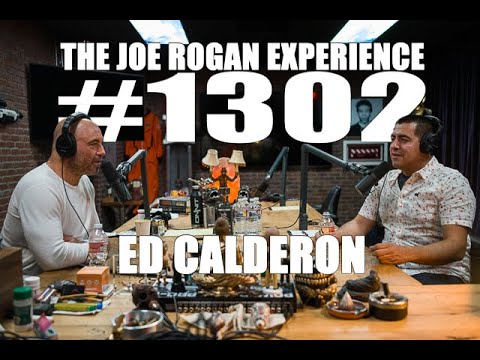
Executive Summary
Ed Calderon describes his background in Mexican law enforcement and the unexpected shift from a conventional policing job to heavily armed operations. He recalls an environment in which the risks followed officers home, including to communities where they had grown up. Rogan asks how corruption, fear and cartel influence work, and Calderon argues that coercion matters alongside financial motives. They discuss the public image of El Chapo, local benefits used to gain loyalty and the problem of power vacuums. Calderon also criticizes political cycles and institutional rebranding. Selected coverage: these notes cover the opening supplied captions through the discussion of repeated police name and uniform changes, not the full episode. They summarize Calderon's experiences and assessments at the time of this 2019 conversation. Specific allegations, crime figures and political claims are not independently checked here and must not be treated as current conditions or a safety advisory. No escape, weapons or evasion instructions are reproduced. Original: https://www.youtube.com/watch?v=llhb2ymtsw8 .
Key Takeaways
A job can change far beyond the original expectation
Calderon says he entered policing expecting community work but found himself in militarized operations. His account shows a difference between a role's advertised identity and the conditions faced on the ground. It is a recollection of his path, not a description of every officer's experience.
Risk did not stop at the end of a shift
He recalls fear following officers into vacations and their home communities. Unlike deployment somewhere unfamiliar, he says he sometimes recognized people from his own upbringing. That social proximity is central to the account and complicates a simple distinction between work and private life.
Corruption can involve coercion as well as gain
Calderon argues that threats to family can pressure people into cooperation, not only greed. Rogan's questions draw out this distinction. The explanation does not excuse wrongdoing, but it changes what a meaningful analysis of incentives would need to consider.
Public image can hide the damage behind a figure
They question celebrity treatment and romantic accounts of El Chapo. Calderon contrasts that image with harms he associates with cartel activity. The conversation asks who gets a voice and how media attention can turn notoriety into a story of glamour.
Local benefits can become an influence network
Calderon describes roads, schooling, gifts and other support as ways cartel figures built loyalty. He presents these benefits as investments in social protection. The point is not that the harms disappear, but that local incentives can make enforcement and cooperation more complicated.
Removing a leader does not finish the system problem
The discussion turns to power vacuums and changes in criminal activity after prominent arrests. Calderon describes shifting groups and markets in his period of experience. Those assessments are historical speaker claims, not a verified map of current organizations or routes.
A new institutional name is not the same as reform
Calderon criticizes cycles of new administrations, plans and police rebranding. He says familiar personnel could remain behind new uniforms and names. His proposed test is continuity in people and incentives rather than accepting a new label as proof that underlying problems changed.
The Conversation Breakdown
A job can change far beyond the original expectation
⏱ Selected coverageCalderon says he entered policing expecting community work but found himself in militarized operations. His account shows a difference between a role's advertised identity and the conditions faced on the ground. It is a recollection of his path, not a description of every officer's experience.
Risk did not stop at the end of a shift
⏱ Selected coverageHe recalls fear following officers into vacations and their home communities. Unlike deployment somewhere unfamiliar, he says he sometimes recognized people from his own upbringing. That social proximity is central to the account and complicates a simple distinction between work and private life.
Corruption can involve coercion as well as gain
⏱ Selected coverageCalderon argues that threats to family can pressure people into cooperation, not only greed. Rogan's questions draw out this distinction. The explanation does not excuse wrongdoing, but it changes what a meaningful analysis of incentives would need to consider.
Public image can hide the damage behind a figure
⏱ Selected coverageThey question celebrity treatment and romantic accounts of El Chapo. Calderon contrasts that image with harms he associates with cartel activity. The conversation asks who gets a voice and how media attention can turn notoriety into a story of glamour.
Local benefits can become an influence network
⏱ Selected coverageCalderon describes roads, schooling, gifts and other support as ways cartel figures built loyalty. He presents these benefits as investments in social protection. The point is not that the harms disappear, but that local incentives can make enforcement and cooperation more complicated.
Removing a leader does not finish the system problem
⏱ Selected coverageThe discussion turns to power vacuums and changes in criminal activity after prominent arrests. Calderon describes shifting groups and markets in his period of experience. Those assessments are historical speaker claims, not a verified map of current organizations or routes.
A new institutional name is not the same as reform
⏱ Selected coverageCalderon criticizes cycles of new administrations, plans and police rebranding. He says familiar personnel could remain behind new uniforms and names. His proposed test is continuity in people and incentives rather than accepting a new label as proof that underlying problems changed.
Core Frameworks & Ideas
Coercion-aware incentives
Ask how threats constrain choices instead of treating every bad outcome as a freely chosen financial bargain.
Influence through dependency
Services and favors can create a relationship of obligation, especially where alternatives are weak.
Reform versus relabeling
Compare operational changes with changes in names, uniforms or public promises.
Actionable Next Steps
- ✓Distinguish an institution's advertised role from evidence of how it operates.
- ✓Ask whether incentives include coercion, not only financial reward.
- ✓Check the date and source of a risk claim before treating it as current guidance.
- ✓Evaluate a reform by changes in accountability and practice rather than a new name.
Notable Quotes
“it's not just corruption because people are greedy”
“there's no vacation even when this vacation”
“it's the same guy change uniform”
The One Thing to Remember
When assessing an institution or risk environment, look beyond its label to incentives, coercion and the people who actually operate it.