


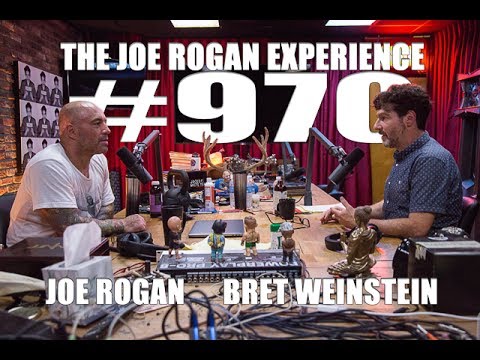
Joe Rogan Experience #970 - Bret Weinstein
Executive Summary
Bret Weinstein recounts the origins of Evergreen's Day of Absence tradition and explains his objection to a change he says was proposed in 2017. Joe Rogan asks about the responses to Weinstein's letter, and Weinstein distinguishes public condemnation from private conversations that he describes as more varied. They discuss how labels and definitions can shape a dispute, then turn to Evergreen's unusual full-time teaching programs and faculty governance. Weinstein says he values the college and wants it preserved rather than simply dismissed. Selected coverage: these notes use the supplied opening captions through the early discussion of the equity council and program structure, not the full episode. Events, intentions and policy details are Weinstein's account in a contested situation. Other participants' perspectives and the full documentary record are not represented here; the notes do not decide who was right or establish the motives of students, staff or administrators. Original: https://www.youtube.com/watch?v=xq4Y87idawk .
Key Takeaways
Weinstein frames the dispute around a change in participation
He describes an earlier tradition in which people chose to leave campus and a later proposal he understood as asking a different population not to attend. The distinction explains his objection. These notes preserve his account without establishing the disputed event's complete terms or other participants' intent.
A personal relationship offers his alternative ideal
Weinstein recounts meeting a student he knew from a teaching trip and emphasizes the relationship they shared beyond racial identity. He presents this as the kind of interaction he values. A single anecdote expresses that ideal but cannot establish the full experience of the campus community.
Public discussion can differ from private discussion
He says private conversations included a wider range of views than the visible public response suggested. Rogan asks whether the same people said different things, and Weinstein says that was true of a few but mostly different people were involved. That qualification matters when describing apparent consensus.
Labels can change the cost of speaking
Weinstein argues that accusations made people reluctant to express disagreement. This is his interpretation of the dynamics, not proof that criticism was illegitimate. The general question is whether a discussion allows claims to be examined or turns a disputed label into the whole argument.
Definitions need to remain stable across an argument
He alleges that a term can be applied under a broad definition while carrying the stigma of a narrower one. Regardless of whether that happened in this dispute, it identifies a testable reasoning problem. Participants should state which definition they are using rather than switching meanings mid-argument.
The teaching model is part of what he wants to preserve
Weinstein describes students and professors working full-time in one program, sometimes for a year, and says this allowed close attention to individual learning. The episode is not only a complaint about a controversy. He also explains why he thought the institution was worth rescuing.
Access and educational design can create a real tradeoff
He discusses an argument that full-time programs are harder for people with jobs or families to attend, while defending the value of retaining that model. He acknowledges some truth in the access concern. That is a policy tradeoff to investigate rather than a reason to infer the motives of everyone involved.
The Conversation Breakdown
Weinstein frames the dispute around a change in participation
⏱ Selected coverageHe describes an earlier tradition in which people chose to leave campus and a later proposal he understood as asking a different population not to attend. The distinction explains his objection. These notes preserve his account without establishing the disputed event's complete terms or other participants' intent.
A personal relationship offers his alternative ideal
⏱ Selected coverageWeinstein recounts meeting a student he knew from a teaching trip and emphasizes the relationship they shared beyond racial identity. He presents this as the kind of interaction he values. A single anecdote expresses that ideal but cannot establish the full experience of the campus community.
Public discussion can differ from private discussion
⏱ Selected coverageHe says private conversations included a wider range of views than the visible public response suggested. Rogan asks whether the same people said different things, and Weinstein says that was true of a few but mostly different people were involved. That qualification matters when describing apparent consensus.
Labels can change the cost of speaking
⏱ Selected coverageWeinstein argues that accusations made people reluctant to express disagreement. This is his interpretation of the dynamics, not proof that criticism was illegitimate. The general question is whether a discussion allows claims to be examined or turns a disputed label into the whole argument.
Definitions need to remain stable across an argument
⏱ Selected coverageHe alleges that a term can be applied under a broad definition while carrying the stigma of a narrower one. Regardless of whether that happened in this dispute, it identifies a testable reasoning problem. Participants should state which definition they are using rather than switching meanings mid-argument.
The teaching model is part of what he wants to preserve
⏱ Selected coverageWeinstein describes students and professors working full-time in one program, sometimes for a year, and says this allowed close attention to individual learning. The episode is not only a complaint about a controversy. He also explains why he thought the institution was worth rescuing.
Access and educational design can create a real tradeoff
⏱ Selected coverageHe discusses an argument that full-time programs are harder for people with jobs or families to attend, while defending the value of retaining that model. He acknowledges some truth in the access concern. That is a policy tradeoff to investigate rather than a reason to infer the motives of everyone involved.
Core Frameworks & Ideas
Public-private evidence gap
A visible response may not capture every view, but claims of hidden support also need evidence.
Definition consistency
Check whether the meaning of a contested word stays the same as an argument proceeds.
Institutional design tradeoff
Evaluate the benefits of an educational model alongside who can realistically access it.
Actionable Next Steps
- ✓Read the underlying proposal or letter before relying on a summary of a dispute.
- ✓Separate observed conduct from interpretations of a person's motives.
- ✓Ask which perspectives and records are missing from a first-person account.
- ✓State the definition of a contested term before debating whether it applies.
Notable Quotes
“We know each other as people”
“mostly it's different people”
“it is worth rescuing”
The One Thing to Remember
In a public dispute, separate a person's account, the underlying proposal, definitions, institutional incentives and the perspectives still missing.