

Nikhil Kamath x Netflix Co-CEO, Ted Sarandos | People by WTF | Ep. 10
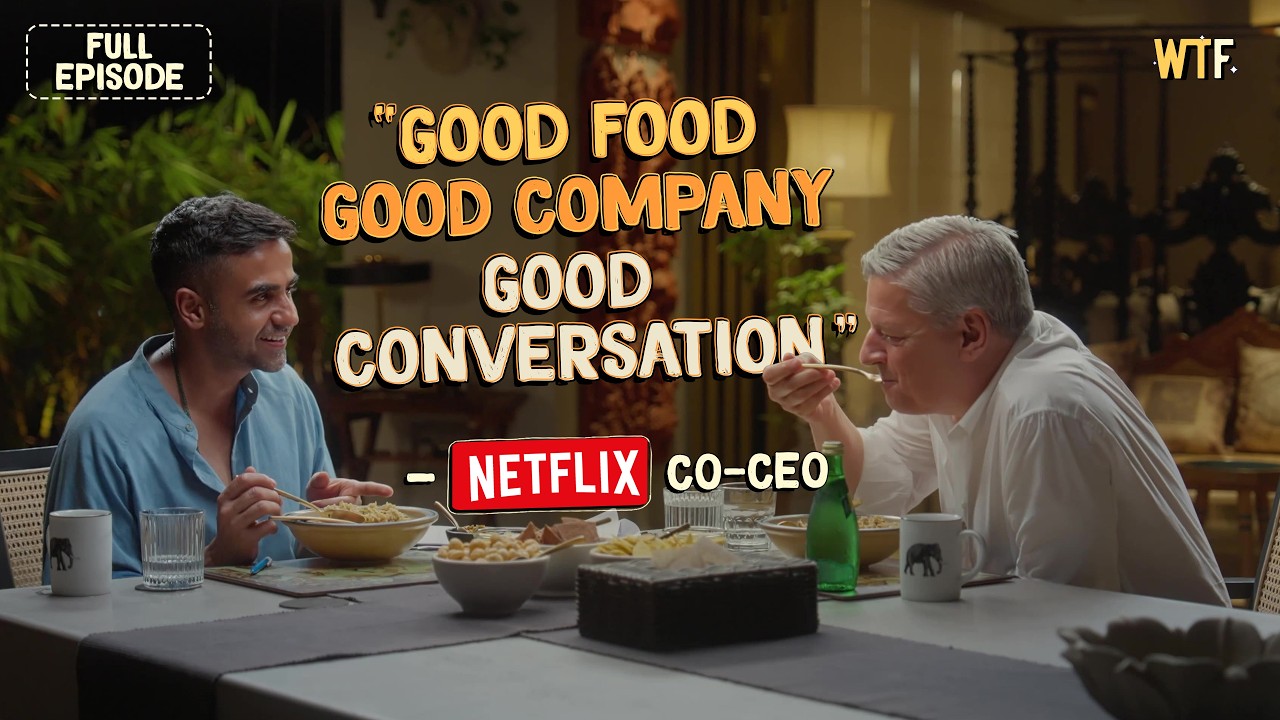
Executive Summary
Ted Sarandos's Netflix playbook, told from a Mumbai dinner table. Distribution: the internet was always the destination (DVDs by mail were just the cheapest way to move bits in 1999), and the moat is unglamorous engineering - every device individually optimised, streams that downshift instead of buffer, and Open Connect boxes physically near your home; tech spend at Netflix is second only to content, while rivals spend their second rupee on marketing. Content: authentically local storytelling (Squid Game, Kantara's cousin logic) travels better than engineered global hodgepodges; greenlighting is gut, not algorithm - bet on the creator, and watch everything so you have a frame of reference. Economics: big sports rights are a trap where the league keeps all the profit (Netflix built F1's American audience with Drive to Survive, and its reward would have been a 10x rights fee); the win is whether a viewer stays after pressing play, not what they click; ads stay a minority of revenue because ads-only economics can't fund ambitious content. Culture: talent density over family loyalty, big swings with no ten-year-old guardrails, and a co-CEO split that works only because tech and entertainment are genuinely different cultures run by two people who won't backstab each other. For a 20-year-old in India: the next disruption is in creativity (AI tools, virtual production), not distribution; start at the bottom, learn every job, quit what makes you unhappy in your twenties, and ignore the work-life-balance fantasy - life is perpetually out of balance.
Key Takeaways
The video store taught Netflix
Two lessons from Sarandos's rental-store years built the company: trade radius (a niche film loses money in one neighbourhood store but one copy in each of a thousand stores all profit - the national-footprint insight behind Netflix's niche strategy), and managed dissatisfaction (customers rarely found their first-choice movie, then paid late fees that became the peak-pain memory Kahneman describes). Netflix's counter-position: no late fees, everything ever published, and recommendations.
Talent density over family loyalty
Reed Hastings's answer to why startups become big fat companies that fail: as you grow you accommodate weaker people with rules, then attract people who like rules. Netflix's model is a high-performing sports team - no shame in getting cut from a great team - articulated to all 175 envelope-stuffers from day one. It works because the bar is set before you join.
Delivery is table stakes, and hard
Netflix optimises every connected device individually, downshifts resolution invisibly instead of buffering, and built Open Connect to put data physically near homes. Most rivals' second-biggest expense is marketing; Netflix's is tech, after content. The Jake Paul-Mike Tyson fight broke the internet's limits - a lifetime of learning that made NFL Christmas Day trouble-free.
Local is the global strategy
Squid Game's edges were never shaved down - it is fundamentally Korean storytelling, and that is exactly why it travelled. Engineered globalism (Squid Game star + Shah Rukh Khan + Brad Pitt in one film) produces hodgepodges nobody recognises. The universal themes (class, fairness) ride on authentic local specificity, and Indian audiences turn out to be far more international - Japanese anime, Turkish soaps - than conventional wisdom assumed.
Big sports rights are a trap
Leagues with real consumer demand should get all the money; the distributor's margin should be thin because the audience leaves with the rights. Drive to Survive tripled F1's American audience - and the reward at renewal would have been a 10x fee. Netflix's version instead: own-event programming like NFL Christmas Day with a Beyonce concert, or the Tyson-Paul fight.
AI lowers cost, not imagination
The Irishman spent ~$30 million just on de-aging technology; the same cinematographer later directed Pedro Paramo for less than that entire amount. Sarandos frames AI as the next visual-effects leap (smaller than the 2D-to-CG jump, which created more animator jobs, not fewer) - the danger he flags is humans stopping saying 'not like this' to whatever the model spits out. The next disruption is in creativity, not distribution.
Gut greenlights, and no balance
Greenlighting is gut - will people want to live in this world, do I care what happens to these characters, can this creator actually deliver (the Duffer Brothers won Stranger Things off a tiny Warner Brothers film). Passes become other people's hits, so the track record is never clean. And personally: life is perpetually out of balance, the phrase 'work-life balance' was designed to make you feel bad, and at 38 or 60 the trade-off guilt never fully resolves.
The Conversation Breakdown
From Phoenix to a video-store education
⏱ Untimed topicUtilities switching off at home, a mother who bought a VCR before video stores existed, a school-newspaper editorship inspired by Don Bolles - the Arizona reporter killed by the mob for a story he could have chosen not to write - and the honest self-assessment at community college that he was not good enough to be a professional journalist. The part-time video-store job, meant to pay for school, became the real education.
Meeting Reed and the 1999 vision
⏱ Untimed topicRevenue-share DVD deals at West Coast Video brought him to a San Jose warehouse where Reed Hastings laid out Netflix almost exactly as it exists today: all entertainment arriving on the internet, distribution cost falling by Moore's Law. Sarandos thought he might be crazy; Reed's counter ('they need you in third world countries feeding starving children - why aren't you doing that?') closed him. Marc Randolph's exit, the 175-person talent-density speech, and the sports-team-not-family culture.
Killing Blockbuster politely
⏱ Untimed topicFrom one California centre with 3-5 day delivery to one-day service nationwide; the psychology of movie-picking as identity ('it says a lot about me'); why the longest-unreturned DVDs were Citizen Kane and Gone With the Wind - films people liked the idea of watching. No late fees, full selection, and recommendations as the counter-position to Blockbuster's $8-billion managed-dissatisfaction machine.
The tech company inside the entertainment company
⏱ Untimed topicPer-device optimisation, invisible downshifting, compression work, Open Connect, Golden Eye tests on lousy early content so the stream was beautiful when the content arrived, and why everyone else underestimated streaming ('we'll buy off-the-shelf software'). Two USPs: content and delivery - and if either fails, the other doesn't matter.
What to build in media now
⏱ Untimed topicHis $100 answer: producing content, because streaming monetises almost anything at scale and delivery models keep evolving. Good always works; duration is whatever the story needs (Adolescence is four hours, The Brutalist nearly that); micro-dramas are fun but not yet a business. For a 20-year-old: six months at a talent agency teaches more than any job, then find what you are genuinely good at - passion follows competence - and your twenties are for quitting the wrong things.
Sports, India and the subscription problem
⏱ Untimed topicWhy Netflix makes sports documentaries instead of buying leagues (the Drive to Survive economics), and event-ises what it does buy. India: Sacred Games arrived before the market was ready for cinema-grade TV, recurring card charges collided with cultural norms (a debit-card analogy settled it), the addressable market now exploding with fixed broadband and big-screen TVs, and a viewing palate that is unexpectedly global. Ads stay a minority - capped around 20% even when healthy - because ads-only economics cannot fund ambition.
Greenlighting, co-CEOs and the person
⏱ Untimed topicGut over algorithm; Monika Shergill in India wants a committed script; the best pitches hide the worst shows and vice versa (he wants a college course on pitching); Bhansali's Heeramandi dare and its old-fashioned practical sets; Bong Joon-Ho, Okja and a Scorsese introduction. The co-CEO model with Greg Peters works because tech and entertainment are separate cultures and neither man wants the other's job; Reed planned succession from 1999 and was clear he would not come back. Meeting his wife Nicole Avant on the Obama campaign ('You're late'), kids in the business, and the closing advice: start at the bottom, and ignore the balance fantasy.
Core Frameworks & Ideas
Trade radius: niches roll up nationally
A niche product dies in one local market but thrives when one unit is placed in each of a thousand markets. Physical retail forces local demand density; digital distribution lets you aggregate thin demand into a big business. Applies far beyond movies - ask of any niche: is my market a neighbourhood or a network?
Peak-pain design
Customers remember the peak pain (Kahneman's peak-end rule): Blockbuster's late fee erased the entire experience's joy. Find the one moment of maximum resentment in your category's transaction and remove it - that removal is the counter-position the incumbent structurally cannot copy.
Bet the creator, not the comp
Greenlighting is a prediction about people: has this person shown, even at tiny scale, that they can deliver a vision (the Duffer Brothers' small Warner film)? Watch everything so the frame of reference is yours, take big swings without ten-year-old guardrails, and accept that some passes become other people's hits.
Actionable Next Steps
- ✓Building in media or content? Spend six months inside a talent agency or as a production assistant first - you learn why deals fall apart and how every role works, which no course teaches.
- ✓Founders: identify your category's 'late fee' - the peak-pain moment customers remember - and make eliminating it your counter-position.
- ✓Creators pitching anything: lead with proof you can deliver at small scale (a short, a pilot, a tiny budget film), and learn to pitch in the room - it is the make-or-break skill nobody teaches.
- ✓Making content for the world? Keep it authentically local - shave no edges; universal themes travel on specific storytelling, engineered global casts do not.
Notable Quotes
“What I think is killing Hollywood is people forgetting the audience.”
“That phrase, life-work balance, was designed to make you feel bad.”
“I have not given up on the attention span of youth.”
The One Thing to Remember
Authentically local storytelling is the most globally valuable - unintuitive but totally true.