
Host: Nikhil Kamath
Long-form conversations hosted by Nikhil Kamath with people across business, culture, and technology.
Read structured takeaways and actionable insights from People by WTF
People by WTF
Nikhil Kamath, a self-declared crypto critic who has never bought a coin, sits down with Coinbase co-founder and CEO Brian Armstrong for a first-principles tour of the new financial system: what Bitcoin was actually built to do, how blockchains reach consensus, why stablecoins are becoming the medium of exchange Bitcoin never became, and why the banks' lobby is fighting the Clarity Act in Washington. Armstrong explains the 90/10 economics of USDC yield, makes the case against fractional reserve banking, reveals Coinbase's India relaunch with an FIU-registered local entity, and fields questions from two young guests - a 21-year-old asking whether 24/7 speculation is wiring a generation wrong, and a perps trader asking about order-flow fairness. The conversation also covers the AI valuation bubble, the India opportunity in remittances and agentic commerce, and Armstrong's side quests in longevity biotech. FULL COVERAGE: the captions appear to cover the entire episode. Sponsor: none stated - Nikhil notes the podcast runs no ads or sponsors. Nothing here is financial, investment or legal advice; every market view is the speaker's own opinion.
People by WTF
Nikos Christodoulides is not a politician who knows history - he is a historian who became President of the Republic of Cyprus, a small country under partial Turkish occupation sitting at the bridge between Europe, the Gulf and the Middle East. Over chai and halloumi (Cyprus's number one export), he tells Nikhil Kamath why history repeating itself is his operating advantage, why he belongs to the realist school of international relations, and why he expects the post-1945 international system to be rebuilt: expand the UN Security Council (India first), and build a new regional organisation running from India through the Gulf to Europe, on a positive agenda, not against any third country. He makes the case for Cyprus as India's gateway to a 450-million-person European market, explains why Europe is rearming after Ukraine, defends democracy as 'the only way' to economic progress, worries openly about AI replacing 80% of the workforce, and reflects on power as 'a very lonely road' where you decide for the next generations, not the next elections. FULL COVERAGE: the captions appear to cover the entire episode. All views and claims are the speakers' own, not independently verified. Sponsor: none stated in the episode. Nothing here is political, investment or policy advice.
People by WTF
Nikhil Kamath sits down in New York with Martin Escobari, co-president of General Atlantic - one of the world's largest growth equity funds - and Arian, a 21-year-old from Mumbai who cold-emailed Sam Altman, moved to San Francisco and started an AI company. Two questions drive the conversation: what does it take to survive chaos, and why has India never produced a truly global company? Martin grew up in 1980s Bolivia - 35,000% inflation, 11 presidents in 10 years, a family that lost everything in a revolution - then built through crisis in Brazil, where his 'Amazon of Brazil' nearly died weeks before its IPO, came back to profitability, and was sold just as he was packing for India in 2003. The dinner-table conversation widens to Florian Brand (ATAI Life Sciences) and Anirudh (Karma Global Enterprises), covering the four waves Martin would deploy $100 billion behind, GA's investment checklist, India's missing global champion, private-market wealth and the IPO dump problem, and a running side-quest to fix Arian's dating life. FULL COVERAGE: the captions appear to cover the entire episode. All views and figures are the guests' own claims in conversation, not investment advice. Sponsor: none stated - Nikhil's podcast runs no ads or sponsors.
People by WTF
Nikhil Kamath asks Oaktree co-founder Howard Marks how he moved from Queens to Wall Street, why he chose bonds over stocks, and how market cycles and AI change investing. The conversation links careful credit analysis with second-level thinking and a willingness to keep learning. Educational summary, not investment advice.
People by WTF
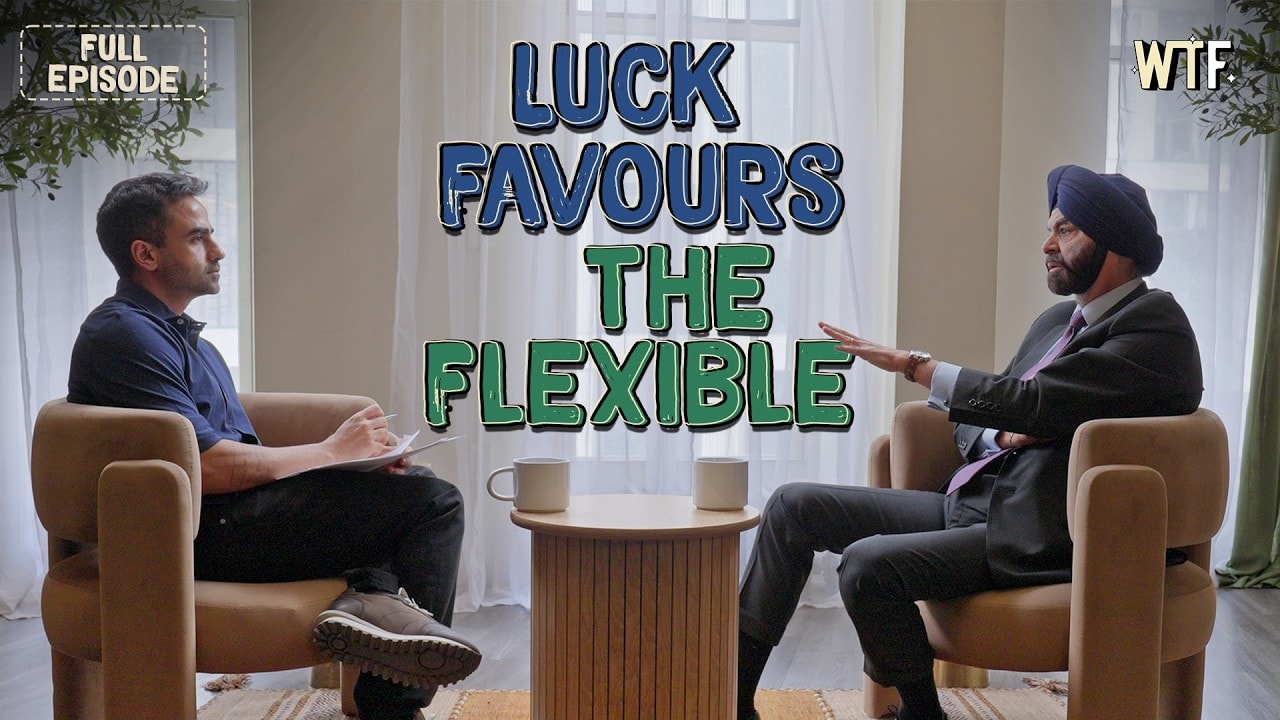
World Bank President Ajay Banga joins Nikhil Kamath to discuss his career, the bank's structure and why he places jobs at the center of reducing poverty. The conversation connects infrastructure, education, health, farming and local value creation with opportunity for young people. Economic figures and policy arguments are Banga's account in this interview.
People by WTF
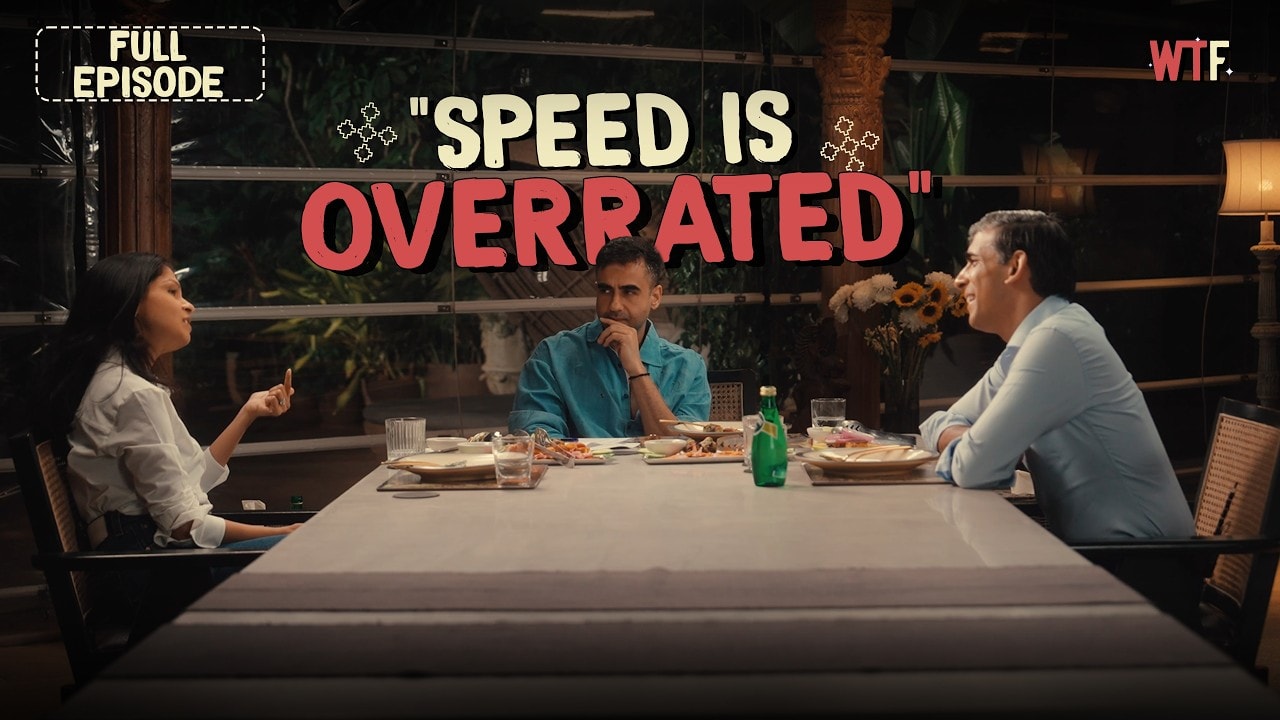
Over a long lunch, former UK Prime Minister Rishi Sunak and Akshata Murty sit down together with Nikhil Kamath for their first joint long-form interview. Sunak explains why doing something before politics matters, why he now believes patience beats speed ('I used to think speed was the most important thing... patience is almost a bigger competitive advantage'), and what it felt like to become Prime Minister suddenly at Diwali - and to lose the job publicly. Akshata talks about carving her own path as Narayana Murthy's daughter and a PM's wife, her Lessons at 10 programme, and why her identity comes 'from genuinely having impact' - she calls herself 'a Bangalore girl with a British accent,' part of the diaspora's 'living bridge.' Together they cover the Foundery (Nikhil's three-month residential consumer-brand incubator), AI-era education (horizontal skills plus deep mastery), sovereign AI as a three-part portfolio strategy, tariffs and China's export model, the William Wilberforce playbook for change from the backbenches, coping with failure without victim stories, and their closing debate: poets or politicians. FULL COVERAGE: the captions appear to cover the entire episode. All views and stories are the guests' own. Sponsor: none stated. Nothing here is professional, financial or political advice.
People by WTF
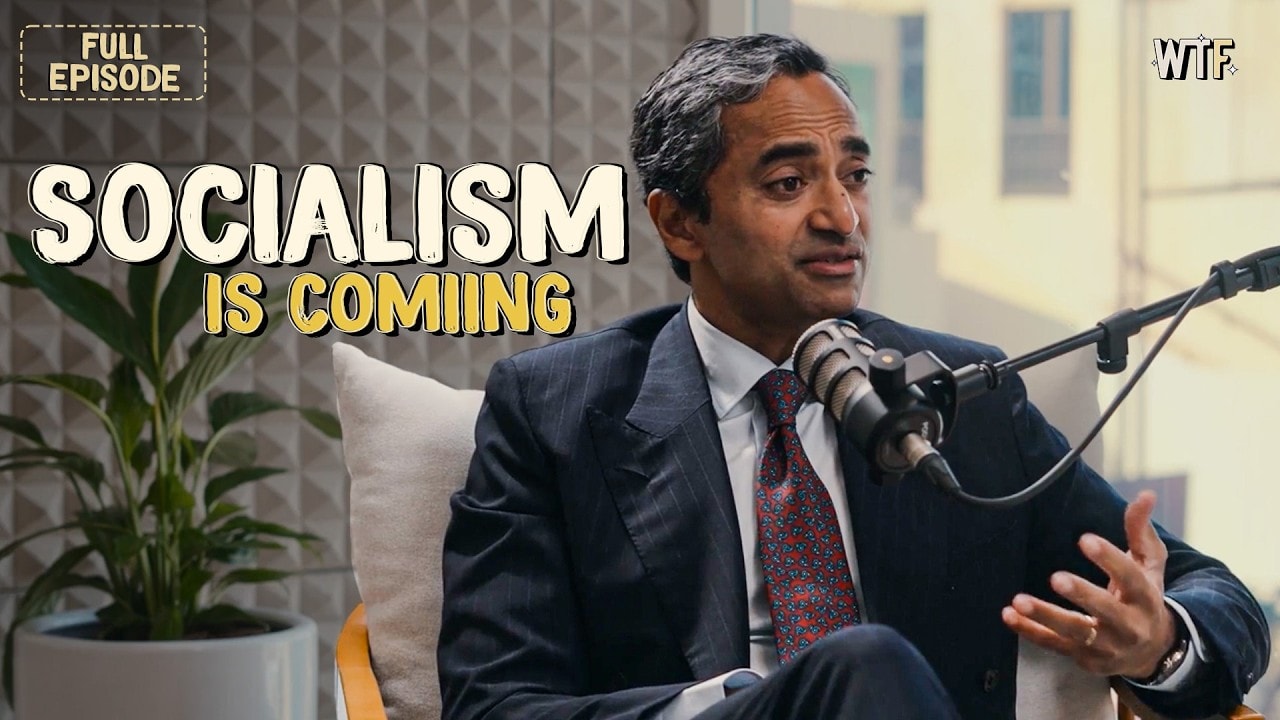
Nikhil Kamath and Chamath Palihapitiya discuss childhood pain, ambition, family and the shift from treating business as life-and-death to seeing it as a game. The conversation also covers investment conviction, position sizing, AI and politics. Personal and market claims are Palihapitiya's account, not independently verified findings or investment advice.
People by WTF
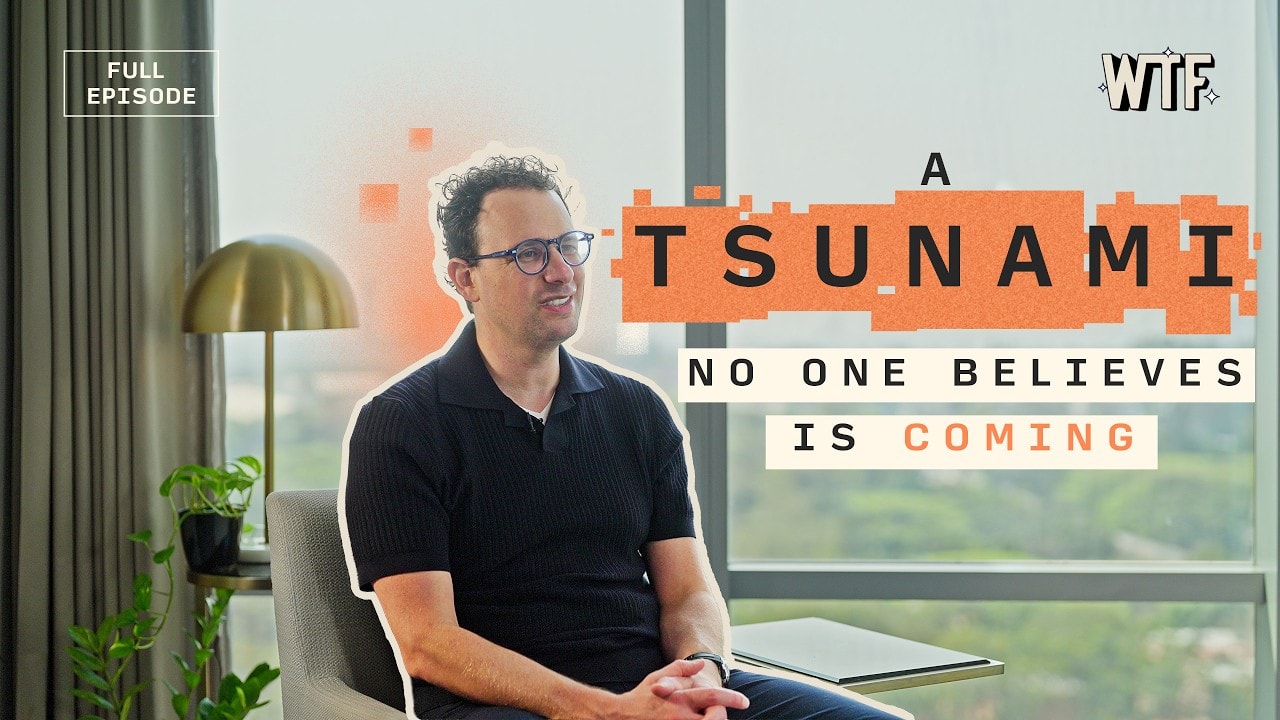
Nikhil Kamath asks Anthropic co-founder Dario Amodei about scaling laws, trust, AI risks and benefits, India's IT sector and opportunities for builders. Amodei argues for steering AI rather than simply stopping it, while warning that society may be unprepared. Company claims and forecasts are his own views, not independently verified findings or investment advice.
People by WTF
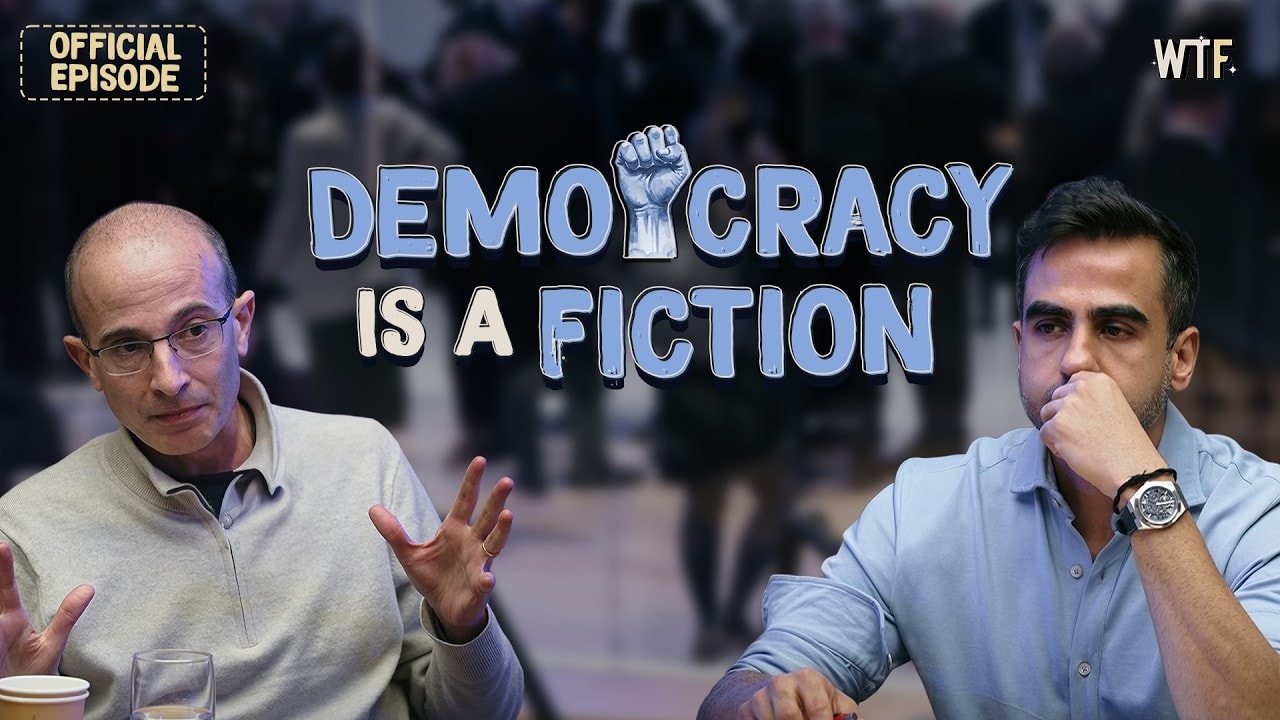
At Davos, Nikhil Kamath asks historian Yuval Noah Harari about shared stories, religion, power, democracy and AI. Harari argues that cynical thinking can excuse dishonesty, engagement metrics can damage public trust, and understanding suffering is a better guide than imagining a fixed role in a cosmic drama. Political judgments in these notes are his views, not settled facts.
People by WTF
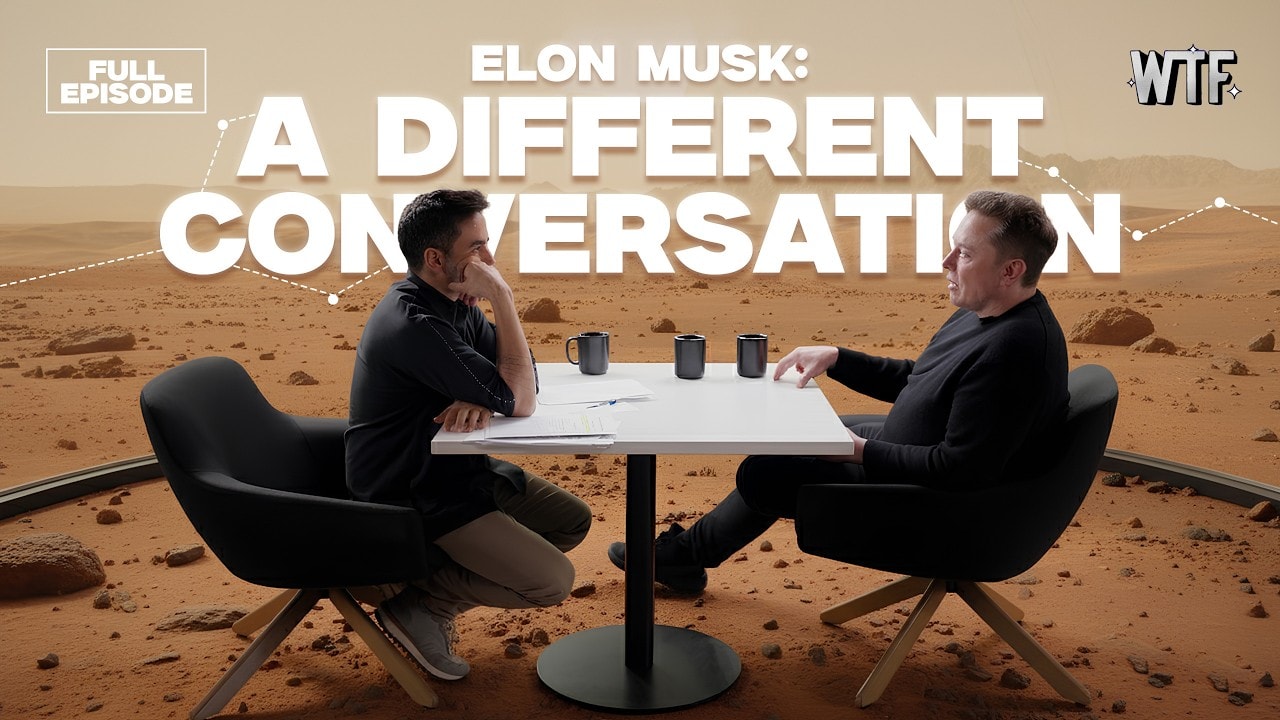
A long unscripted conversation with Elon Musk and Nikhil Kamath about work, consciousness, family, money, AI and how the future might unfold. They discuss social platforms, useful products, Tesla, SpaceX, xAI, Starlink, investing, college, morality and simulation theory. Musk’s forecasts are his opinions.
People by WTF
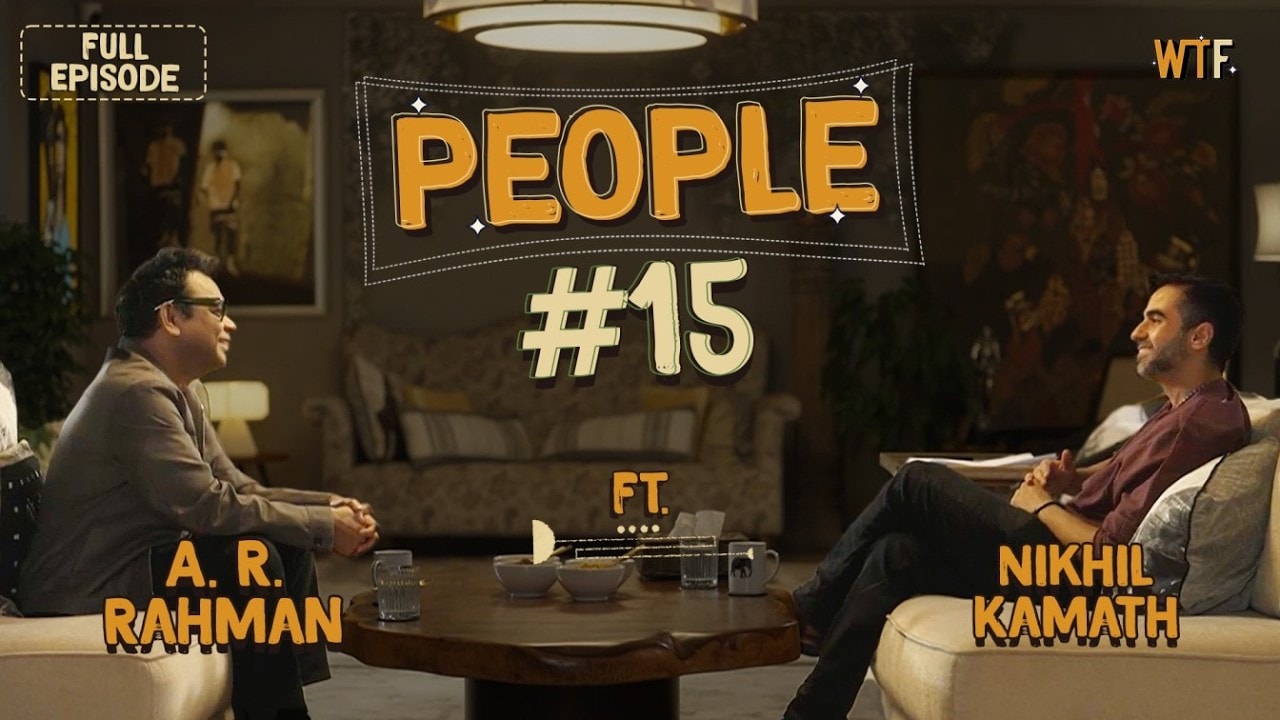
A.R. Rahman talks with Nikhil Kamath about creative independence, musical influences, practice, artistic education and AI. He reflects on working across traditions, making space to experiment and what human participation brings to performance. Personal recollections and predictions are presented as his views from November 2025.
People by WTF
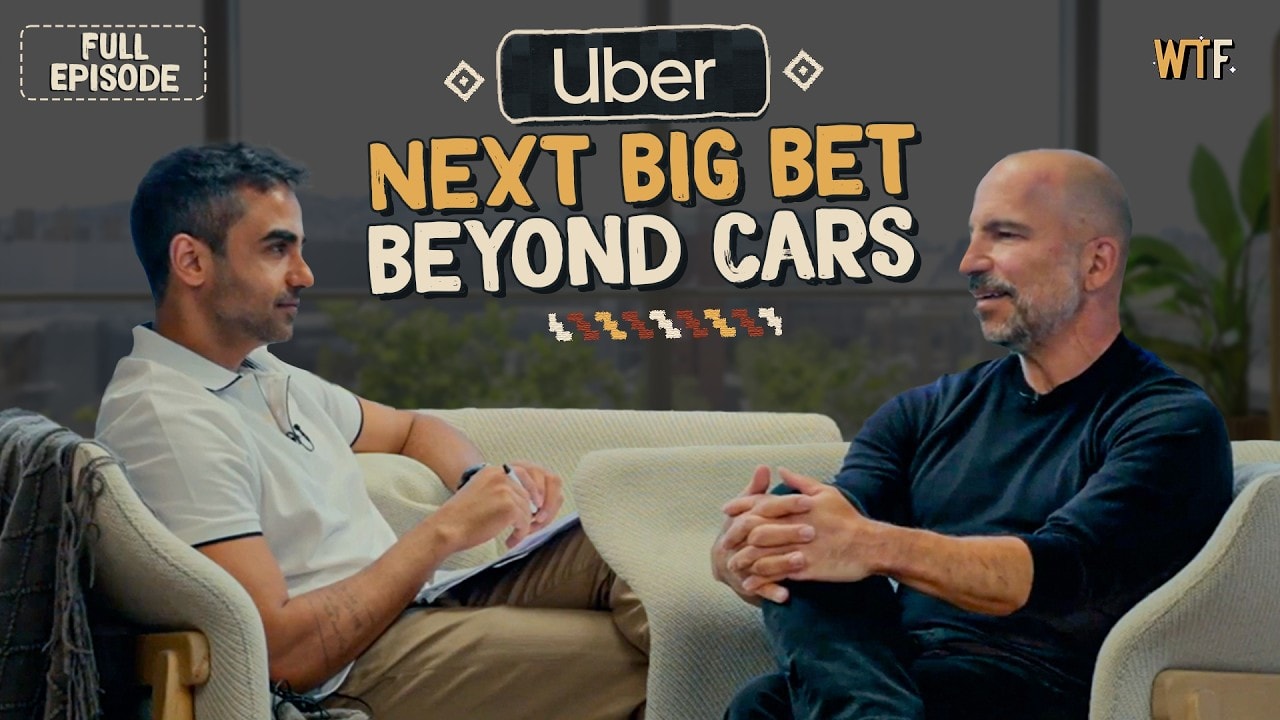
Dara Khosrowshahi discusses an authentic, collaborative leadership style, learning from competition and the difference between starting and scaling a business. He shares career criteria and his August 2025 outlook on AI in travel. These are his accounts and forecasts, not verified current Uber features, availability or policy.
People by WTF
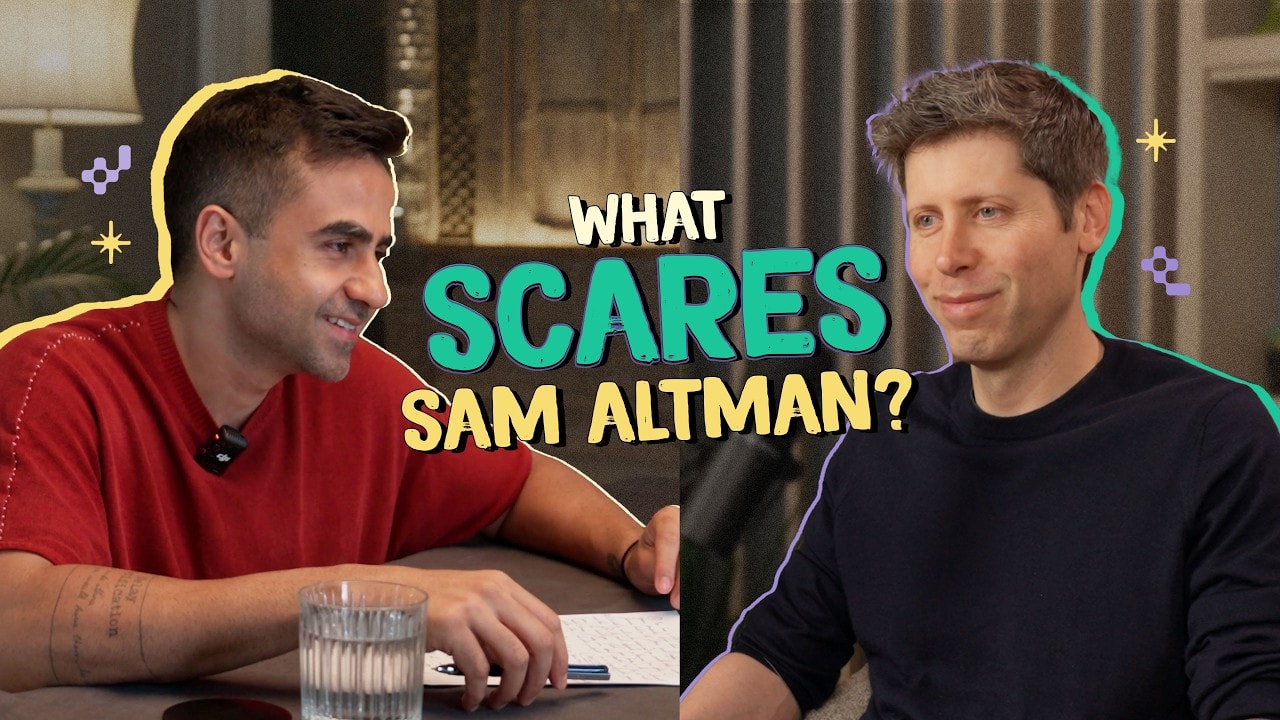
Nikhil Kamath asks Sam Altman about GPT-5, careers, building with AI, humility, parenthood and the future of business. Altman emphasizes AI fluency and learning to learn while acknowledging the difficulty of predicting beyond a few years. Recorded in 2025; product claims are Altman's account at the time, and economic predictions are not investment advice.
People by WTF
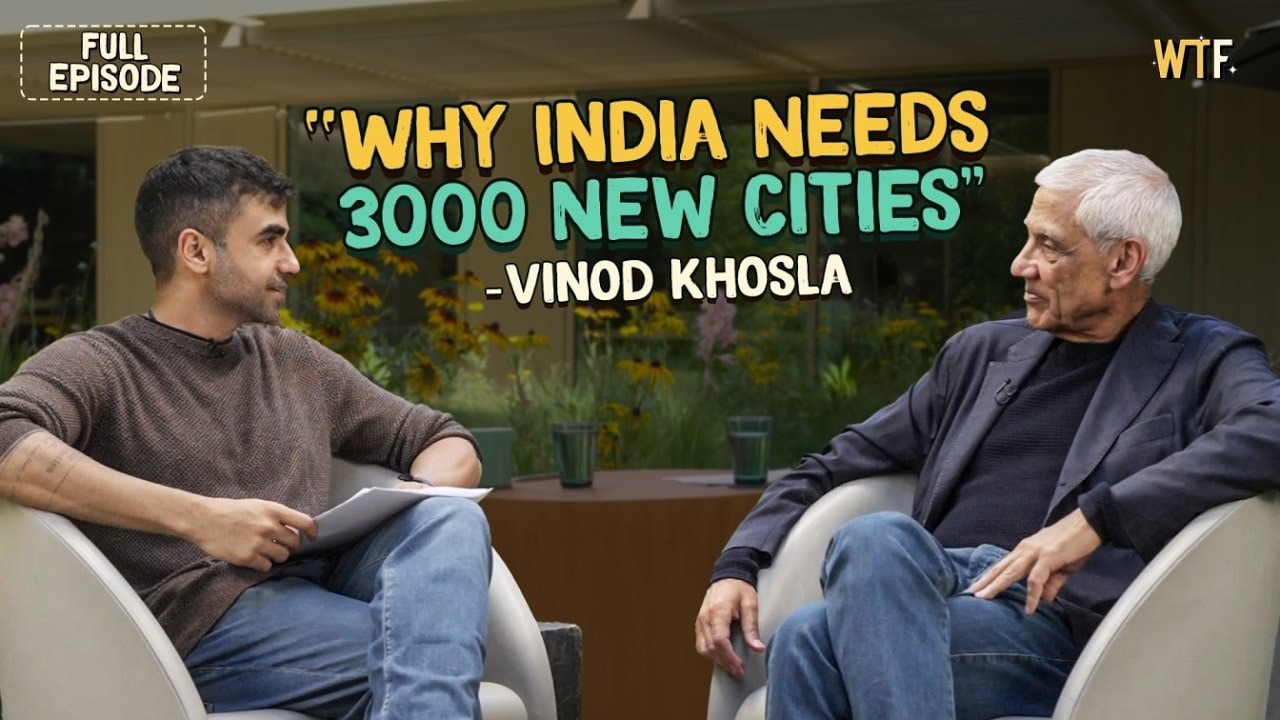
Nikhil Kamath asks Vinod Khosla about entrepreneurship, mission, education and adapting to AI. Khosla argues for first-principles thinking, broad learning and a five-year direction alongside near-term sales. Recorded 7 July 2025 and released 2 August 2025 in India; his predictions about jobs and technology are opinions, not settled facts or investment advice.
People by WTF
Nikhil Kamath sits down in Silicon Valley with Nikesh Arora - chairman and CEO of Palo Alto Networks, formerly of Google and SoftBank - for a wide-ranging conversation that runs from an Air Force childhood in Ghaziabad (a lawyer father who taught integrity, a mother with a master's in math and Sanskrit) to the top of the cybersecurity industry. Arora explains why the attack surface keeps expanding (five billion people online, connected cars and humanoids next), why over $10 billion a year is extorted or ransomed in what he calls the lowest-conviction crime, and why most real hacks are still human error rather than quantum wizardry. The conversation turns to AI: agents as inference engines plus do-engines, why 75% of product development is really teaching users to talk to back-end databases (and why that layer dies), systems of record as the durable moat, the internet democratising information while AI democratises intelligence, and why the art is in wrapping models rather than building them. He also tells the personal story - the CAT exam he walked out of for a movie, 400+ rejection letters he still keeps, seven rejections from Fidelity before the eighth person hired him, lessons from Larry Page (product obsession) and Masa Son (all-in risk appetite) - and closes with his decade bet: long technology, short services. All figures and views are the speakers' own, not verified by us. FULL COVERAGE: the captions appear to cover the entire episode. Sponsor: none stated. Nothing here is investment, legal or financial advice.
People by WTF
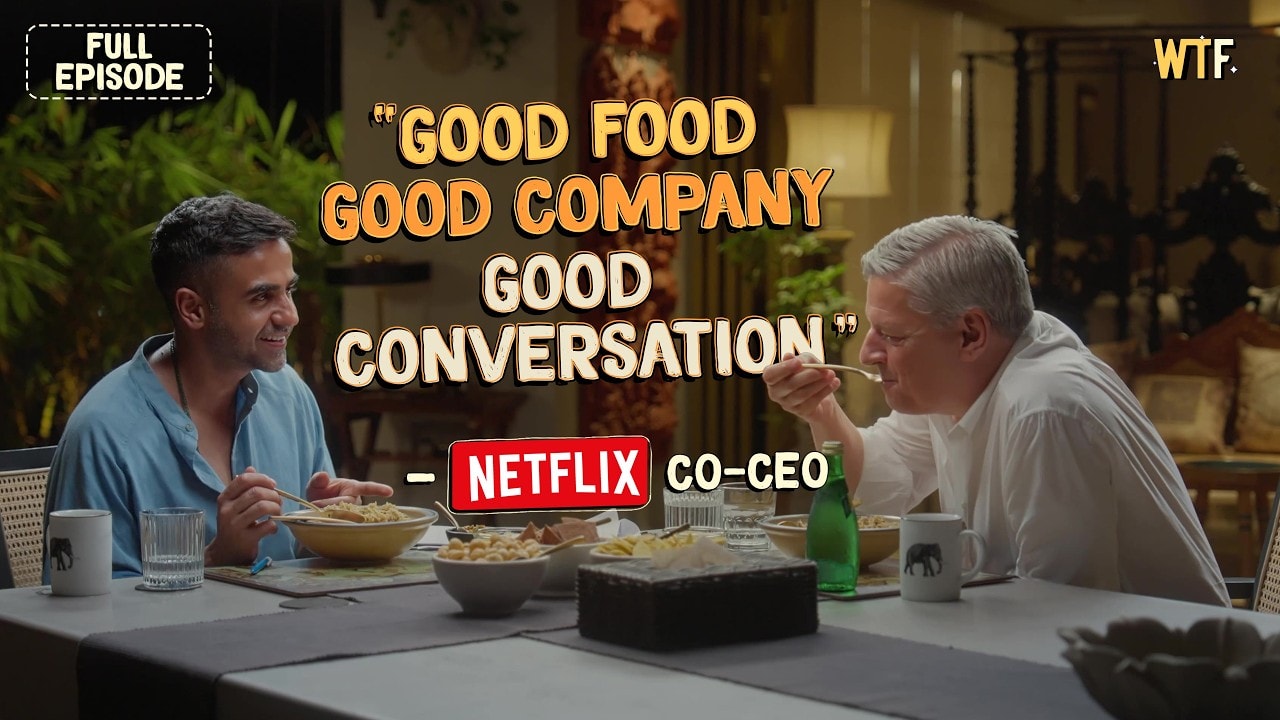
Nikhil Kamath hosts Ted Sarandos - co-CEO of Netflix for 25 years alongside Reed Hastings - in Mumbai, over chicken pulao, for a tour of how modern entertainment actually works. Sarandos retraces his own path: a Phoenix childhood with utilities switching on and off, a journalism dream abandoned when he realised he was only an okay writer, and a part-time video-store job that taught him the trade-radius lesson (one copy of an art film in a thousand stores makes money; a thousand copies in one store does not) that later became Netflix's national-inventory niche strategy. He retells meeting Reed Hastings in October 1999 - the pitch that all entertainment would arrive over the internet, backed by Moore's Law - and the culture Reed built: talent density, a sports team not a family, and the warning that you can idiot-proof a business but end up with a business full of idiots. The conversation covers the Blockbuster counter-position (no late fees, no managed dissatisfaction), why the win metric is whether you stay after pressing play, the tech DNA (per-device optimisation, downshifting streams, Open Connect, the Jake Paul-Tyson fight stress test), why authentically local stories like Squid Game travel best, why big-league sports rights are a low-margin trap (Drive to Survive built F1's audience, then the fee went up 10x), India specifics (Sacred Games came early, recurring card charges were culturally alien, Indian viewers are surprisingly international), AI as a tool not a replacement (The Irishman's $30M de-aging versus Pedro Paramo's entire budget), greenlighting by gut, co-CEO mechanics with Greg Peters, and his advice to a 20-year-old: start at the bottom, get coffee for a writers' room, and don't chase work-life balance - the phrase was designed to make you feel bad. All figures and views are the speakers' own, not verified by us. FULL COVERAGE: the captions appear to cover the entire episode. Sponsor: none stated. Nothing here is investment, legal or financial advice.
People by WTF
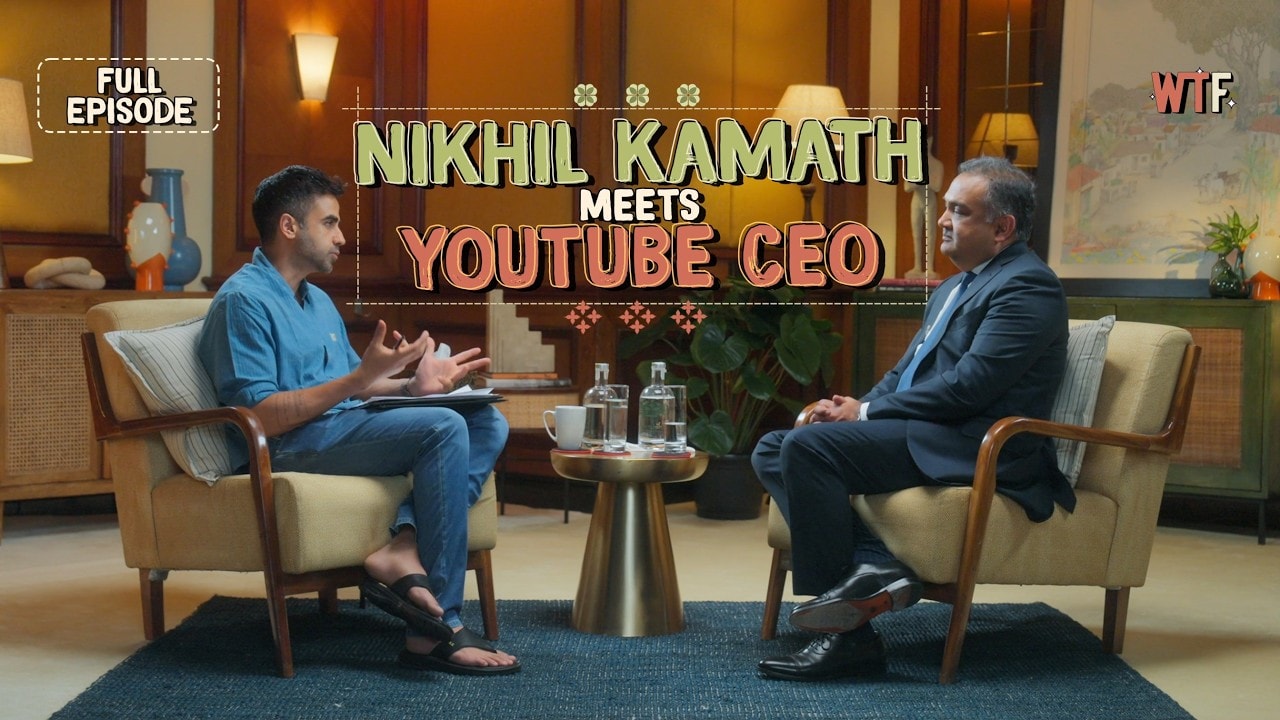
Recorded at the WAVES summit in Mumbai, Nikhil Kamath sits with YouTube CEO Neal Mohan on what YouTube actually is, why podcasters beat news channels for trust, and how a young Indian should build an audience before a business. FULL COVERAGE: notes span the entire episode (transcript 0:30 to 1:05:52 of 1:05:56). Sponsor: none stated (no ad read; the conversation is framed around the government-backed WAVES creator summit where Mohan was speaking). Mohan speaks as YouTube's CEO - his figures on creators, payouts, and product strategy are the company's own account. The 'Google offered $100 million' anecdote Nikhil cites is addressed by Mohan only with 'don't believe every single headline.' Nothing here is investment advice.
People by WTF
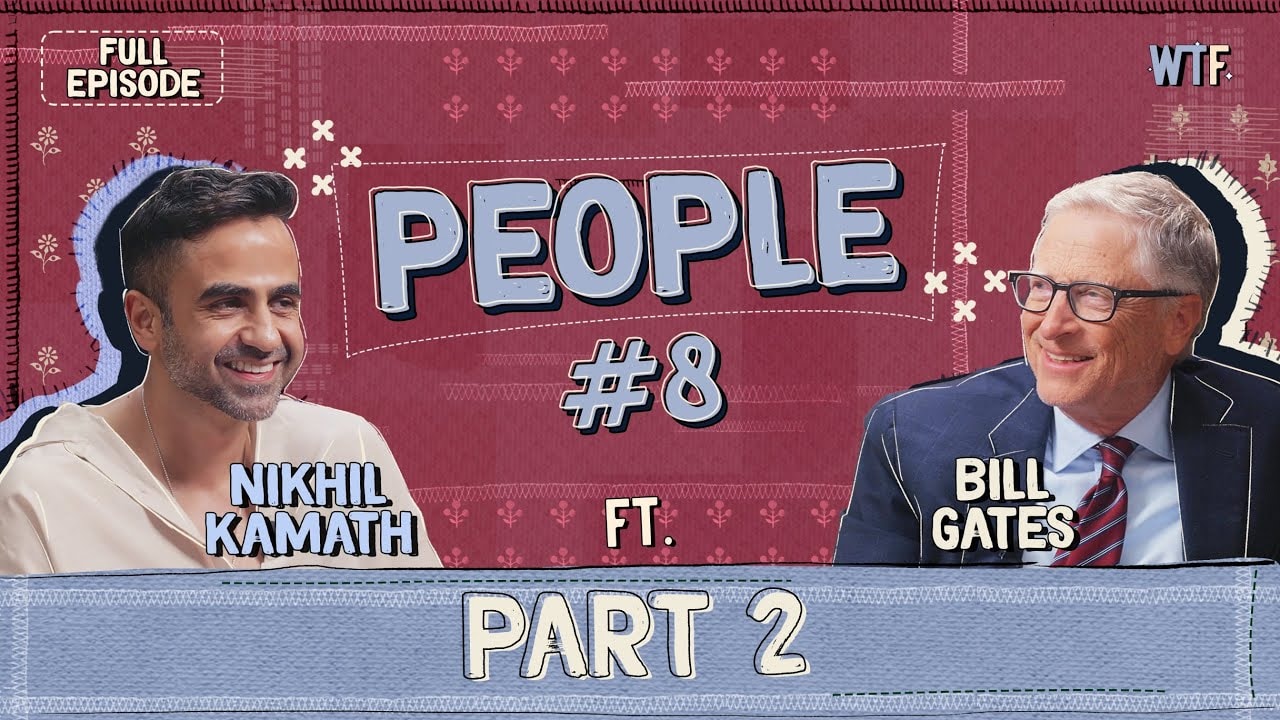
In this loose, late-evening Part 2 (recorded during Gates's India trip, after Nikhil spent a week reading his memoir Source Code), the conversation goes personal: Gates's 'almost ideal' childhood, why he still works at 70, what AI does to a world built on scarcity, and whether giving money away is ego too. FULL COVERAGE: notes span the entire episode (transcript 0:28 to 40:15 of 40:23; the video closes with a 'What's WTF?' title card). Sponsor: none stated. Gates's recollections of Jobs, Musk, Zuckerberg, and Paul Allen are his personal account, and his AI timeline (roughly 20 years to robots with good hands) is his own extrapolation. Nothing here is financial advice.
People by WTF
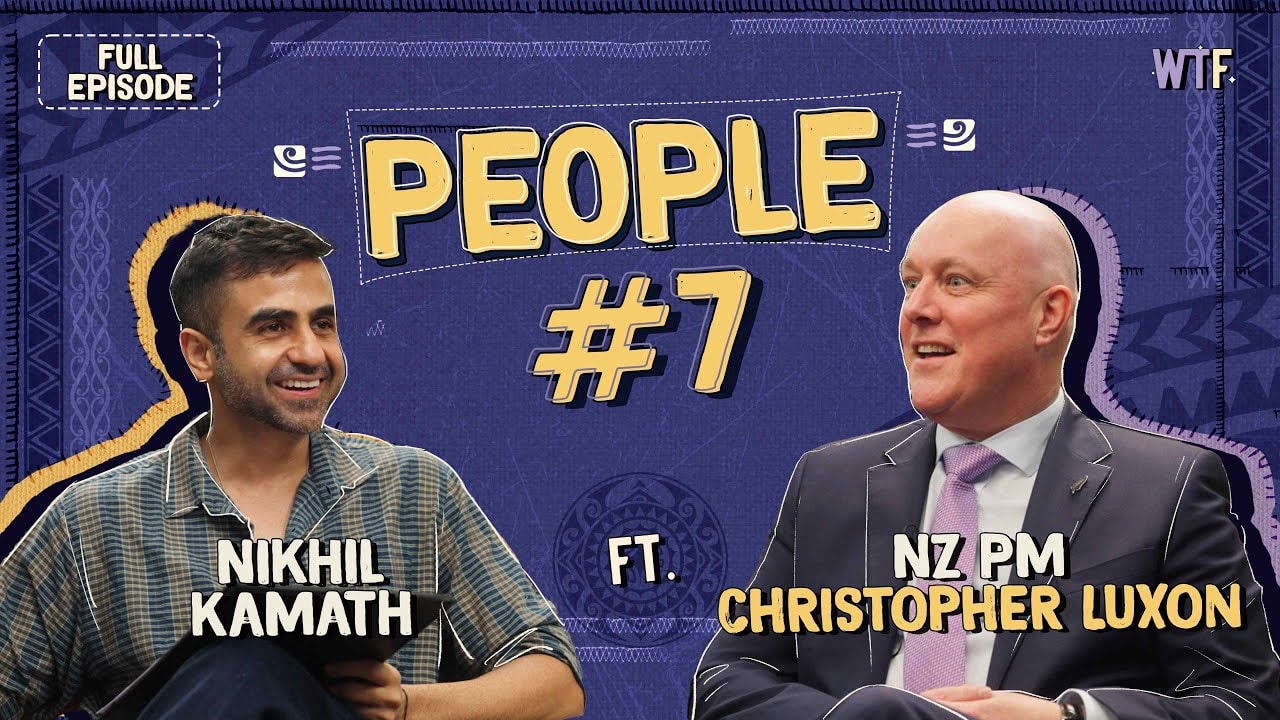
New Zealand Prime Minister Christopher Luxon - ex-Unilever, ex-Air New Zealand CEO - joins Nikhil Kamath in Mumbai during his India visit for a conversation aimed squarely at people who work in or want to start companies: the business-to-politics transition, leading without being consumed by critics, and what New Zealand offers Indian entrepreneurs. Nikhil explicitly skips the Khalistan, nuclear, and China questions. FULL COVERAGE: notes span the entire episode (transcript 0:31 to 40:47 of 40:54; the raw transcript repeats once, collection artifact). Sponsor: none stated. Luxon's claims about New Zealand policy, the Active Investor Visa, and his record are a sitting PM's own account made on an official visit.
People by WTF
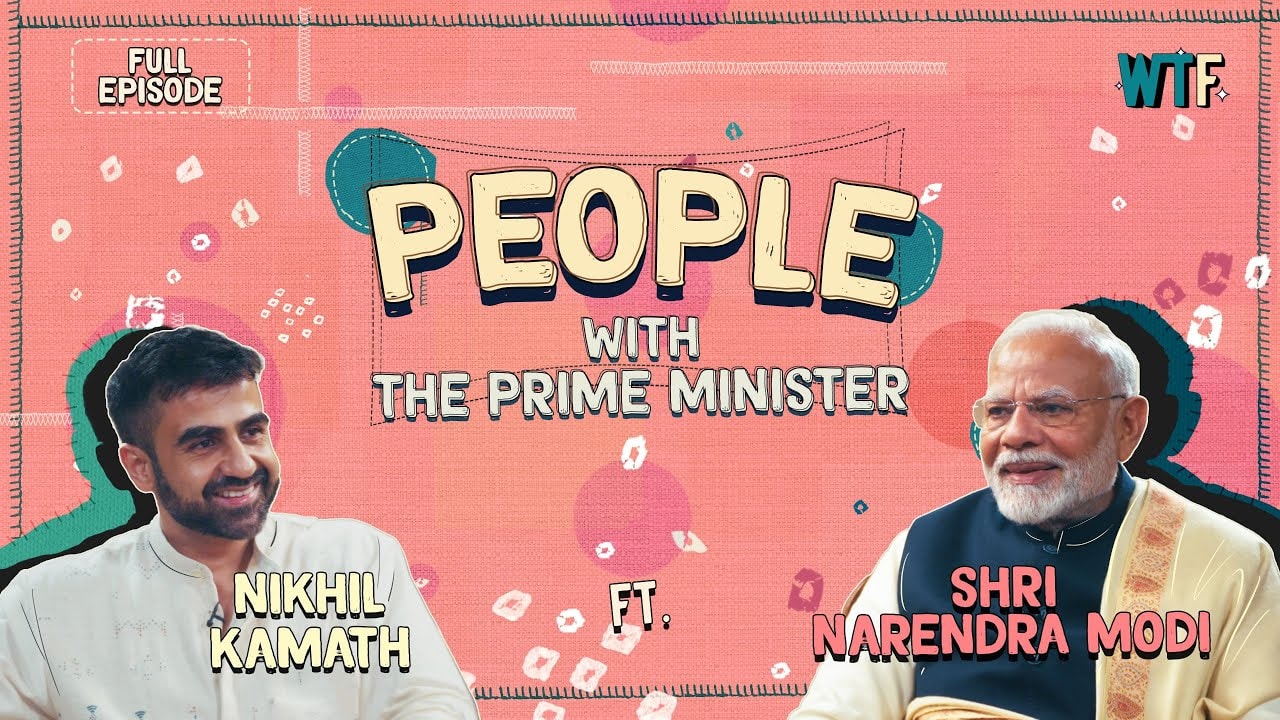
Prime Minister Narendra Modi joins Nikhil Kamath for his first podcast - a two-hour Hindi conversation (notes in English) covering his Vadnagar childhood and early setbacks, his years of wandering and self-discovery, his philosophy of politics as mission over ambition, his working methods as CM and PM, technology and governance, foreign policy moments, and his 2047 'Aspirational India' closing message to young people and women. FULL COVERAGE: notes span the entire episode (transcript 1:05 to 2:06:15 of 2:06:20). The audio is Hindi; quotes are given in English translation and marked accordingly. Sponsor: none stated. All anecdotes, claims and figures (compliance counts, reservation percentages, the PM Janman Yojana details) are the speaker's own account from January 2025, attributed to him, not independently verified. This is an interview record, not political endorsement or advice.
People by WTF
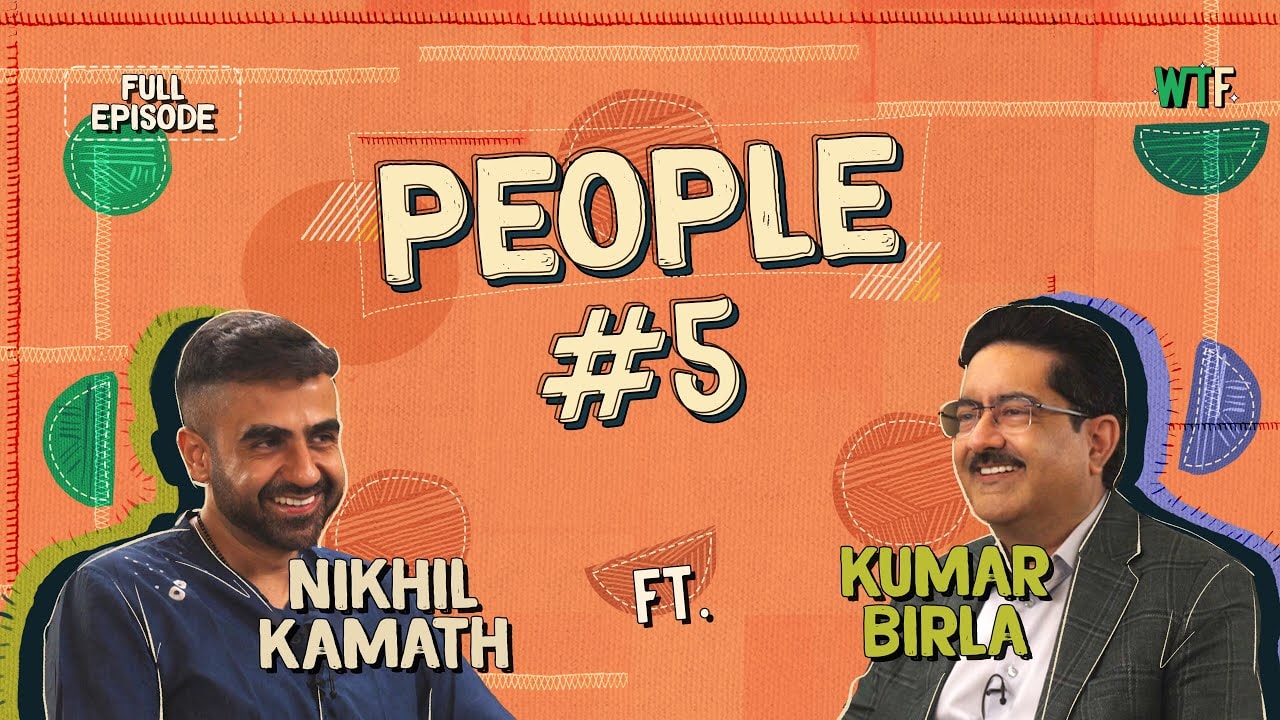
Kumar Mangalam Birla, chairman of the Aditya Birla Group, sits with Nikhil Kamath for a rare, long People by WTF conversation: his Kolkata-Bombay childhood across four generations, losing his father at 28 and inheriting the group, the CA-years grind, how a 180,000-person conglomerate actually delegates, why he is betting on paints and jewellery retail, and unusually personal stretches on anger, emotional availability, conformity, and what legacy means. FULL COVERAGE: notes span the entire episode (transcript 0:00 to 2:18:24 of 2:18:30; the raw transcript repeats once, a collection artifact). Sponsor: none stated. The account is entirely the guest's own recollection and opinion - family history, business figures (180,000 employees, about 4,000 twenty-year veterans) and views on private equity and society are his, not independently verified. Nothing here is financial or business advice.
People by WTF
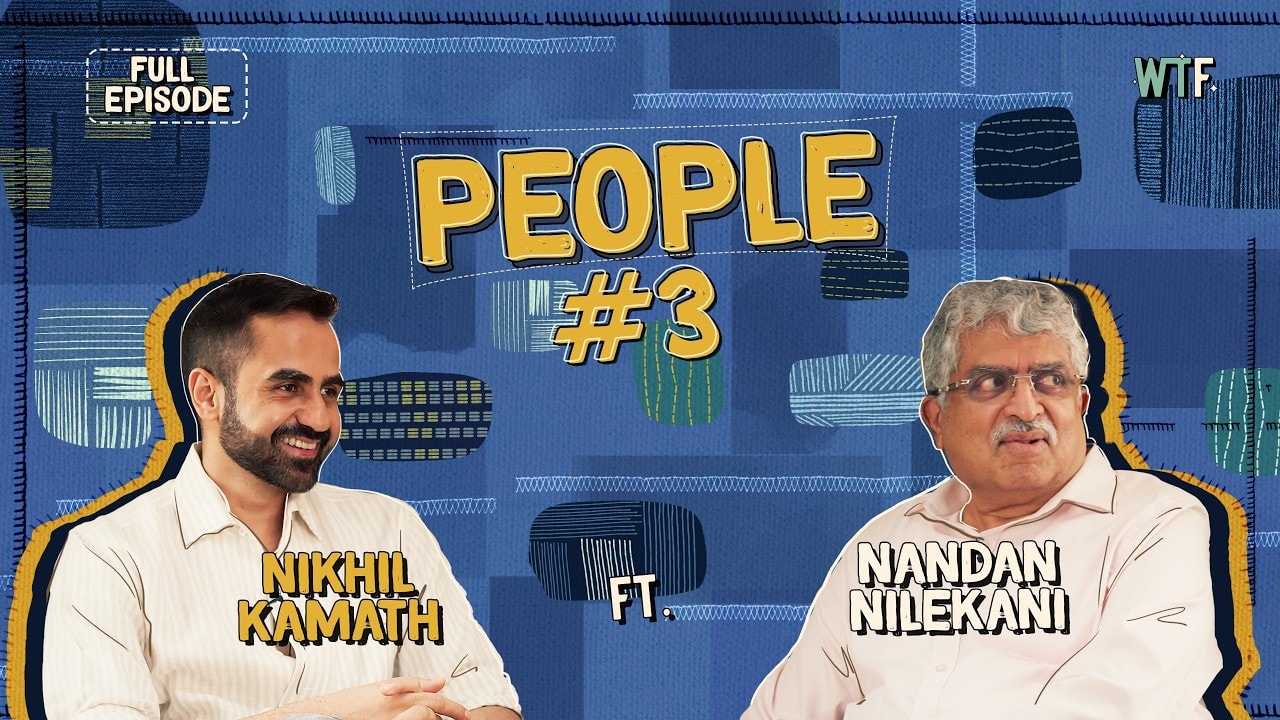
Nikhil Kamath with Nandan Nilekani (Infosys co-founder, founding chairman of UIDAI/Aadhaar) on the full India Stack story: Infosys values and scale lessons, why Aadhaar was made digital and online-verifiable, how eKYC won over every regulator one by one, the 2016 inflection year (1 billion Aadhaar, UPI, Jio, demonetization, BHIM), protocols explained from TCP/IP to UPI, account aggregation and consent-based data sharing, FASTag, ONDC/Beckn and Namma Yatri's driver-first model, why India shouldn't build LLMs but should build Indian-language voice AI on top, the Finternet and tokenized assets, CBDC and capital-account liberalization, and his advice to a 20-year-old with Rs 1 crore. FULL COVERAGE: notes span the entire episode (full ~1:06 audio transcribed). Sponsor: none stated in the episode. All statistics (transaction volumes, remittances, timelines) are the guest's statements as of September 2024; nothing here is investment, legal or policy advice.
People by WTF
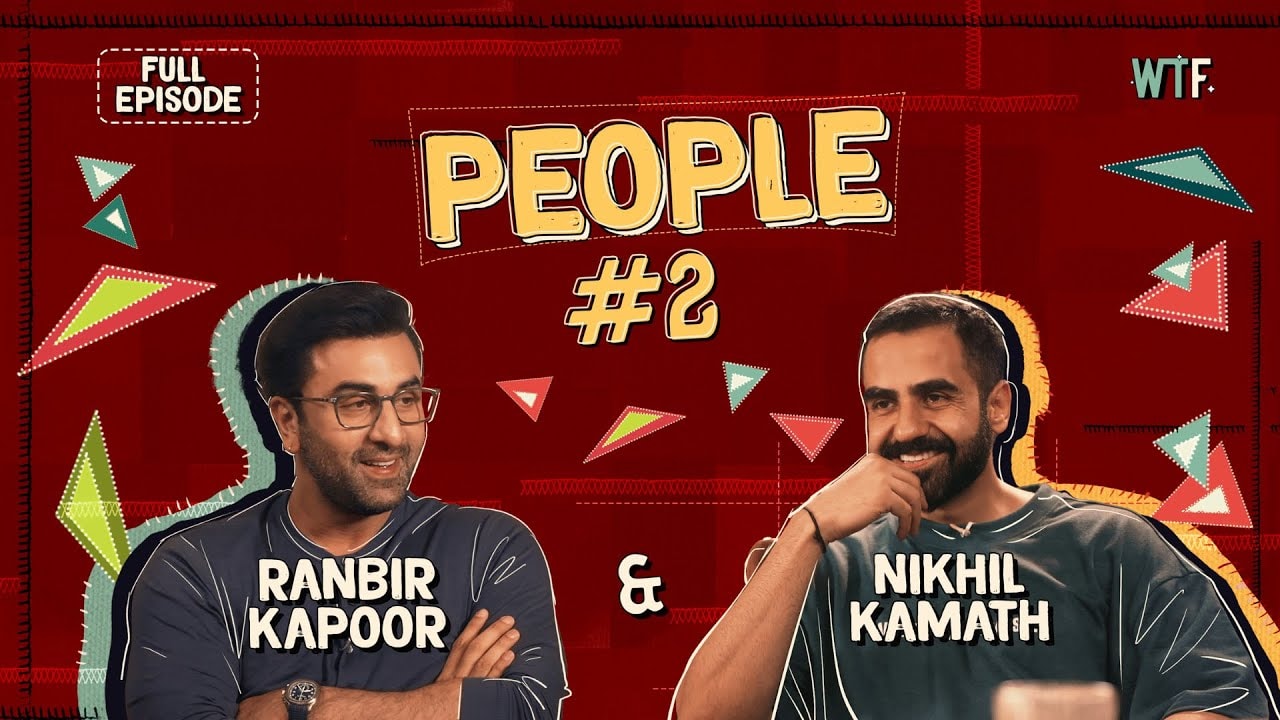
Ranbir Kapoor and Nikhil Kamath discuss childhood, family, the difference between a public image and a private person, cinema, ambition, relationships and work. Original English notes from the full available auto-caption page. Short quotes follow captions and may differ from audio. Source: https://youtubetotranscript.com/transcript?v=fEnwMyHejtQ. Personal accounts and opinions are attributed to the speakers and not independently verified. Business plans discussed are from the July 2024 recording, not confirmed current projects. This is not mental-health, relationship or investment advice.
People by WTF
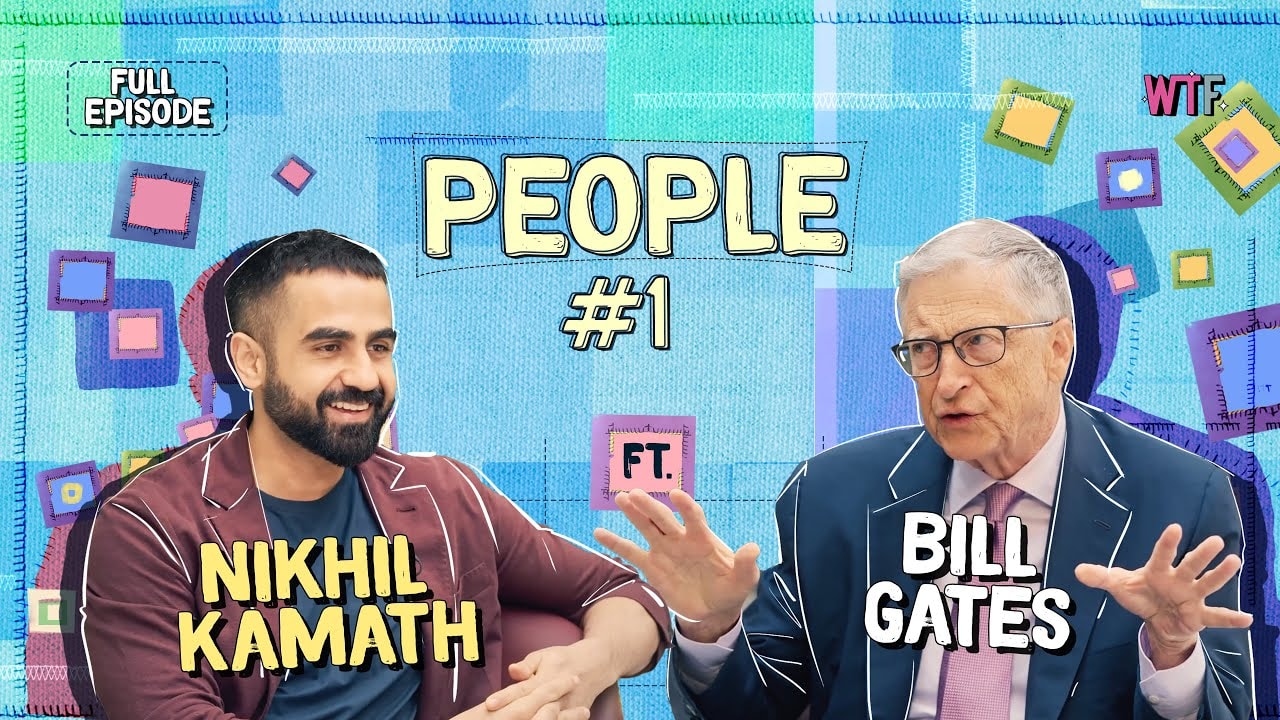
Nikhil Kamath with Bill Gates (Microsoft co-founder, Gates Foundation) on his decades-long India relationship, why the foundation spends close to a billion dollars a year here, what philanthropy can and cannot do versus markets and government, capitalism vs socialism, where a 22-year-old should enter the energy transition, why Indian AI founders should build on top of platform models rather than compete with them, the regulatory arbitrage he expects in health and agriculture AI, and how close AGI might be. FULL COVERAGE: notes span the entire episode (full ~31:30 audio transcribed, including behind-the-scenes outro). Sponsor: none stated in the episode. All figures (foundation spend, Microsoft India headcount) are the guest's statements as of June 2024; brief mentions of supplements and medical tests are the guest's personal views, not medical advice; nothing here is investment or career advice.

