


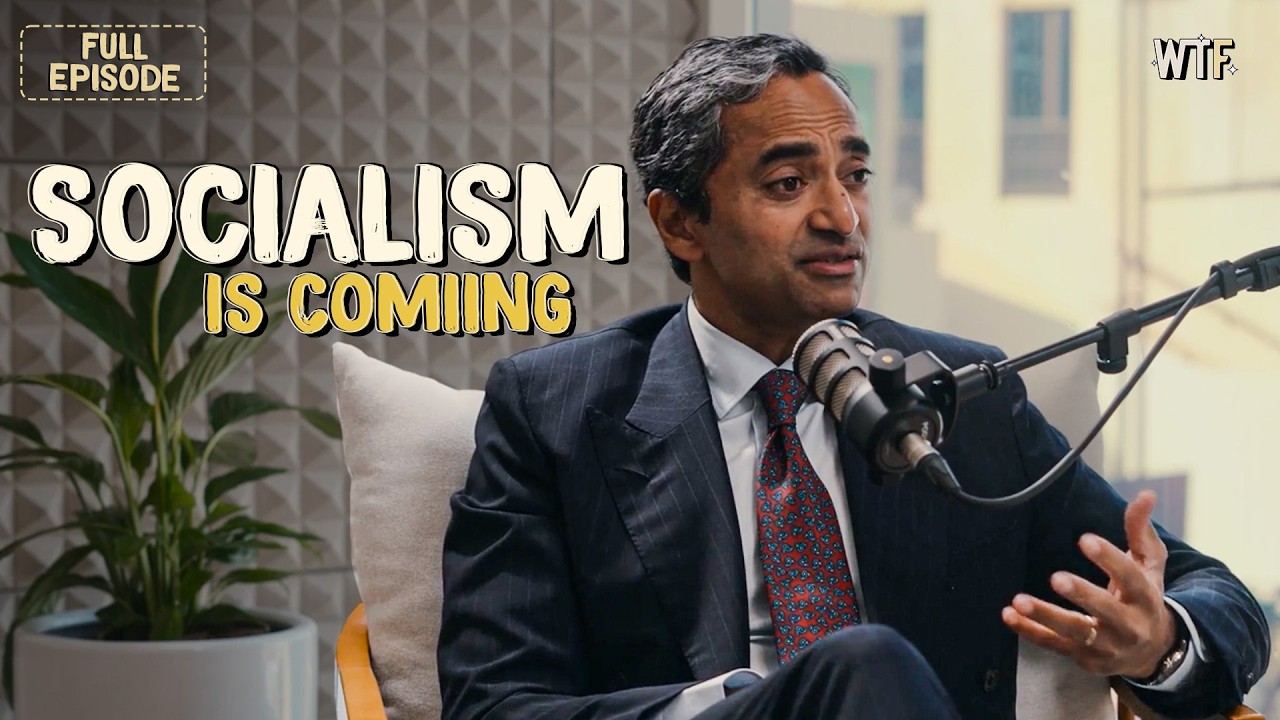
Pain, Power & The Game Nobody Wins | Chamath Palihapitiya x Nikhil Kamath | People by WTF
Executive Summary
Palihapitiya describes how pain and hunger shaped his ambition, then explains why he now treats business as a game rather than the whole of life. Family and personal growth offer a different measure from money and influence. His investing approach emphasizes independent conclusions and different levels of risk for small versus large bets. These are his retrospective claims and opinions, not verified financial results or investment advice.
Key Takeaways
Pain shaped his drive, but it is not a requirement to seek
Palihapitiya describes pain as an amplifier of capability and connects his own tolerance for difficulty with childhood experience. That is his interpretation of his life, not evidence that adversity produces better founders or that anyone should pursue harm. A difficult past can have many effects and deserves care rather than romanticizing.
The external scoreboard can miss what matters
He argues that fame, influence and capital are simple public measures that do not capture whether a life has been well lived. Personal evolution is harder to display but more meaningful to him. The question is whether a pursuit improves life or mainly makes the score easier for others to recognize.
Business stopped being life-and-death for him
Palihapitiya compares business with poker: some hands win, others lose, and even good execution can fail. He describes becoming more able to step away and remain himself around friends. This is a way of separating identity from outcomes, not a claim that business losses have no real consequences.
Family supplies a different feedback signal
He says his children do not judge him by followers, money or a deal, while his wife and friends respond to how he treats them and himself. He values that signal because it can reveal behavior the public scoreboard misses. He presents this as his experience, not a universal account of every family.
Investment conviction is personal in his approach
Palihapitiya insists on making his own investment decisions rather than treating consensus as a substitute for judgment. He also distinguishes that decision role from the trusted people who handle supporting infrastructure. His criticism of teams is an opinion about his investing style, not proof that collaborative investing cannot work.
Position size changes the risk he is willing to accept
His coarse small, medium and large buckets serve different purposes. Small bets seek unusual upside and may fail; larger bets prioritize avoiding ruin. He sees controversy as a place to investigate, but disagreement itself does not prove an idea right. This framework is his account, not an allocation recommendation.
The Conversation Breakdown
Personal growth versus the financial scoreboard
⏱ 11:16Kamath asks what matters outside conventional success. Palihapitiya contrasts public measures of money and influence with personal evolution and relationships. He then describes seeing business as a game with wins and losses rather than the whole of life. His later investment discussion retains strong conviction but separates the risk of smaller experiments from the danger of losing on large positions.
Core Frameworks & Ideas
Business as poker
Separate identity from a sequence of outcomes. Some hands lose despite good execution; that does not make the scoreboard a complete measure of a life.
Small, medium and large
In his approach, small positions seek unusual upside while larger positions prioritize avoiding ruin. This is a description of his method, not financial advice.
Controversy as a research signal
Strongly divergent reactions can identify a question worth examining. They do not establish that the contrarian answer is true or worth funding.
Actionable Next Steps
- ✓Write down a measure of personal progress that does not depend on followers or money.
- ✓Notice whether a work outcome changes how you behave toward friends or family.
- ✓Before joining a consensus, write your own reasoning and the evidence that could change it.
- ✓Treat his investing framework as one view to study, not an instruction to trade or increase risk.
Notable Quotes
“Pain is a fantastic amplifier of capability.”
“I thought that business success was a matter of life and death.”
“To be a very successful investor, you have to be extremely, extremely single-minded.”
The One Thing to Remember
Business is a game, not the whole of life. Palihapitiya argues that winning a financial scoreboard cannot substitute for personal growth and relationships.