


Sam Altman x Nikhil Kamath: How to Win When AI Changes Everything | People by WTF | Episode 13
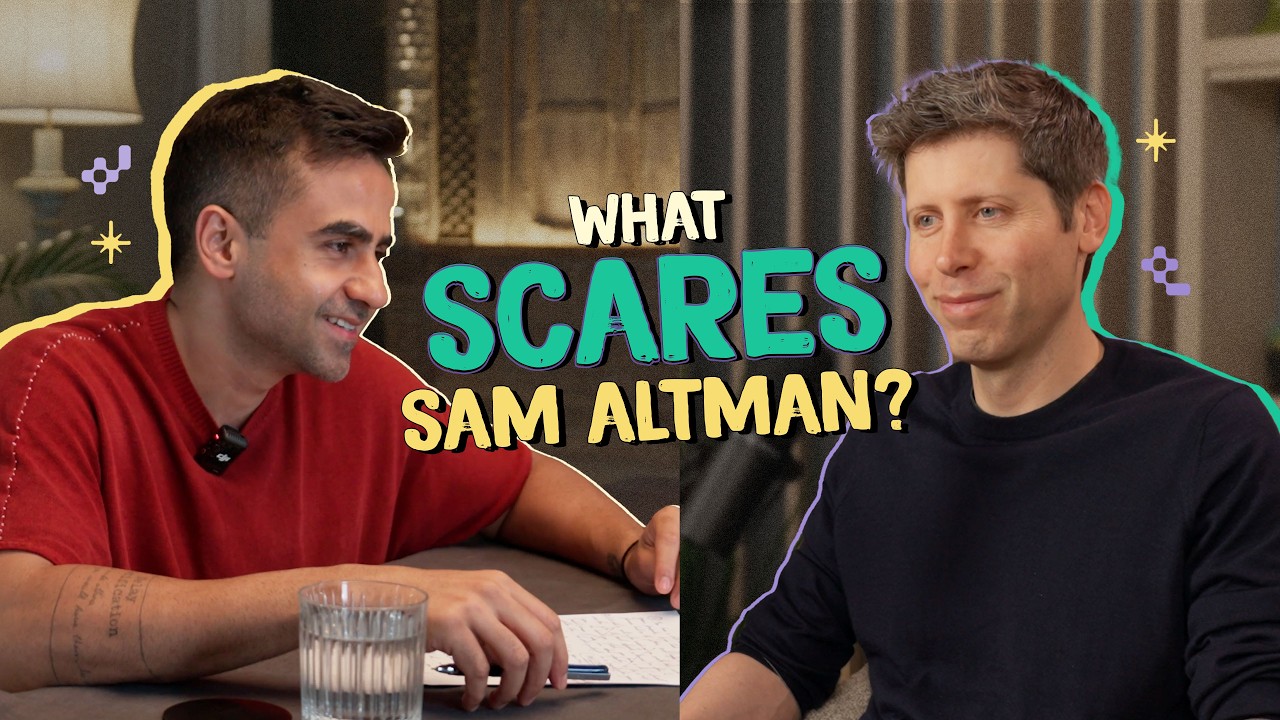
Executive Summary
Altman describes GPT-5 as a meaningful improvement over the previous generation and an opportunity for people starting their careers. His main advice is to become good at using AI tools and at learning new things. He discusses small software projects, the limits of certainty, family and the continued importance of real human relationships. These are his product views and forecasts from August 2025, not guarantees about later technology or the economy.
Key Takeaways
A capability jump changes what one person can attempt
Altman says returning from GPT-5 to the previous model feels painful to him. He presents the new tool as useful across tasks rather than only one benchmark. That is the product creator's account at launch, not an independent evaluation or a promise that every output is accurate.
Starting a career can mean greater practical reach
He argues that a young person in Mumbai can attempt more than earlier generations because of the tools available. He connects this with earlier computing revolutions rather than claiming the past lacked opportunity. The emphasis is on using capability, not waiting for a perfectly predictable career path.
Learning to learn is the durable skill
Altman recommends AI fluency alongside the ability to learn quickly across fields. Biology or computer engineering can both be valuable if study builds that ability. The point is not that formal learning has no value, but that adapting to new knowledge matters when tools and opportunities change.
Small software is a useful place to practice
He describes using GPT-5 for small pieces of software that solve problems in his own life. A bounded project gives a beginner a clearer purpose and a result to evaluate. The broader claim that AI can help with a startup does not remove the need to review legal, technical or customer-facing work.
False certainty makes it harder to listen
Altman reacts negatively to projecting confidence when the future is unknown. His concern is the culture it creates: people can become less open to other views and less able to make sound decisions. He also admits difficulty seeing more than a few years ahead, keeping his own predictions limited.
Human connection remains part of the future he wants
He calls having a child his favorite experience and hopes family and community matter more after advanced AI. He also argues that people care about real people rather than only efficient output. These are hopes and judgments about society, not a settled account of what a post-AGI world will be.
The Conversation Breakdown
Capabilities, learning and uncertainty
⏱ 02:54Kamath asks what a young person should study and build. Altman describes the practical reach of new tools, recommends becoming skilled at using them, and treats learning to learn as a meta skill. The later discussion of humility limits that optimism: he dislikes certainty that closes off other views and finds long-range prediction difficult.
Core Frameworks & Ideas
Learning to learn
Use study to build the ability to enter new fields quickly. Tool fluency and broad learning support adaptation when a specific forecast turns out wrong.
Small problem, small software
Choose a bounded personal problem and use an AI tool to prototype a solution. Evaluate the result rather than assuming a successful demonstration transfers to every task.
Intellectual openness
Keep uncertain forecasts visibly uncertain so other viewpoints and new evidence can change a decision.
Actionable Next Steps
- ✓Pick one small personal problem and test whether an AI tool can help make a simple software solution.
- ✓Choose a new field to study and note which learning methods help you enter it quickly.
- ✓Before repeating a prediction, write down what is known and what remains uncertain.
- ✓Review AI-generated technical or professional work carefully; product claims in this 2025 conversation are not a substitute for current testing.
Notable Quotes
“I think that 25-year-old in Mumbai can probably do more than any previous 25-year-old in history could.”
“And learning to learn is this meta skill that will serve you throughout life.”
“I find it very hard to see more than a few years in the future at this point.”
The One Thing to Remember
Get good at using new AI tools and at learning to learn. Altman treats the ability to enter a new field quickly as more durable than a single narrow prediction about the future.