

Sourav Ganguly on Leadership, Team Building, BCCI, Match-Fixing Era & Aggression | FO509 Raj Shamani
with Sourav Ganguly
Executive Summary
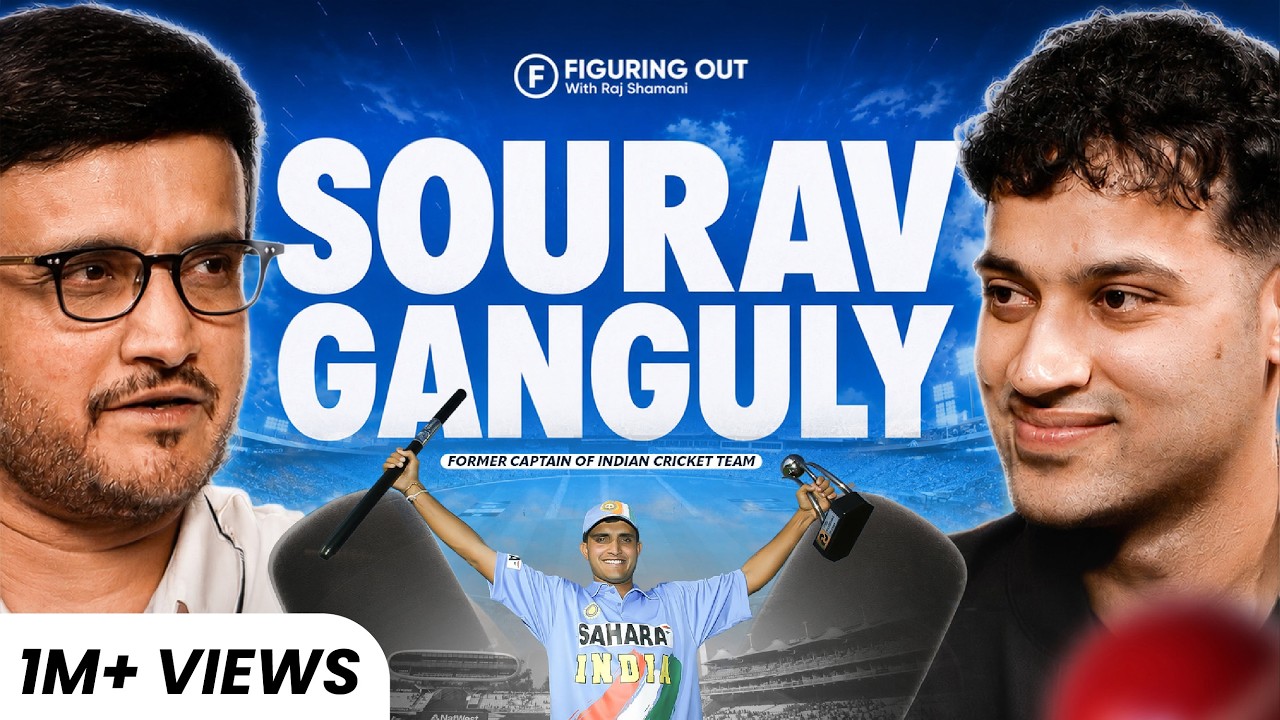
Sourav Ganguly - the captain who taught India to win overseas - sits with Raj Shamani on leadership, team building and his life after cricket. He revisits taking over in 2000 when trust in Indian cricket had collapsed after the fixing scandal, and how he rebuilt it: backing young players (Sehwag, Yuvraj, Kaif, Bhajji, Zaheer, Dhoni), asking Sehwag to open as his most unusual call, and trusting first-class colleagues' eyes - it was Navjot Sidhu who tipped him to Harbhajan. He separates aggression from anger (anger is a wrong emotion; aggression is playing hard), explains why he never criticized a player in the media, and why mistakes should not be taken negatively. He opens up about the Chappell era and losing captaincy, why he has no regrets (including the 2007 T20 World Cup), his father's death and his own 2021 heart scare, the Desmond Haynes book lines he lives by ('eight out of 10 failures happen when you surrender mentally'), and his advice to Raj: create value, and don't put cobras on your neck.
Key Takeaways
He inherited a broken dressing room in 2000 and rebuilt trust
After the match-fixing scandal, trust in Indian cricket was down; Ganguly's answer was a system - back young players publicly, take fear out of them over weeks in nets and team meetings, and make everyone move forward together.
His most unusual selection call: asking Sehwag to open
He picked players on technique and temperament - who can leave the ball outside off stump - pushed Sehwag to open, guaranteed Yuvraj a middle-order spot when he feared being dropped, and lifted Harbhajan on Navjot Sidhu's word alone.
Aggression is a method; anger is a wrong emotion
His distinction: you do not succeed much with being angry - aggression is playing hard and playing to win, a strategy to compete with the strongest Australia side he had seen in 40 years, not a temper.
Never criticize your players in the media
He refused Match ka Mujrim-style public blame even when it cost him: private honest conversations, public defense - and he says he never paid a price for it because the team trusted him back.
No regrets - not Chappell, not the 2007 T20 World Cup
On losing the captaincy, the Chappell fallout and sitting out the 2007 T20 title: everything is decided on evidence at the time, the wicket is seen, everyone is asked, and second-guessing later is pointless.
Visualization and the Desmond Haynes lines
His mental routine came from a book chapter on Desmond Haynes - rehearse the 15 ways you can get out and be prepared for each - and the two lines he says work like magic, including '8 out of 10 failures happen when you surrender mentally'.
Loss, a heart scare and what remains: value
His father died as his playing days ended; his own January 2021 cardiac event changed his relationship with risk; what remains is his father's 6 AM rule, time with his mother, and the belief that money follows when you keep creating value.
The Conversation Breakdown
From a joint family in Kolkata to the 1996 Lord's hundred
⏱ Untimed topicGrowing up with five uncles' sons and one cricket bat, emulating a cricket field at home in whites, the brother six years elder - and the debut Test hundred at Lord's with a loose bat handle he used for the entire series, back-to-back hundreds that changed how the team saw him.
2000: taking over after the fixing scandal
⏱ Untimed topicThe captaincy arrived when trust in Indian cricket had collapsed; his approach - no superstars, one team moving forward, the system matters more than any individual, and facing the strongest Australia side of the era by playing them hard rather than fearing them.
Building the team: Sehwag, Yuvraj, Bhajji, Dhoni
⏱ Untimed topicHow he identified talent: listening to first-class colleagues who saw players daily, Sidhu's tip on Harbhajan, asking Sehwag to open as his most unusual call, guaranteeing Yuvraj his middle-order place, and why one match never makes or breaks a player.
Aggression, anger and the captain's private code
⏱ Untimed topicThe distinctions he lived by: aggression is playing hard, anger is a wrong emotion; never criticize players publicly; mistakes should not be taken negatively; and the isolation of leadership - 200 matches as India captain, practice in the morning, the beach alone with his thoughts.
Chappell, lost captaincy and the 2007 question
⏱ Untimed topicOn the hardest years: roles reversing with players he once backed, knowing on day five at Nagpur (his 113th Test) that he was done, sitting out the 2007 T20 World Cup that MS led to the title - and why he genuinely holds no regrets about any of it.
The mind: visualization, surrender and Match ka Mujrim
⏱ Untimed topicHis mental preparation - the Desmond Haynes book chapter, rehearsing every dismissal before it happens, positive visualization like Michael Jordan - and his media rule shaped by watching Match ka Mujrim destroy players: no newspapers in the morning, no public blame.
After cricket: his father, the heart scare, value and cobras
⏱ Untimed topicThe personal close: his father's 6 AM switch-off-the-fan discipline, dying satisfied after seeing him captain India; the CAB and BCCI presidencies his father would have loved; the 2 January 2021 cardiac event; his biggest insecurity (not being valuable); and advice to Raj - create value, and don't put cobras on your neck.
Core Frameworks & Ideas
Aggression without anger
Anger is a wrong emotion that clouds judgment; aggression is a deliberate method - play hard, play to win - chosen because the opponent (Australia) punished anything less.
Trust the watchers
He scouted by trusting people who watched players daily - first-class colleagues, Sidhu on Harbhajan - leadership as curating trusted eyes, not personal omniscience.
Fear removal as a slow system
Fearless cricket is not a speech: it is built over 8-10 days in nets, rooms and team meetings, with guarantees given privately ('you will get your chance') so players stop playing for survival.
Surrender precedes failure
From the Haynes chapter he lives by: 8 out of 10 failures happen when you surrender mentally - prepare for every way you can fail, and the fight is rarely lost on the field first.
Actionable Next Steps
- ✓Before your next high-stakes performance, write down the 10-15 specific ways it could fail and prepare an answer for each - Ganguly's pre-match routine.
- ✓Separate aggression from anger in one ongoing conflict: keep the hard, winning intent, drop the emotion - he says anger has never produced much success.
- ✓If you lead people, adopt his media rule: never criticize your own people publicly; take the hard conversations private and defend them outside.
- ✓Give one junior person the Yuvraj guarantee - a stated promise that one failure will not end them - and watch what it does to their game.
- ✓Do a value audit instead of a money audit: where are you still creating difference? His claim is that numbers follow value, slowly but surely.
Notable Quotes
“I did not even cry at my father's death.”
“Mistakes should not be taken negatively.”
“Eight out of 10 failure happen when you surrender mentally.”
“The world has taught me to be like that. That's the way I am.”
“You cannot be a rejecter all the time.”
“Unknowingly you get tired dealing with things, press conferences, media, coach, players, manager, selectors.”
“Stop thinking that you don't need money. It will come slowly.”
The One Thing to Remember
One thing to remember: Eight out of ten failures happen when you surrender mentally - the fight is lost in the head before it is lost on the field.