

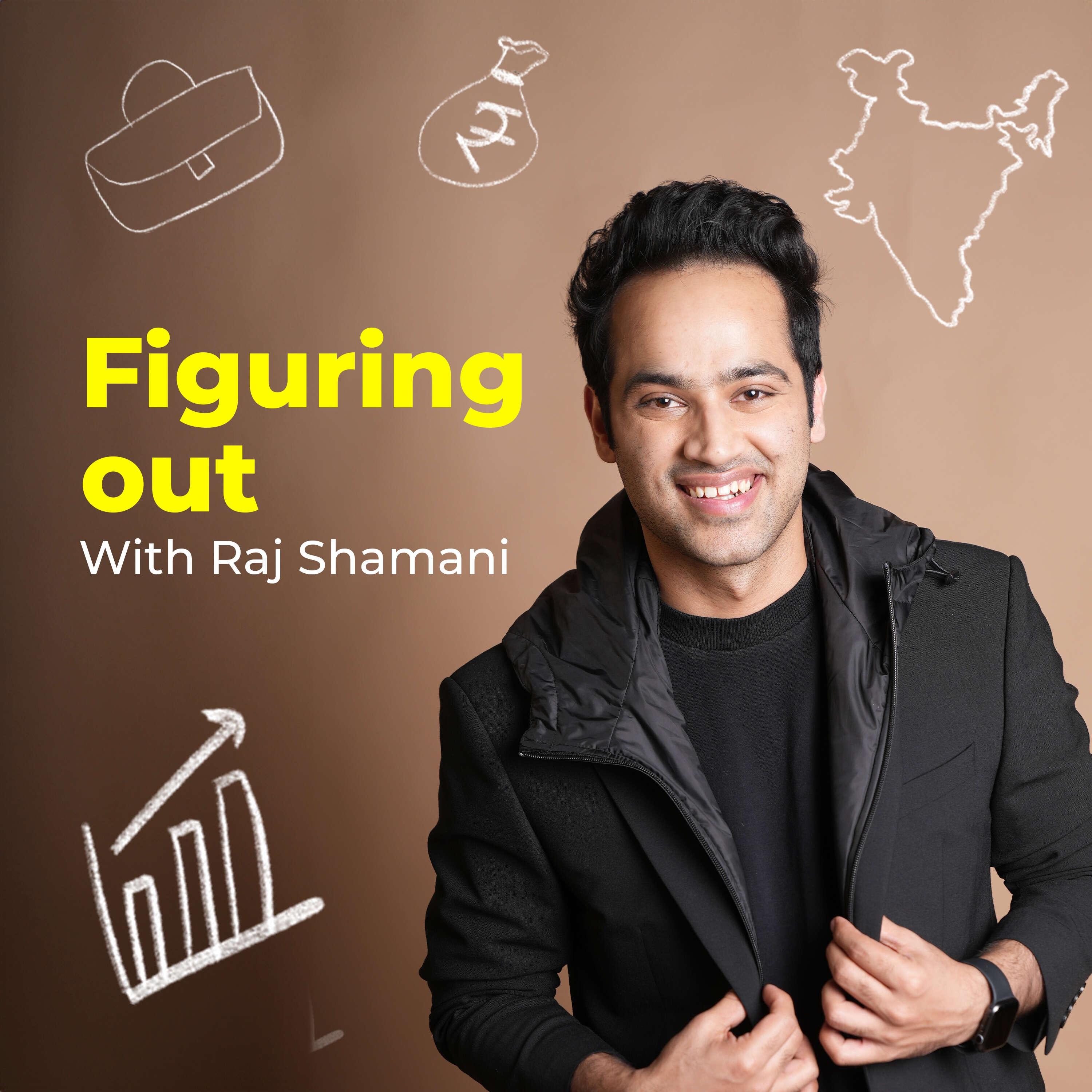
Top Geopolitical Expert: Why America Is No Longer The World's Leader | Ian Bremmer | FO545 Raj Shamani

Executive Summary
Bremmer describes a mismatch between global institutions and the balance of power through his G-Zero and geopolitical-recession lens. He argues that shared rules are needed for fast-moving technology and proposes expert-led coordination for AI risks, drawing an analogy with financial crises. He also reflects on changing his judgments and controlling his own response. These are August 2026 interpretations and proposals, not settled facts or existing global AI institutions.
Key Takeaways
G-Zero is his lens for a leadership gap
Bremmer calls the world G-Zero because he sees a mismatch between existing rules and the balance of power. He argues that uncertainty follows when major powers do not provide shared leadership. This is his geopolitical interpretation, not a universally accepted classification or an independently measured index of how every country is governed.
Geopolitical recession is an analogy
He compares disruption in global leadership with an economic recession, while saying it can last longer and be harder to recognize. He favors strengthening or rebuilding institutions over ignoring the problem. The analogy helps explain his reasoning; it does not prove that his list of responses is exhaustive or that conflict follows a fixed cycle.
He redirects the question toward future rules
Rather than only asking whether the United States will decline, Bremmer asks what governance people will need as technology changes. His focus shifts from a ranking of countries to shared problems and institutions. The future population language in the interview is rhetorical, not a checked demographic forecast, and his proposed framing is an opinion.
AI governance is a response he advocates
Bremmer worries that fast-moving technology can be misused and says governance should reflect risks that cross borders. This summary does not validate named models, claimed capabilities or specific events he cites. The supported point is his call for coordination, not a verified technical risk assessment or proof that one global framework will work.
Financial coordination provides his analogy
He points to responding across borders during financial crises as a way to think about AI oversight. He wants expert understanding, threat identification and coordinated response. The analogy is illustrative: it does not establish that all central banks have the same independence or that financial tools transfer directly to technology governance.
The Ministry of the Future is a proposal
Drawing on Kim Stanley Robinson’s novel, Bremmer imagines an expert-led body able to identify threats, alert relevant parties and coordinate a response. It is an institutional idea, not an existing ministry or approved policy. The fictional climate event he recounts belongs to the book, not a historical disaster reported here.
Judgment and personal response can remain revisable
Bremmer says an analyst can be wrong as the world changes but should be honest about the view they hold. He distinguishes controlling political leaders from controlling his intellectual and emotional response. These are his personal reflections, not evidence that every forecast is reliable or that criticism has no consequences.
The Conversation Breakdown
Governance and AI
⏱ 34:13Bremmer argues for shared governance of AI and uses financial-crisis coordination as an analogy. His expert-response body is a proposal inspired by fiction. The summary deliberately does not turn unverified model-capability or event claims into technical facts, and it distinguishes his analysis from an existing institution.
Core Frameworks & Ideas
G-Zero lens
Examine whether rules and institutions match the analyst’s view of the current power balance.
Coordination analogy
Compare a proposed governance system with an existing one while testing where the analogy breaks.
Controllable response
Distinguish external events from the judgments and responses a person can choose.
Actionable Next Steps
- ✓Identify which statement in an analysis is a fact, forecast or proposal.
- ✓Ask which institutions and rules govern a problem that crosses borders.
- ✓Compare a governance proposal’s aims with its unanswered implementation questions.
- ✓Record what evidence would make you revise a geopolitical judgment.
Notable Quotes
“Not G7, not G20, but an absence of global leadership and therefore a geopolitical recession.”
“It is not the right question to ask in 2026, not for the Indians, not for the Americans.”
“The only person I have control over is me, my intellectual response, my emotional response.”
The One Thing to Remember
Separate an analyst’s description of a problem from the institutions and rules they propose to address it.