Find key takeaways from long-form podcast conversations.
Found 5 results across 5 episodes
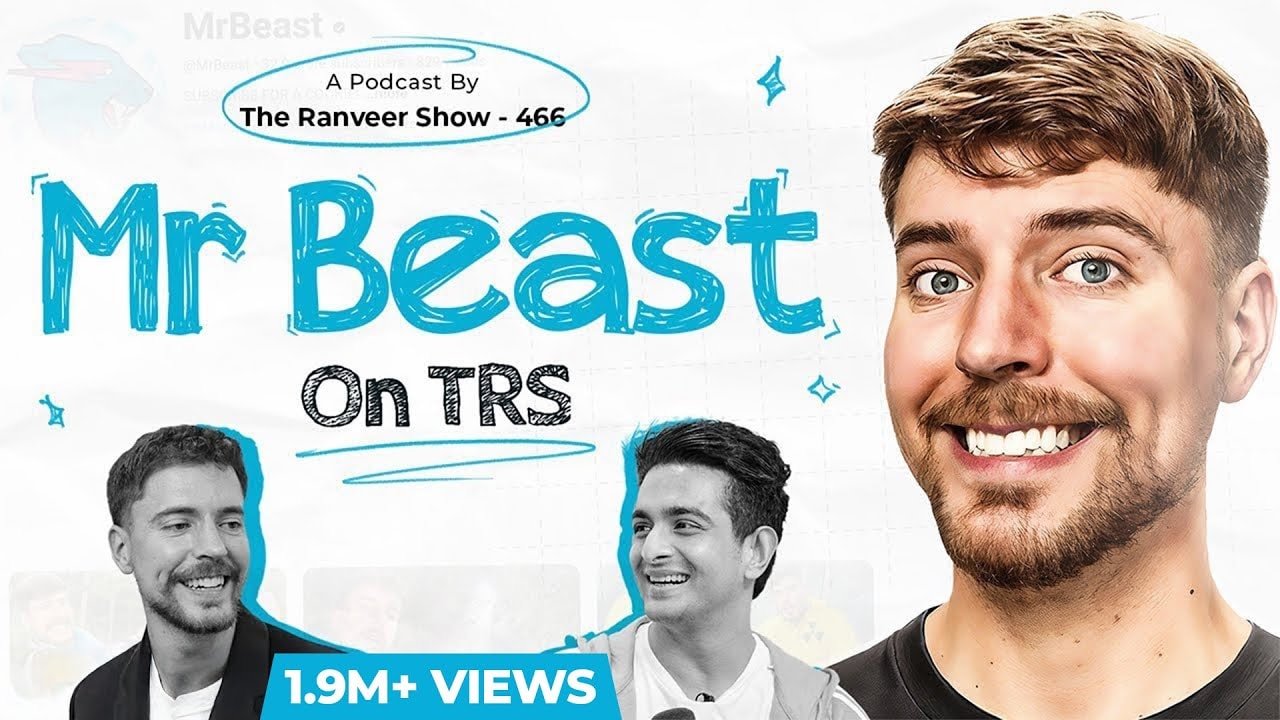
The Ranveer Show
Ranveer Allahbadia sits down with Jimmy Donaldson - MrBeast, the biggest YouTuber on the planet - during his December 2024 India trip, recording partly in a vanity van and partly on the drive to Mumbai airport. FULL COVERAGE: notes span the entire conversation. Sponsor: none stated (Ranveer plugs MrBeast's Beast Games on Prime Video as content, not a paid read). All figures and claims are MrBeast's own as told on the show; nothing here is business or financial advice. MrBeast says roughly 630 million unique viewers watched his main channel in the previous 90 days - by his math, 7-8% of all humans alive - and describes what that scale costs: hundreds of employees, productions like the 100-day bunker video (buried bunker, 50 cameras recording 24/7, medics on standby, millions of dollars), and 7-day survival videos he admits are miserable to film (sand-flea bites that forced a desert-island reshoot, fasting to avoid pooping while buried alive, solitary confinement where 10 hours feel like 30). He traces the hunger back to childhood: his family went bankrupt after the 2008 crisis, his mother worked two jobs, and as a young teen he prayed every hour to become a YouTuber, crying some nights with chest pain because he wanted it so badly. Today his mother - once horrified he skipped homework for YouTube - holds the keys to the master bank account, because, he says, who else in the world can you trust? He explains his idea machine (a team brings raw ideas, he riffles through weekly and spins 'my neighbour's house burned down so I bought him a mansion' into 'last to leave the mansion keeps it'), why one 50-million-view video beats a hundred 500K ones, and why he is not proud of himself yet: at 26 he counts only six efficient working years and plans to work until the day he dies. Ranveer draws him out on self-doubt (a pendulum, but he leans optimistic - 'I just have to have faith in myself'), his girlfriend and dog Alfie as his switch-off ritual, not celebrating wins, and why the goal must never end. They cover India: meeting Bhushan Kumar at T-Series HQ after the old subscriber 'war', wanting Virat Kohli in a video, the CarryMinati parody, MrBeast's prediction that CarryMinati will be India's first 100-million-subscriber creator, and his advice to Indian creators - CPMs will rise, so predict where the world will be in five years, think outside the box, and keep honing your skills. It ends with a plan: MrBeast in the Himalayas, meditating at the ashram Steve Jobs visited.
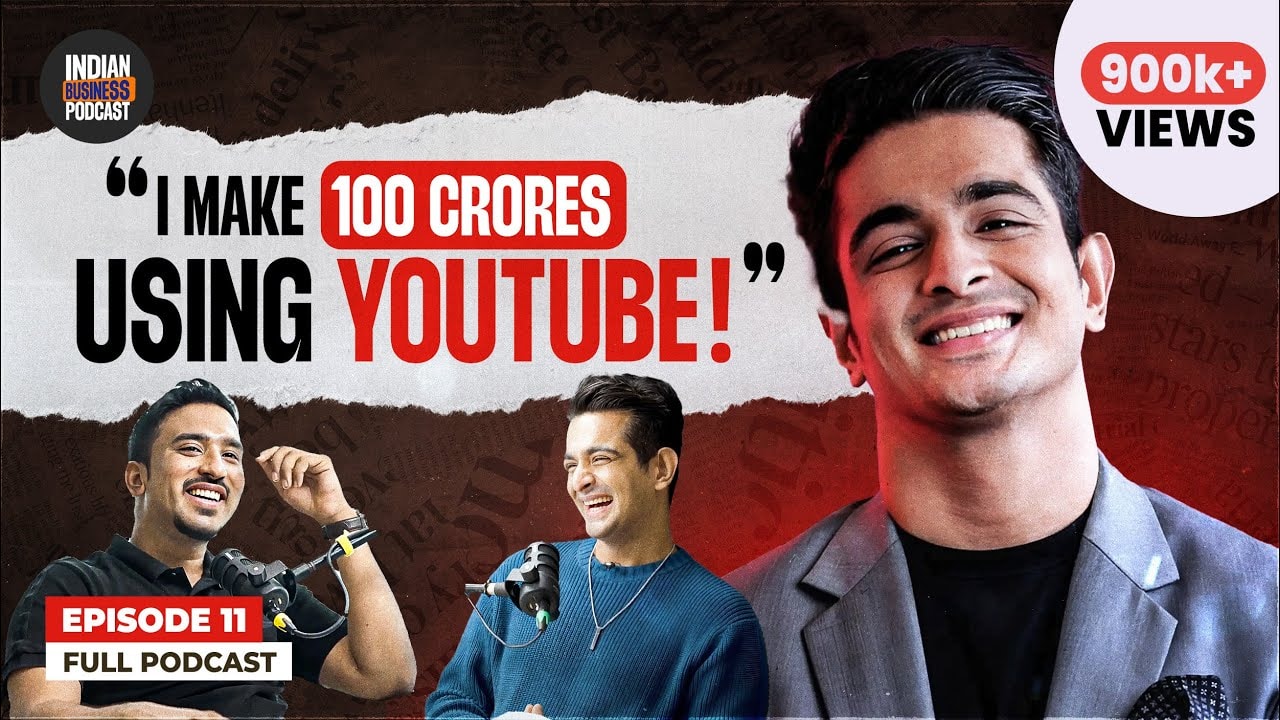
Think School: Indian Business Podcast
Think School's Ganeshprasad interviews Ranveer Allahbadia (BeerBiceps): the full story from broke engineering student and fitness trainer to a 100-crore media organization - Monk Entertainment, the machine gun content strategy, systems and processes, brand and agency economics, YouTube versus Instagram, and why creators go irrelevant. FULL COVERAGE: notes span the entire episode (0:00 to 2:22:18 of 2:22:22). Sponsor: Scaler School of Business. All revenue, team-size and output figures are the host's and guest's account as of July 2024, attributed to them, not independently verified; nothing here is business or financial advice.
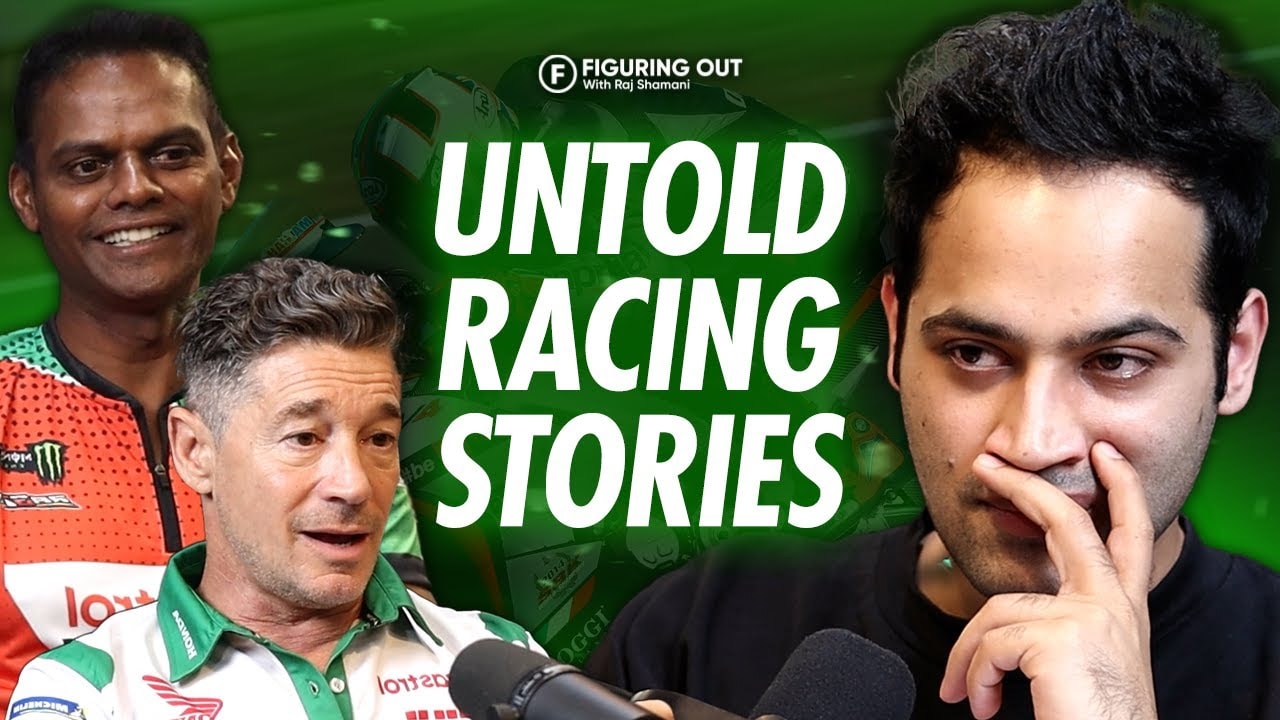
Figuring Out with Raj Shamani
Host Raj Shamani talks with motorcycle racers Lucio Cecchinello (LCR Honda MotoGP team principal) and Rajini Krishnan (Indian national racing champion) about what it takes to become a professional bike racer in India. They trace both origin stories - Rajini riding his brother's scooter in Chennai at 16, losing his father at 14, buying an RX100 at 20 and funding his own racing for nearly a decade; Lucio growing up near Bologna in Ferrari-Ducati country, working as a mechanic, and selling his motorcycle to his girlfriend to fund his first race. The economics are laid out step by step: roughly 5 lakh rupees a year to start in India, 30,000 euro in Europe, rider salaries from 300,000 euro to 20 million, and a 50-million-euro MotoGP team budget with 52 people behind two riders. They discuss the danger - 300 km/h crashes and Rajini's 23 fractures - why the sport lacks Indian media coverage, Lucio's 2003 retirement after 'signals' while leading the world championship, his heroes Valentino Rossi (whom he once beat) and Marc Marquez, and the Castrol Power1 India's Ultimate Moto Star talent program in which both guests hold roles. All views and claims are the speakers' own; nothing here is advice. Sponsor: none stated; the episode features an extended discussion of the Castrol Power1 program in which both guests participate. Notes are based on the publisher's audio edition (Figuring Out feed, published February 14, 2024) and cover that audio edition in full - FULL COVERAGE. The audio edition runs about 52 seconds longer than the YouTube cut; packaging may differ slightly.
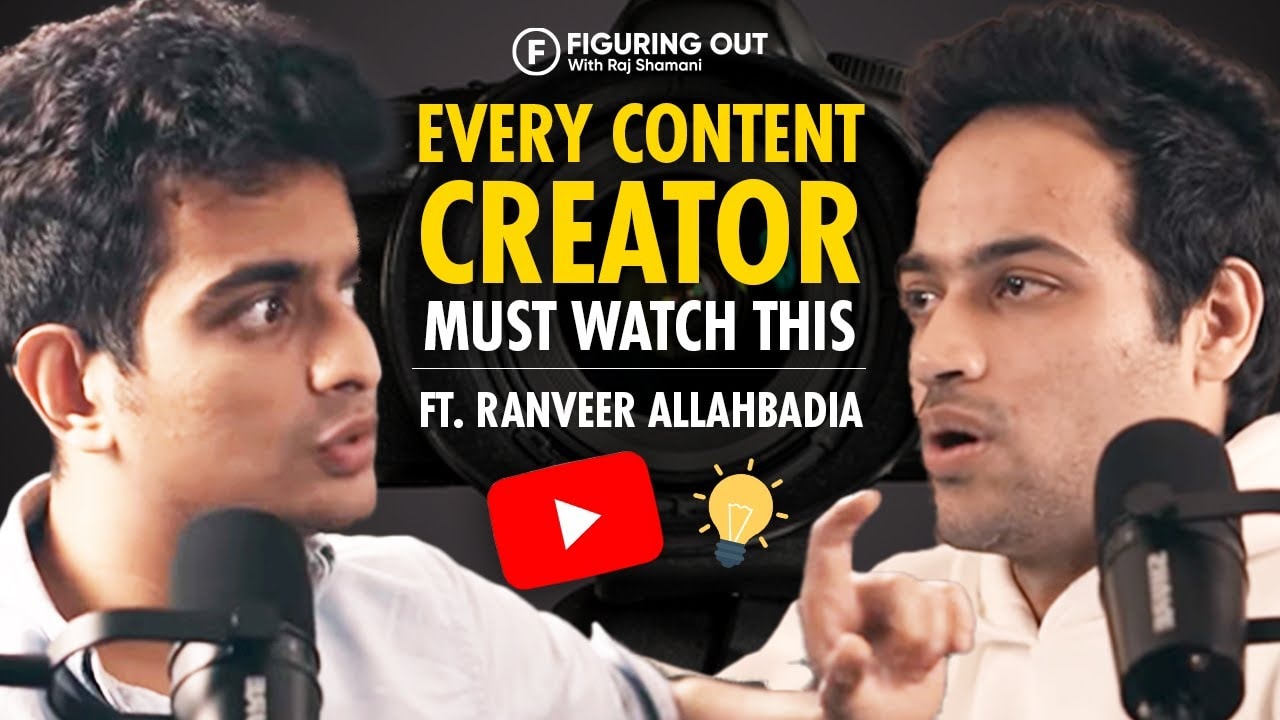
Figuring Out with Raj Shamani
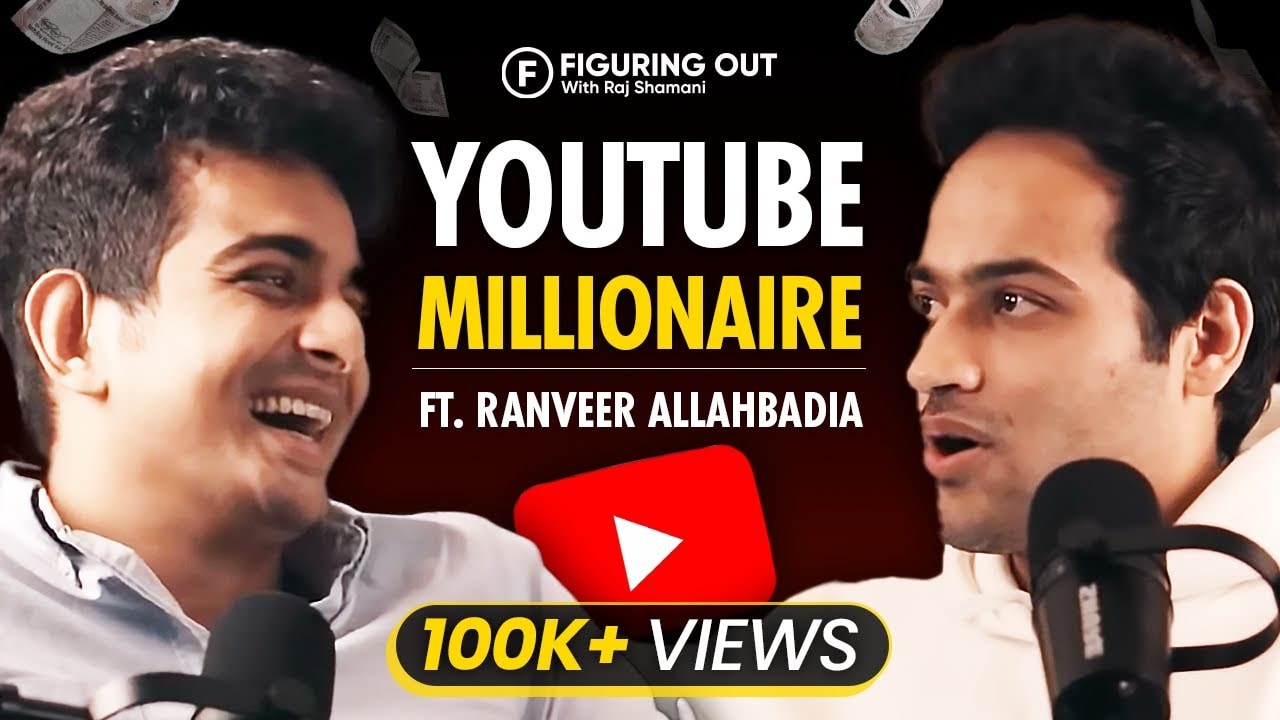
Host Raj Shamani talks with Ranveer Allahbadia, creator of BeerBiceps and host of The Ranveer Show, about the craft and business of content creation. Ranveer describes his satisfaction formula - work that challenges him as an editor and still wins views - and why he sees his catalog as a diary of his own psychology. He shares the 'mathematics of vlogging' (knowing when not to pull out the camera), what an engineering degree actually gave him as a creator, and his product journey: six failed co-founding attempts, a perfume line killed by COVID, and why he is now chasing product over money with the Level app. On audience retention he prescribes reading the algorithm like a musician reads a song, making content you would watch yourself, and running genre experiments when the future is unpredictable. He names YouTube as the best platform for building an audience and Instagram as the easiest, explains his plans for film direction and a Goa-based podcast, and makes his big bet: UI/UX and consumer psychology as India's next great opportunity. A closing rapid-fire covers his quick tips on style, money, fitness and dating - his personal opinions as stated on the show. All views and claims are the speakers' own; nothing here is advice. Sponsor: none stated (the guest's own ventures are discussed). Notes are based on the publisher's audio edition (Figuring Out feed, published January 27, 2022), which begins mid-conversation; they cover that audio edition in full - FULL COVERAGE. The YouTube cut of this episode may differ slightly in packaging or ad load.
Figuring Out with Raj Shamani
Host Raj Shamani talks with creator and entrepreneur Ranveer Allahbadia (BeerBiceps) about confidence, content and the business behind the brand. Ranveer argues everyone is insecure, that confidence is mostly positive self-talk built over time, and that physical training - judo in childhood, the gym and football now - plus self-awareness through meditation or journaling are his two actionable confidence builders. He describes being diagnosed with ADHD as a kid, how his mother chose sports over medication, and how judo's discipline (he was a Bombay champion who beat much bigger opponents on technique) shaped him. On the money side, he shares that his studio office cost roughly 30-40 lakh rupees, that he invests 10-20% of earnings back into the setup each year, and that his six YouTube channels and team cost roughly 10-20 lakh rupees monthly. He explains his hiring filter - calm people to balance his fiery side, and 'kinetic energy' doers over idea pitchers - and how he assigns his different personalities to different content formats. He recounts the COVID collapse of fashion content, the SOS call that led to Hindi podcasting and eventually a Spotify exclusive deal for the English show, and his view that editing is psychology and content is a five-year education in culture, product and sales. Claims and opinions in these notes are attributed to the speakers and reflect their views, not advice. This episode was sponsored by CoinSwitch Kuber, as stated in the audio; the guest also discusses his own ventures, which is disclosed here. FULL COVERAGE: these notes are based on the complete publisher audio edition of this episode (about 44 minutes), transcribed and reviewed end to end; no segment was skipped.

