


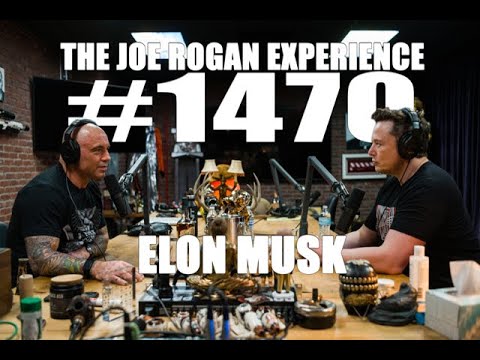
Joe Rogan Experience #1470 - Elon Musk
Executive Summary
Elon Musk returns to Rogan in May 2020 and discusses parenthood, machine learning, his plans to reduce possessions and how he allocates attention among projects. He argues for more talent going into making products and distinguishes capital allocation from consumption. The conversation then concentrates on Neuralink: a proposed implant, initial medical uses and much more speculative future communication or memory capabilities. Selected coverage only: the supplied English captions end near the start of the COVID-19 discussion, so later pandemic, media and other material is not summarized. Neuralink statements are Musk's May 2020 forecasts, not current availability, demonstrated results or a clinical safety assessment. His broad brain-function analogies and medical claims are not independently validated here. Rogan's fears about losing language and unequal access serve as questions, not evidence that the projected future is inevitable. Original: https://www.youtube.com/watch?v=RcYjXbSJBN8 .
Key Takeaways
Possessions can compete with the work a person values
Musk describes houses he seldom uses and the attention a dream-house project would consume. He compares that time with his interest in Mars and energy. His decision is personal, but the underlying question is transferable: what does a possession or project require beyond its purchase price?
Capital allocation and consumption are different activities
Musk argues that ownership can determine how resources are directed toward products and services. Rogan contrasts building products with financial activities. These are their views about business and value, not a general proof that every fortune or allocation decision has the same merit.
A limited attention budget forces priorities
Musk describes giving most of his thinking time to Tesla and SpaceX, with less for other projects. The useful principle is not the precise percentage he estimates but the acknowledgment that high productivity still has opportunity costs. More projects do not remove the need to choose.
Biological analogies should not be treated as exact models
The speakers compare artificial neural networks with brains, submarines with fish and aircraft with birds. Those comparisons explain borrowing a principle without copying a complete organism. They remain simplified analogies rather than a complete account of how learning or the brain works.
The first medical goal is different from a full future vision
Musk distinguishes early efforts to address brain injury from much later ideas about communication and symbiosis with AI. He notes that development and regulatory approval take time. These projected benefits and schedules belong to the interview's 2020 context and are not presented as treatments available now.
A communication benefit can come with questions about loss
Musk describes language as compression and imagines higher-bandwidth communication, while Rogan values its ambiguity, style and emotional force. Their exchange contrasts technical efficiency with human meaning. A faster channel would not by itself settle consent, privacy or the kind of communication people want.
Speculative futures need evidence and choices, not inevitability
Memory replay, saved states and broad interfaces are discussed as possibilities over long development. Rogan raises unequal access and Musk emphasizes remaining connected with AI. The notes preserve these as forecasts and philosophical arguments, not established engineering plans or a reason to seek an implant.
The Conversation Breakdown
Possessions can compete with the work a person values
⏱ Selected coverageMusk describes houses he seldom uses and the attention a dream-house project would consume. He compares that time with his interest in Mars and energy. His decision is personal, but the underlying question is transferable: what does a possession or project require beyond its purchase price?
Capital allocation and consumption are different activities
⏱ Selected coverageMusk argues that ownership can determine how resources are directed toward products and services. Rogan contrasts building products with financial activities. These are their views about business and value, not a general proof that every fortune or allocation decision has the same merit.
A limited attention budget forces priorities
⏱ Selected coverageMusk describes giving most of his thinking time to Tesla and SpaceX, with less for other projects. The useful principle is not the precise percentage he estimates but the acknowledgment that high productivity still has opportunity costs. More projects do not remove the need to choose.
Biological analogies should not be treated as exact models
⏱ Selected coverageThe speakers compare artificial neural networks with brains, submarines with fish and aircraft with birds. Those comparisons explain borrowing a principle without copying a complete organism. They remain simplified analogies rather than a complete account of how learning or the brain works.
The first medical goal is different from a full future vision
⏱ Selected coverageMusk distinguishes early efforts to address brain injury from much later ideas about communication and symbiosis with AI. He notes that development and regulatory approval take time. These projected benefits and schedules belong to the interview's 2020 context and are not presented as treatments available now.
A communication benefit can come with questions about loss
⏱ Selected coverageMusk describes language as compression and imagines higher-bandwidth communication, while Rogan values its ambiguity, style and emotional force. Their exchange contrasts technical efficiency with human meaning. A faster channel would not by itself settle consent, privacy or the kind of communication people want.
Speculative futures need evidence and choices, not inevitability
⏱ Selected coverageMemory replay, saved states and broad interfaces are discussed as possibilities over long development. Rogan raises unequal access and Musk emphasizes remaining connected with AI. The notes preserve these as forecasts and philosophical arguments, not established engineering plans or a reason to seek an implant.
Core Frameworks & Ideas
Attention opportunity cost
Include the thought, coordination and maintenance a project consumes when comparing it with another goal.
Near-term versus end-state map
Separate a proposed first use, the evidence it needs and the much more distant vision.
Compression tradeoff
Evaluate what an efficient communication method preserves and what it may discard.
Actionable Next Steps
- ✓Identify one project whose maintenance consumes more attention than its benefit justifies.
- ✓For a technology forecast, record its date and distinguish the first testable claim from distant possibilities.
- ✓Before accepting a proposed medical benefit, look for current trial results, approval status and relevant risks.
- ✓When choosing a communication channel, consider privacy, meaning and consent as well as speed.
Notable Quotes
“you can only do so many things”
“there's still a lot of work to do”
“you can aspire to be less wrong”
The One Thing to Remember
Keep a near-term product goal separate from the imagined end state, and make the opportunity cost of each project visible.