


Memory Scientist's Guide To Building A 100X Sharper Brain | Nikolay Kukushkin | FO571 Raj Shamani
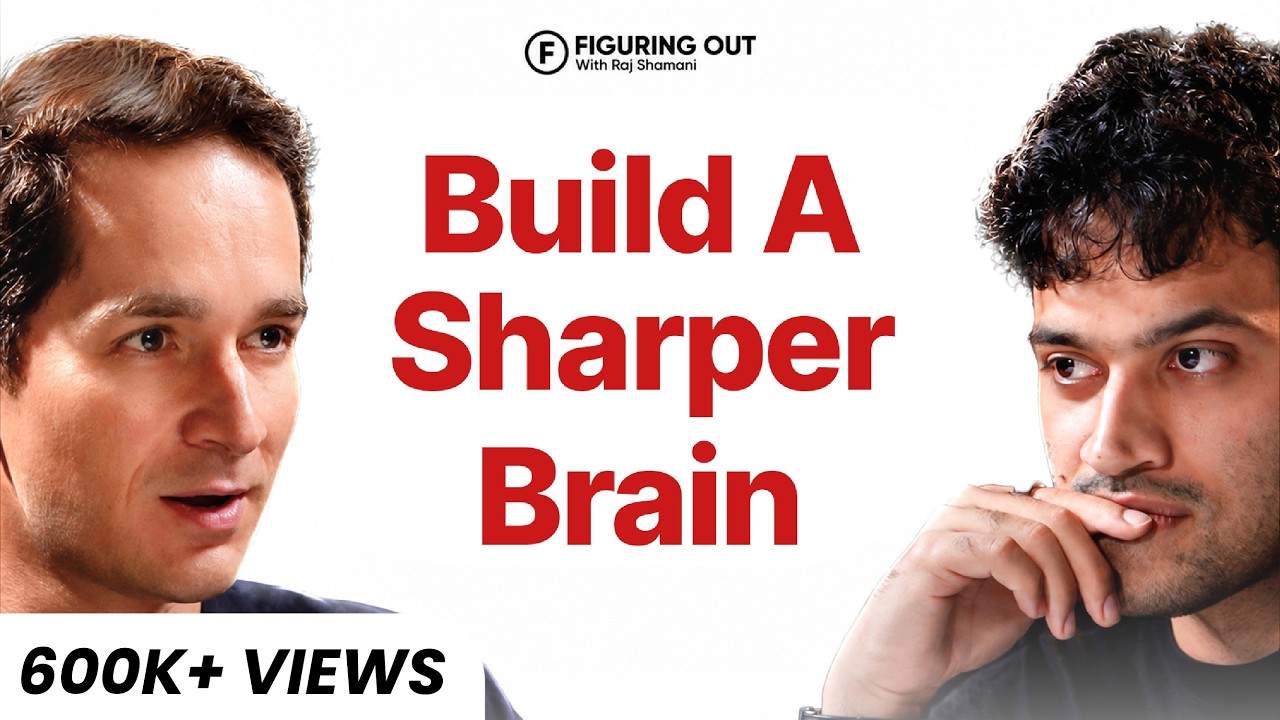
Executive Summary
Kukushkin describes memory as a changing set of thinking paths, not a static hard drive. Repetition layers learning onto a brain already changed by the last experience. Associations and memory palaces attach new information to existing structure; sleep and forgetting matter alongside remembering. He distinguishes repetitive emotional rumination from talking through a problem that can change. These ideas are educational and should not replace professional support for distressing memories.
Key Takeaways
Practice changes the system being practiced
Every attempt lands on a brain and body changed by earlier attempts. Kukushkin calls this repetition without repetition: practice is still useful, but it is a cumulative process, not an exact replay. He says repeated experience helps signal importance and strengthens the pathways needed for a skill.
Memory prioritizes rather than storing everything
Kukushkin frames memory as selecting relevant patterns, not collecting an unlimited pile of details. Forgetting therefore has a function. His account of a person who remembered almost everything illustrates how constant detail can interfere with normal thinking and the ability to recognize broader patterns.
Attach a name to an existing structure
A memory palace uses a visual scaffold to place new information in an imagined space. Kukushkin broadens this to familiar models, associations and knowledge already in the brain. Connecting a name to a hometown, image or other association can give retrieval a path instead of relying on an isolated fact.
Distinguish rumination from useful discussion
Kukushkin separates reliving an emotion without an outcome from discussing a problem that can change. Repetition can reinforce a loop, but conversation can also help people change a relationship or resolve a difficulty. This is not a reason to avoid therapy or suppress distress; persistent distress deserves appropriate care.
Shift domains when a problem becomes a wall
His slow-motion multitasking is not doing many jobs at once. It means focusing on one domain and moving to another for a meaningful interval when stuck. Research, teaching and writing give him separate places to direct attention, and he sometimes returns with a clearer view of the original problem.
Sleep belongs in the learning process
Kukushkin describes sleep as more than inactivity. In his explanation it helps rebalance connections and integrate information rather than permitting endless strengthening while awake. He also distinguishes different sleep phases and acknowledges that sleep has several functions. The practical lesson is not to treat sleep as expendable study time.
The Conversation Breakdown
Learning, associations and attention
⏱ 06:26The early conversation explains why practice modifies the learner rather than simply repeating an event. Kukushkin then treats a memory palace as an association system and distinguishes useful reflection from rumination. Slow-motion multitasking means moving between separate areas of life over longer intervals, not rapid task switching. Sleep is presented as part of how information is rebalanced and integrated.
Core Frameworks & Ideas
Memory palace
Use a familiar imagined space or existing mental model as a scaffold. Attach new information to locations or associations, then revisit those associations when retrieving it.
Slow-motion multitasking
Focus on one domain at a time. When a problem becomes unproductive, shift to a different domain for a meaningful interval and return with fresh attention.
Rumination or productive discussion?
Ask whether reflection has a possible outcome. A repetitive loop differs from working through a changeable problem; this distinction does not replace mental-health care.
Actionable Next Steps
- ✓Try attaching a new name to an image, hometown or familiar place, then revisit the association.
- ✓Practice one skill repeatedly while noticing what changes across attempts.
- ✓When stuck, choose a separate activity that can hold your attention instead of switching among many tasks at once.
- ✓Protect sleep as part of learning. Seek professional help for persistent distress rather than using these ideas to avoid needed care.
Notable Quotes
“repetition without repetition.”
“Everybody who has a nervous system sleeps.”
“So is it rumination or is it productive discussion?”
The One Thing to Remember
Build learning on what is already in your mind. Kukushkin argues that an association gives new information a place to attach rather than treating the brain like an empty hard drive.