Find key takeaways from long-form podcast conversations.
Found 38 results across 30 episodes, 2 podcasts, 5 people, 1 topics

Hosted by Sam Altman and guest lecturers
A historical series of 20 startup lectures taught at Stanford in fall 2014, organized by Sam Altman with speakers from Y Combinator and technology companies. Topics include ideas, products, users, growth, hiring, fundraising, culture and operations. This is the 2014 course archive, not a current interview show. Speaker roles and company examples reflect that period.

Hosted by Kyle Traynor
Kyle Traynor and Pivotal Conversations share interviews with founders about their businesses and lessons from building them. The show covers growth, decisions, teams and practical challenges.
Raj Das is the co-founder and CEO of Hirect, a chat-based hiring app for startups. An IIT alumnus, he worked across startups in India, China, Singapore and the US before founding Hirect, inspired by his own struggles hiring for earlier ventures.
Nikhil, Ashish and Vivek are the co-founders of Grip, an Indian alternative investment platform that lets retail investors access curated, asset-backed and fixed-income opportunities. The three met while working at mobility startup Chalo before founding Grip together.
Ayush Jaiswal is the co-founder of Pesto, a startup that trains Indian software developers for global remote jobs. A self-taught programmer from Varanasi, he built and sold his first software to a Delhi University college at 18 and has been betting on remote work since 2017.

Think School: Indian Business Podcast
Think School breaks down Israel's most consequential election in decades - the first national vote since the October 7 Hamas attack - and why a country of barely 10 million people holds a lever over the price of gold, food, petrol and even Indian home-loan EMIs. FULL COVERAGE: notes span the entire video. Sponsor: Neurogum (Neuro Memory and Focus gum and mints). All results, figures and claims are as stated in the video; attribute them to the episode, not to us. The result as told: Netanyahu's bloc took 53 seats, challenger Gadi Eisenkot's bloc 48, and with the majority mark at 61, the Arab parties' record 19 seats - won on unprecedented turnout - make them the kingmakers in a Jewish state's first post-October-7 election. The episode explains Israel's paradox: a startup powerhouse with more NASDAQ-listed companies than any country outside China and the US, built atop one of the world's most unstable political systems - 37 governments in 78 years, five elections in under four years, three years without a national budget, and once an invented 'alternate prime minister' post. The cause, it argues, is pure proportional representation: 10% of the vote means 10% of the 120 seats, so a dozen parties squeeze in and coalitions of six can collapse overnight - contrasted with India's first-past-the-post system and its caste-politics incentives. Why the world watches: Israel is the region's most advanced military power, believed to have nuclear weapons, and its wars move global trade - Red Sea container traffic crashing about 90% when the Houthis attacked shipping, adding two weeks and 4-5x shipping costs, and Iran's February 2026 closure of the Strait of Hormuz (20% of world oil) triggering, in the video's telling, a historic oil shock. Why India watches harder: India is the biggest buyer of Israeli weapons, and the India-Middle East-Europe Economic Corridor - promising goods to Europe up to 40% faster and 30% cheaper - has its missing link running right through Israel. The two contenders agree on outcomes but not philosophy: Netanyahu wants regime change in Tehran and military pressure in Gaza; Eisenkot, his former army chief, calls regime change unrealistic and prefers targeted strikes, sanctions and a US-backed handover of Gaza to Palestinian technocrats. The sting: Eisenkot plus the Arab parties equals 67 seats, but he has publicly promised never to form a government with them - leaving three exits (break the promise, poach seats, or a unity government) or a sixth election in seven years.
My First Million
My First Million talks with marketer and Angel Studios co-founder Jeff Harmon about product-led campaigns, overlooked distribution channels and testing many video variations. Harmon describes the Orabrush and Poo-Pourri campaigns and a Kevin James promotion. These notes cover selected marketing passages from roughly 49,700 characters of the YouTube auto-captions, not a complete account of the 63-minute conversation. The ending and AI discussion are not covered. Captions may contain errors, and campaign results are the speakers' claims rather than independently audited figures.

The Think Media Podcast
Sean Cannell interviews author Jon Acuff about starting and sustaining creative and business goals without waiting for New Year's. Acuff explains auditioning a goal, finding direction through a Best Moments List, building easy and middle steps before an ambitious goal, and maintaining several sources of motivation. They finish with a practical 60-day planning discussion: a rough finish line, smaller checkpoints, a visible scorecard and specific first-week activities. Studies and percentages mentioned by Acuff are his reported claims, not independently checked findings. Cannell also discusses a YouTube monetization threshold change; YouTube's official notice confirms new-creator ads/Premium thresholds change on February 1, 2027, with existing YPP status unaffected by that entry update (https://support.google.com/youtube/answer/12843009?hl=en-12). Notes based on the publisher's full audio edition. FULL COVERAGE: complete publisher audio from start to finish. RSS says no outside sponsor; audio promotes Think Media's viralvideocoach.com strategy calls and VRA Elite, plus Acuff's book and Soundtracks cards. Speaker opinions and metaphors are attributed. Informational only, not business, financial or mental-health advice.
Think School: Indian Business Podcast
Eric Ries and Ganesh Prasad discuss lean startup experiments, useful metrics and credible customer promises. Selected coverage from approximately the first 50,000 characters of third-party English captions, not the full interview; the unseen ending is not summarized. AI forecasts, health and social-policy examples, promotional material and unsupported revenue guarantees are omitted. Historical examples and numerical claims are the speakers' accounts, not independently verified results. Captions contain recognition errors and no speaker labels; attribution follows the exchange. Topics are untimed and metadata follows YouTube. Source: https://youtubetotranscript.com/transcript?v=eErcrQQHzg4

How I Built This with Guy Raz
Guy Raz interviews Joey Shamah about the early e.l.f. Cosmetics business: a branded one-dollar product line originally intended for dollar stores, repeated retailer rejection, magazine publicity and an unexpectedly important e-commerce channel. The story follows family apparel infrastructure, product and packaging costs, a rushed website, warehouse improvisation, H-E-B’s retail test and an unexplained false acquisition rumor that creates an enormous order surge. Later chapters examine Target’s support for a higher-priced line, cash flow across online and wholesale channels, a minority sale, a collapsed strategic acquisition, the TPG transaction, learning from professional management and Shamah’s later Fit for Life and AS Beauty work. The close discusses luck and Borba’s later change of vocation. Main theme: entrepreneurship, consumer branding, distribution, operating capacity, cash flow and founder liquidity. Religious background, Sabbath observance and the closing priesthood update are brief personal context, not spiritual teaching. AI is incidental sponsor/technology commentary, not the main topic. Cosmetic quality, ingredient activity, a nutraceutical beverage’s supposed skin effects and comparisons with prestige products are speaker or recounted-publication claims, not independent safety or clinical conclusions. No formula, skin treatment or claim that low price proves equal performance is supplied. Revenue, costs, ownership, valuations, deal terms, prices and market capitalization are historical statements, not current quotes or audited figures. The acquisition rumor was false and Shamah says he did not create it; it is not a marketing tactic to imitate or permission to mislead customers. His interpretation of why L’Oreal withdrew is one participant’s opinion, not a verified account of the buyer’s motives. Descriptions of bankruptcy clearing obligations simplify a legal process and are not relied on as legal rules. Early handling of card numbers and customer payment details is a historical anecdote, not a secure checkout procedure to copy. Use compliant payment handling. Family funding, facilities and relationships were meaningful resources, not a no-capital startup claim. FULL COVERAGE: entire publisher audio76:53reviewed in eight contiguous parts, including ads, later ventures and final credits. Publisher-audio edition only; no mappedYouTubecutverified or video timestamp equivalence claimed. Ads/promotions heard: Anthropic/Claude, Amex Corporate and Phoebe Judge’s Criminal live tour. Own-show promotions: following How I Built This and Guy Raz’s newsletter/Substack. Current exactAppleUSepisode andRSS agreeJune22,2026; some regional/index views giveJune29. The published edition date is not proof that every relative-time statement was recorded then; interview claims are kept historical. Informational only, not personalized financial, legal, medical or product-safety advice. PREPUBLICATION: Check existing published and unpublished editions, including original/reissue aliases, before creating or publishing this conversation again. Confirm the chosen cover and guest portrait against the intended edition. A generic show cover or a guest photo is not verified main-video artwork. Figures, roles and opinions describe the historical interview. Product, health, legal and financial claims are not independent conclusions.
Think School: Indian Business Podcast
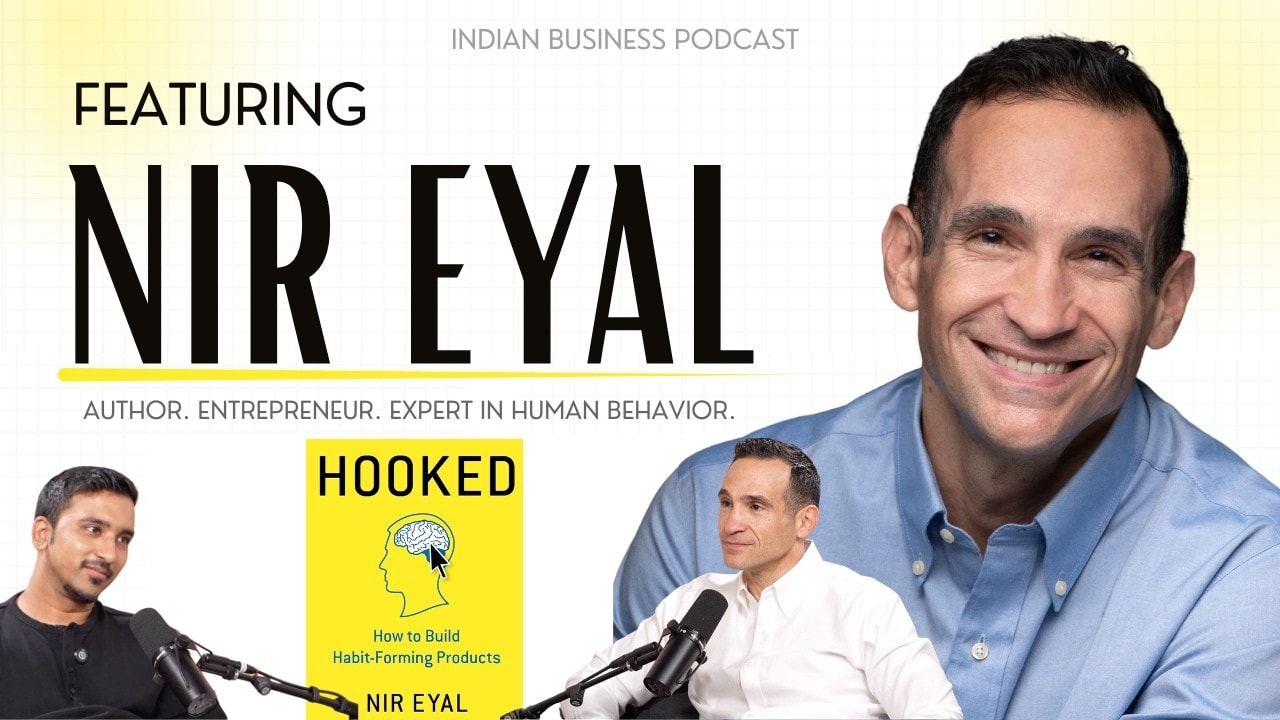
A Think School conversation with Nir Eyal, author of Hooked, on why consumer startups with good products fail and how to build products people come back to using the Hook model (trigger, action, variable reward, investment). PARTIAL COVERAGE: the episode runs about 69 minutes and the available caption text is cut off, so this summary covers the first part, including the Fitbod case study, and not the final section. Examples and figures are the speakers' own claims and are unverified. This is a summary of Eyal's views, not advice.

Lenny's Podcast: Product | Career | Growth
Lenny's Podcast episode, presented by season sponsor WorkOS with support from Vanta, in which Lenny Rachitsky speaks with Snap co-founder and CEO Evan Spiegel about building a lasting consumer product. Spiegel argues that distribution, not product-market fit alone, is what kills consumer startups, and that Snapchat grew by connecting people to their closest friends rather than the biggest network. He describes how Snap runs a large reliable company alongside a tiny flat design team, with leadership keeping respect between the two, why designers rather than PMs drove product in the early years, and how he feels about competitors copying Stories, swipe navigation and subscriptions. He also talks about Specs glasses, jobs-to-be-done planning and using an AI agent over company data. PARTIAL COVERAGE: the captions cover most of the conversation, but this summary highlights the distribution argument, the innovation structure and the copying discussion only, so lighter corners and personal segments are not summarized. These are Spiegel's own views and company figures, not independently verified, and nothing here is investment or business advice.
Shopify Masters
A Shopify Masters interview with AC Hampton, who started mowing lawns at 12 and built Shopify dropshipping stores that he says generated over $10 million, going from sleeping on a church floor to $1.8 million in six months. He tells his story of a first store that lasted 45 minutes, a job loss, a mentorship that was not one-on-one, going into debt, finding a first winning product after about 10 failures, and how he turns winning products into brands. Sponsor: Shopify, which presents the show and links a free trial in the description. PARTIAL COVERAGE: this note is based on the opening, the early life and first dropshipping attempts, a middle section on turning a product into a brand and startup costs, a section on his third attempt, and the description, and does not cover every part of the roughly 41 minute conversation. All business claims and figures are the speaker's own and are not independently checked; this is not financial or business advice.
WTF is with Nikhil Kamath
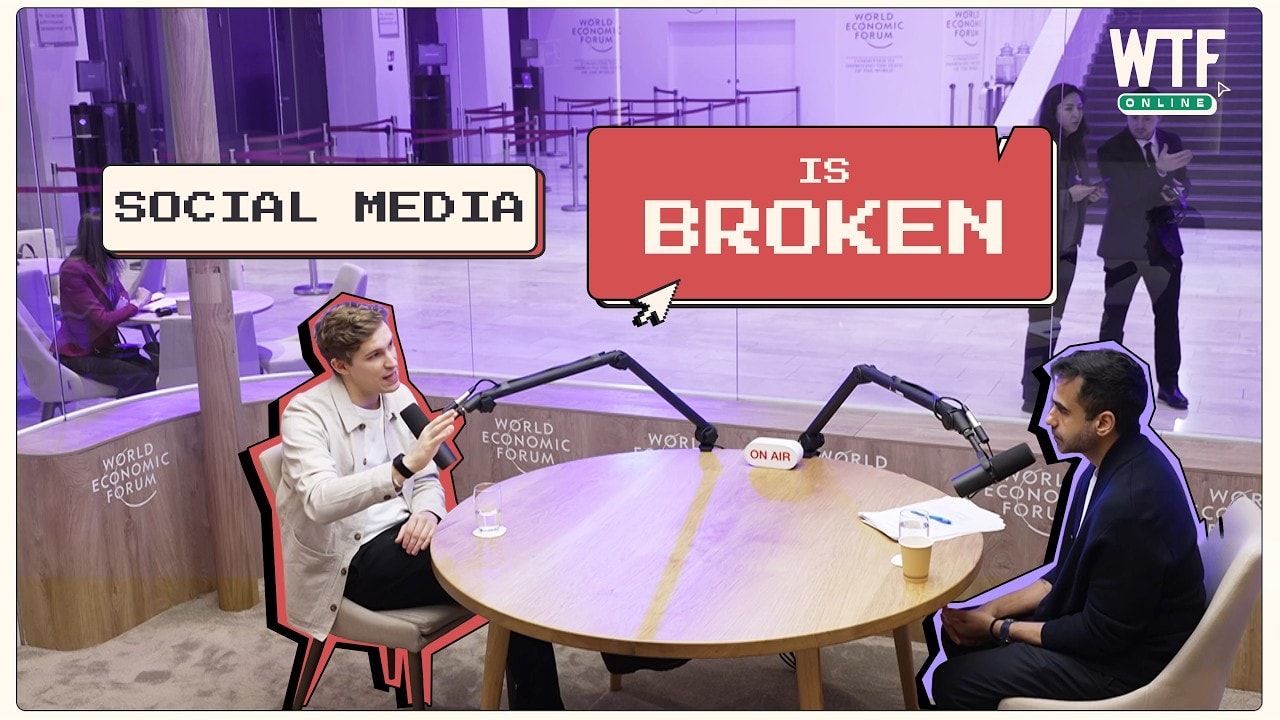
Mati Staniszewski, co-founder of ElevenLabs, joins Nikhil Kamath for a conversation about the voice interface he believes will replace how we interact with technology. ElevenLabs - founded in 2022, split 50/50 between a creative platform (narration, dubbing, localisation) and an agents platform (voice agents for customer experience) - dubbed the Lex Fridman x Narendra Modi podcast, recreates Gordon Ramsay and Chris Voss as AI tutors for MasterClass, and automates roughly 60,000 support calls a day for Meesho in Hindi and English. Mati lays out the three things voice needs before the phone goes back in the pocket (human-level voice quality, knowledge and memory integration, and an unsettled form factor - he bets on behind-ear headphones plus a capture device), why he does not think an AI valuation bubble is brewing (with a caveat on GPU inference providers), and his playbook for young founders: combine deep domain expertise in a lagging industry - automotive, healthcare, e-commerce - with voice agents, as 500 startups in India and 10,000 worldwide already do on ElevenLabs. Nikhil road-tests his social-media idea (a verified, low-bias, algorithm-light network; Mati suggests a voice-first companion interface) and they debate whether a multipolar world kills WhatsApp-scale network effects. FULL COVERAGE: the captions appear to cover the entire episode. All figures are the speakers' own claims in conversation. Sponsor: none stated - Nikhil's podcast runs no ads or sponsors. Nothing here is investment advice.
Shopify Masters
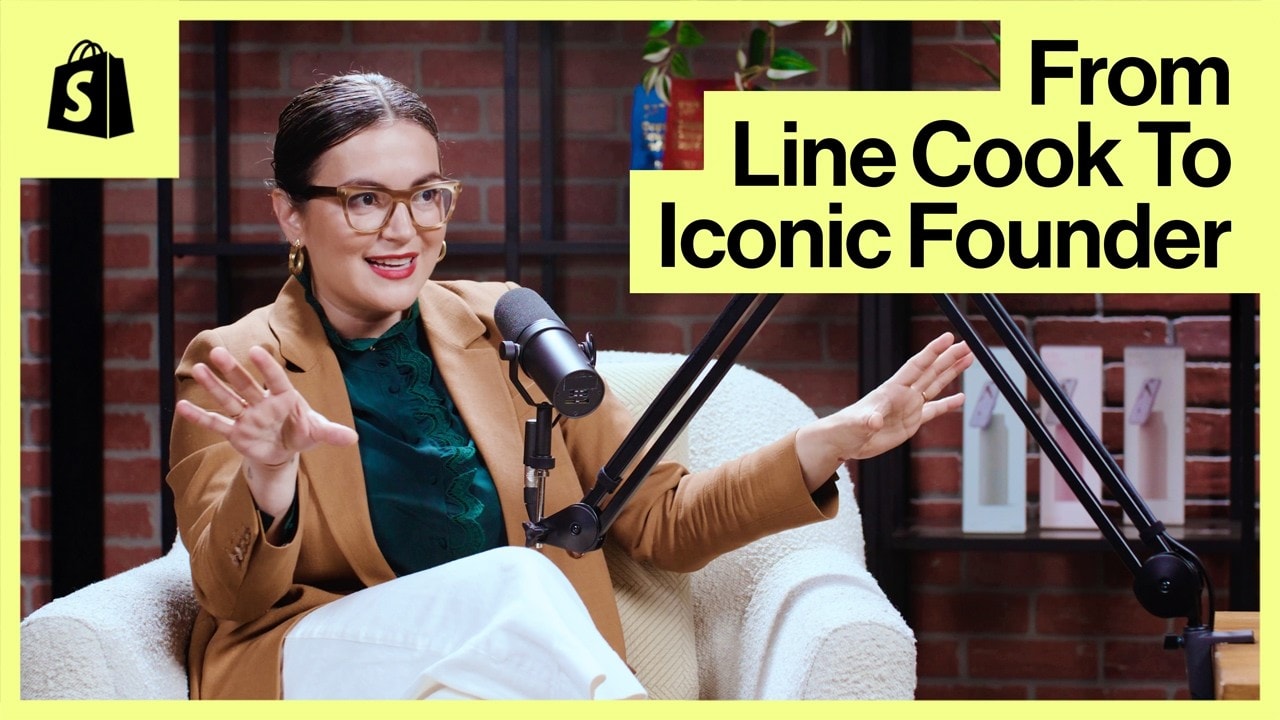
A Shopify Masters interview with Ellen Bennett, founder of Hedley and Bennett, who started the apron and kitchen tools brand with $300 while working in restaurant kitchens. She talks about mission first, building a confidence belt through hard things, thinking long term over a quick exit, focusing on quality and community, and the leap of faith of leaving her restaurant job. Sponsor: Shopify, which presents the show and links a free trial in the description. PARTIAL COVERAGE: this note is based on the opening, the early conversation on courage and the origin story, a middle section on long-term thinking, the closing on leaving the restaurant, and the description, and does not cover every part of the roughly 46 minute conversation. All business claims and figures are the speakers' own and are not independently checked.
Figuring Out with Raj Shamani
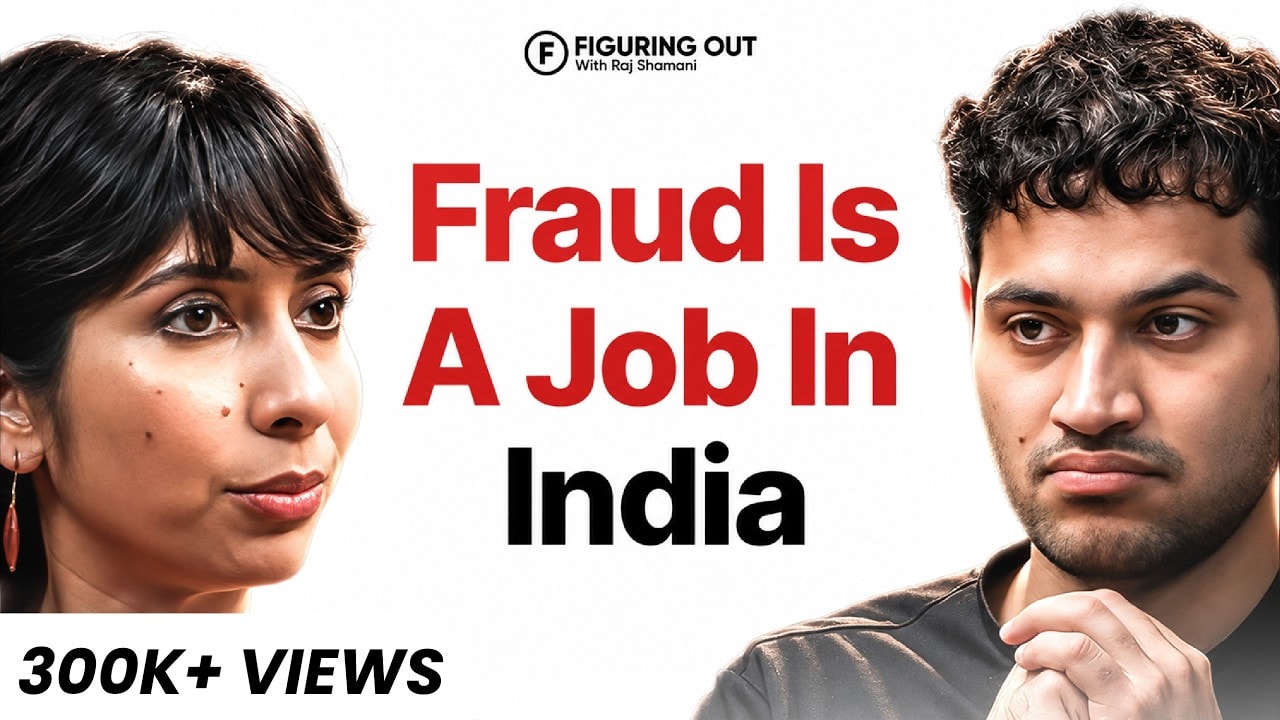
Snigdha Poonam, a journalist and the author of Scamlands, a book on organized online scams in Asia, joins Raj Shamani to explain how scam networks are built and who runs them. Poonam describes how fake dating apps and romance scams work, including the pay-for-a-VIP-package trick and photos stolen from the internet, how job ads draw women to scam call centers, her reporting on companies in Gurgaon that were raided, the claim that apps behind scams were made by Chinese companies, and how a fake life insurance racket in rural Assam used unregistered deaths and even invented people. She also describes how scam bosses see themselves as startup founders and how the fraud drains money out of India. The episode is mostly in Hindi with English terms. PARTIAL COVERAGE: this summary is built from a sampled reading of the Hindi captions. All claims are Poonam's own reporting and views and are not independently verified. Sponsor: none stated in the episode description. This is general awareness only, not legal or financial advice.
WTF is with Nikhil Kamath
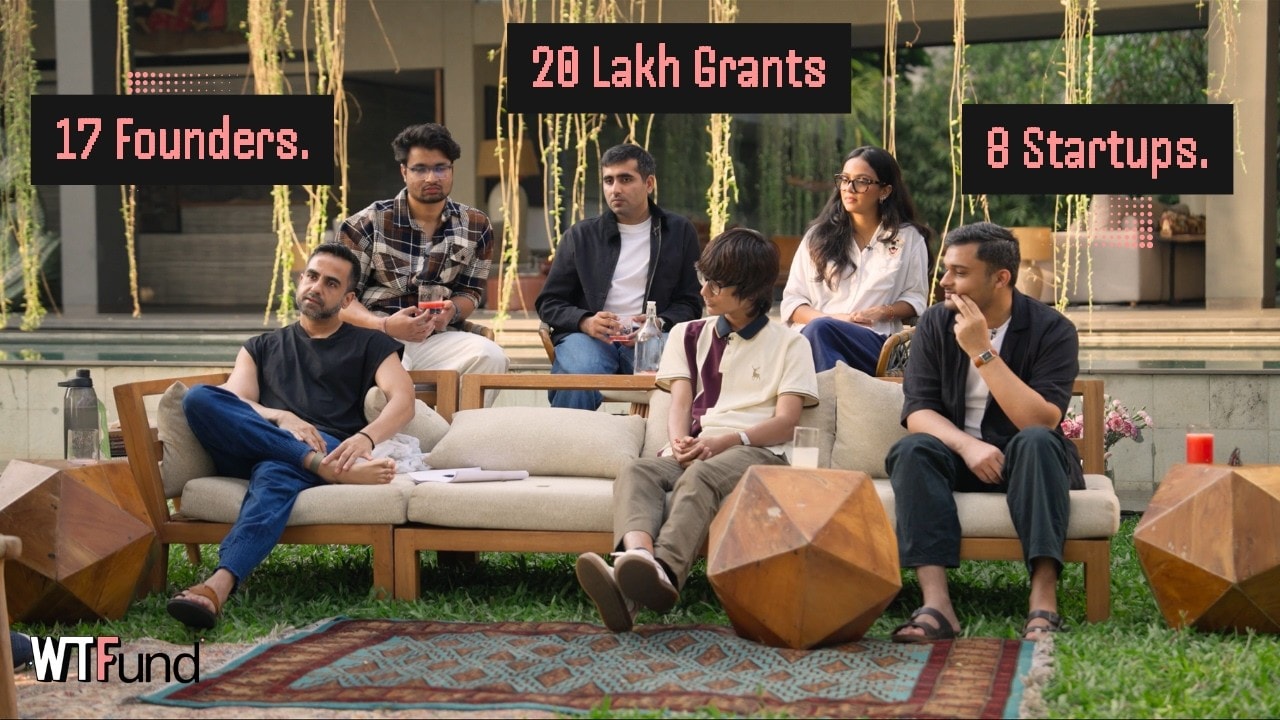
Nikhil Kamath hosts the eight startups of WTFund Cohort 3 - chosen from 3,000 applications - at his home in Goa after their bootcamp, and asks each founder what they built and which trend made them build it. Sushant and Shubham's Prava Payments is building PSP-agnostic infrastructure so AI agents can actually pay, not just discover. Dr. Jayanti's Astraeus Innovus is developing OncoALERT, a roughly Rs 150 nanotech biosensor for needleless oral-cancer screening designed to work with no electricity, lab or trained staff. A doctor, an engineer and a former ISRO rocket scientist are building a low-cost AI operating system that digitizes pathology slides for diagnostic labs and recommends personalized cancer drug therapies. Sridipto and Sirsho's antimattr wants to be the Android for earbuds and wearables. Rohit's O3 Security, already billing and working with large fintechs, argues 80% of the cybersecurity industry is white-labelled scam. Prashanth and Abhishek's BloomRehab builds home rehabilitation robots for stroke patients. A solo founder's Placestation puts a pick-and-place machine on your desk to cut hardware iteration from two months to a day. And Sahil's Aeyi turns ordinary CCTVs into AI security guards that alert you in real time. The second half is Nikhil unplugged: storytelling, negotiation, hypocrisy, marriage, legacy vs longevity, and why he allocates to energy transition. FULL COVERAGE: the captions appear to cover the entire episode. All traction figures and claims are the founders' own, not independently verified. Sponsor: none stated. Nothing here is investment, medical or professional advice.
Figuring Out with Raj Shamani
Shiv Shivakumar discusses category focus, hiring for the next stage, cost choices, brand associations and customer relevance. Selected brand and growth coverage; named-company criticism, political and generational commentary and sponsor segments omitted. Auto-captions have recognition errors and no speaker labels; attribution follows interview context. Historical examples and broad business claims are his views, not verified statistics or universal rules. Untimed topics are not video chapters. Source: https://www.youtube.com/watch?v=nrVyl0awWsw

Lenny's Podcast: Product | Career | Growth
Lenny's Podcast episode in which Lenny Rachitsky talks with Jason Cohen, a four-time founder whose companies include the unicorn WP Engine, an investor in over 60 startups and the writer behind A Smart Bear. Jason shares a five step framework for diagnosing stalled growth: logo retention, pricing, net revenue retention, marketing channels and target market. He says cancellation survey drop-downs mostly capture noise, since randomizing the list made every option equally popular, and recommends asking open-ended questions such as what made you cancel. He describes the elephant curve of growth, where a channel surges and then sags, and a pricing story in which repositioning a product to double leads for the same cost led to 8 times the revenue. He also covers when to reconsider if growth is even the right goal. Sponsors named in the description: 10Web, Strella and Brex. PARTIAL COVERAGE: the captions cover the full conversation, but this summary highlights only the framework, the cancellation survey, the elephant curve and the repositioning story, so other segments are not summarized. All views are the speakers' own and are not independently checked. Nothing here is financial, legal or investment advice.
Think School: Indian Business Podcast
Ankit Agarwal and Ganesh Prasad discuss researching startup jobs, understanding the work behind titles and preparing relevant applications. Selected career-evaluation coverage from approximately the first 50,000 characters of third-party captions, not the full interview; the unseen ending is not summarized. AI/job-loss forecasts, startup-wealth guarantees, investment claims, broad criticism of MNC careers and promotional hiring pitches are omitted. The title's salary target is not a promised outcome. Captions contain errors and no named speakers; attribution follows the exchange. Topics are untimed; metadata follows YouTube. Source: https://youtubetotranscript.com/transcript?v=CKS1glzmDVc
My First Million
My First Million episode 785 in which Shaan Puri talks with entrepreneur Nick Huber, known online as the Sweaty Startup, about the biggest bet he ever made and the mistakes he learned the hard way. Nick says he has been humbled in his 30s: he started 11 companies, shut down four, and learned that business is really hard, especially after the algorithm changed and customers watched spending. He and Shaan retell the story of a $47 million stock offer for the talent company then called Shepherd, now Somewhere, and the new owner syndrome that followed. Shaan gives a short masterclass on hiring overseas talent using paid task trials, and names places such as Colombia, Brazil, South Africa, Sri Lanka and the Philippines as talent hubs. Chapters in the description also list buying a domain for 400K, Peter Thiel's Stanford class and brutal advice. Sponsors named in the description: HubSpot, Somewhere, Mercury and Beehiiv. PARTIAL COVERAGE: the captions cover the intro, the portfolio, the Shepherd story and the hiring segment, but later chapters are only named by title. All views are the speakers' own and are not independently checked. Nothing here is financial, legal or medical advice.
Lenny's Podcast: Product | Career | Growth
Lenny's Podcast episode, sponsored by TenWeb and DX, in which Lenny Rachitsky talks with Sam Lessin, partner at Slow Ventures, former VP of product at Facebook and two-time founder, about his etiquette playbook for founders. Lessin argues that as software commoditizes, trust decides deals, and etiquette is the skill of showing up in a room with a low heart rate: abundance over scarcity, relationships over business cards. He gives concrete rules - say great to see you instead of nice to meet you, keep fragrance subtle, remember B for bread and D for drinks, tip without making it the story, keep business email short and emoji-free, and order recipients by importance. He closes with his investing view that AI is a propellant, not a startup thesis, and that he backs companies needed because of AI rather than AI companies. PARTIAL COVERAGE: the captions cover most of the conversation, but this summary highlights the core etiquette rules only, so most of the ten book categories and the lightning round are not covered. These are Lessin's own opinions, not independently verified, and nothing here is investment advice.
Figuring Out with Raj Shamani
Raj Shamani Figuring Out episode, in Hindi, in which Raj talks with Zomato founder Deepinder Goyal about his childhood, founder mindset, ten-minute delivery, and what he is building next. Goyal describes being bullied all his childhood - short, dark, a stammerer, with other parents telling their kids not to be his friend - and says what pinched most was that people did not listen when he spoke. His hiring bar: the cost of working alongside him is very high, because you have to be obsessive about building something and think of it as life, not a job - startups do not get built on a nine-to-five attitude. On Blinkit he reveals that right after the acquisition he asked his old friend, the founder, to leave, because objective calls matter more than sentiment. On ten-minute delivery he insists no human pressure is created - the countdown timer is shown only to the customer, not the rider, and every delivery earns money on its own. He shares how Swiggy, as a Shark Tank sponsor, had him removed as a judge, and shrugs off competitors like Zepto - we do not think about all this, we do our work. He closes on his new gravity-and-aging research venture, treating it as a science project that could create a category. PARTIAL COVERAGE: this summary highlights the founder-mindset lessons from the four-and-a-half-hour conversation; many segments are not covered. These are Goyal's own views and claims, not independently verified. No sponsor read was named in the episode.
My First Million
My First Million episode 778 in which Sam Parr talks with Brian Halligan, co-founder and former CEO of HubSpot, about the highs and lows of building the company. Brian grades his own enjoyment by company size, saying he had what he calls CEO market fit between 10 and a thousand employees and enjoyed the larger stage less. He says founder work is at least a 996 schedule, that about 90 percent of the time things are broken, and that he still feels imposter syndrome. Chapters in the description also cover whether it ever stops sucking, whether the trade offs were worth it, whether AI is a bubble, whether you have to be liked, what he would do if he had to start over, and what he got wrong. Sponsors named in the description: HubSpot, Somewhere, Mercury and Beehiiv. PARTIAL COVERAGE: the captions cover the opening chapters in detail, and later chapters such as starting over and what he got wrong are named by title only. All views are Brian's and Sam's own and are not independently checked. Nothing here is medical, mental-health, financial or legal advice.
Figuring Out with Raj Shamani
Raj Shamani talks with Karan Bhangay, founder and CEO of Indulge, a luxury concierge service (Figuring Out, FO447; the episode is presented by Indulge, the guest's own company). Bhangay explains what the richest of the rich actually want: not things, but access - a meeting with Virat Kohli, a seat in Wimbledon's Royal Box, a table at a fully booked ten-seat restaurant. He describes how Indulge profiles each client down to food, music and the 40-50 most important people in their life, runs 24/7 across time zones because 80% of clients are always traveling, and organizes its team into 'kings' who each own about 200 customers like a small startup. He shares the economics (one client paid 8 lakh rupees over two years and used the service only two or three times, yet reads every message), the Veblen effect (the ultra-rich want rare, not expensive), emotional requests his team has fulfilled - from reuniting families to overnight charter paperwork through an embassy - and how the ultra-wealthy behave inside invite-only clubs like the Taj Chambers and YPO. His sharpest observation: entry-level clients complain the most; the top level are disarmingly polite. All views expressed are the speaker's own; nothing here is financial or investment advice.
Startup Diaries
South St founder Harley Booth tells Kyle Traynor what changed when an Australian fashion business opened in London. She describes the gap between opening excitement and sustained demand, unexpected costs and the need to slow expansion while improving systems. Notes cover selected business passages from the full public auto-captions of this September 2023 conversation. Store plans, shipping times and cost comparisons describe the business at that time, not its current footprint or general legal/tax rules. Personal distress, family-life and confidence advice are not summarized.
How to Start a Startup (Stanford CS183B, 2014)
Marc Andreessen, Ron Conway and Parker Conrad discuss what investors look for, why a stronger business matters more than a polished pitch and how capital can fund the removal of specific risks. The historical Stanford panel also covers written commitments, introductions and choosing investors for a long relationship. Notes cover the first roughly 49,700 characters of public auto-captions for the 50-minute panel, with names checked against the official Stanford CS183B archive. The date is the October 21, 2014 video upload. The final questions are cut off. Firm processes, valuations, dilution ranges and company examples describe 2014, not current funding offers or legal or investment advice. A passing machine-learning reference is not summarized.
How to Start a Startup (Stanford CS183B, 2014)
Paul Graham argues that understanding users and making something they want matter more than mastering the outward rituals of a startup. His historical Stanford lecture connects useful side projects, domain expertise and curiosity with the discovery of ideas worth pursuing. Notes cover selected product and learning passages from about 46,300 characters of public auto-captions for the 48-minute lecture, with speaker identity checked against the official Stanford CS183B archive. The date is the September 30, 2014 video upload. The captions reach the final questions. Personal-distress, work-life and age-prescriptive passages are not summarized. Claims about startup success, education and fundraising are Graham's 2014 opinions, not universal rules.
How to Start a Startup (Stanford CS183B, 2014)
Stanley Tang, Walker Williams and Justin Kan explain how DoorDash, Teespring and Twitch approached early customers and publicity. Their historical Stanford lecture moves from a simple delivery experiment to hands-on customer support, fast product tests and pitching news to the right audience. Notes cover the first roughly 49,700 characters of public auto-captions for the 52-minute lecture, with speaker identities checked against the official Stanford CS183B archive. The date is the October 16, 2014 video upload. The final questions are cut off. Revenue, fundraising and customer figures describe 2014; founder anecdotes and press tactics are not guarantees. Personal-distress passages and a closing reference to deceptive press tactics are not summarized.

How to Start a Startup (Stanford CS183B, 2014)
Reid Hoffman challenges the idea that a founder must be exceptional at every task. In this historical Stanford lecture, he discusses complementary co-founders, networks suited to the problem, informed disagreement and using a clear thesis to decide when to persist or change. Notes cover selected business passages from roughly 49,700 characters of public auto-captions for the 50-minute lecture, with course identity checked against the official Stanford CS183B archive. The date is the November 4, 2014 video upload. Company examples and speaker roles reflect 2014. The notes do not cover every closing question or endorse the lecture's personal work-life-balance advice.
How to Start a Startup (Stanford CS183B, 2014)
Alfred Lin and Brian Chesky discuss how shared values become daily behavior rather than a list on a wall. The historical Stanford lecture links early hiring, trust, accountability and internal communication with the experience a company promises customers. Notes cover selected culture and business passages from the first roughly 49,700 characters of public auto-captions for the 50-minute lecture, with names checked against the official Stanford CS183B archive. The date is the October 24, 2014 video upload. The final customer-experience example is cut off. Practices, company figures and Airbnb program descriptions reflect 2014, not current hiring or host policies. Political-themed cereal anecdotes, violence metaphors and personal-distress passages are not summarized.
How to Start a Startup (Stanford CS183B, 2014)
Keith Rabois discusses moving from a product people like to an organization that can deliver consistently. In this historical Stanford lecture, he uses an editor metaphor for management, explains delegation based on experience and consequences, and argues for clear priorities and measures of results. Notes cover selected operating passages from roughly 49,700 characters of public auto-captions for the 47-minute lecture, with course identity checked against the official Stanford CS183B archive. The date is the November 6, 2014 video upload. Company examples and management opinions reflect 2014, not universal employment rules. Some closing questions are outside the source coverage; office-culture claims are the speaker's views rather than verified requirements.

How to Start a Startup (Stanford CS183B, 2014)
In this historical Stanford startup lecture, Adora Cheung describes learning the cleaning business firsthand, finding initial customers, gathering candid feedback and measuring whether customers return. Her Homejoy examples connect manual work with product design, channel testing and retention. Notes cover selected business passages of the public auto-captions for the 52-minute lecture, checked against the official Stanford CS183B archive. The date is the October 2, 2014 video upload. Homejoy figures and growth claims describe 2014, not the company today. An early therapy-platform example is not summarized; growth and payback guidance is Cheung's view, not a universal business rule.

How to Start a Startup (Stanford CS183B, 2014)
Tyler Bosmeny explains founder-led sales, from finding prospects to asking useful questions and reaching a clear decision. Michael Seibel then breaks a short investor pitch into a plain explanation of the business, market and traction, followed by a mock meeting with Dalton Caldwell and Qasar Younis. Notes cover the first roughly 49,700 characters of public auto-captions for this historical 49-minute Stanford lecture, with names checked against the official CS183B archive. The date is the December 2, 2014 video upload. The final section is cut off. Sales, fundraising and contract opinions describe the speakers' 2014 experience, not legal advice or guaranteed outcomes.
How to Start a Startup (Stanford CS183B, 2014)
Emmett Shear explains how conversations with broadcasters helped Twitch move beyond assumptions made at Justin.tv. In this historical Stanford lecture, he demonstrates a user interview, separates current behavior from feature requests and compares existing users, competitors' users and people who have not adopted any service. Notes cover selected public auto-caption passages for the 46-minute lecture, with speaker identity checked against the official Stanford CS183B archive. The date is the November 13, 2014 video upload. Twitch examples, platform comparisons and language-market observations reflect 2014. The captions include audience questions; interview-method claims are Shear's guidance rather than universal research rules.

